


How Is Finish Consistency Controlled Across Hotel Lighting Fixtures?

Zoey
Lighting Designer
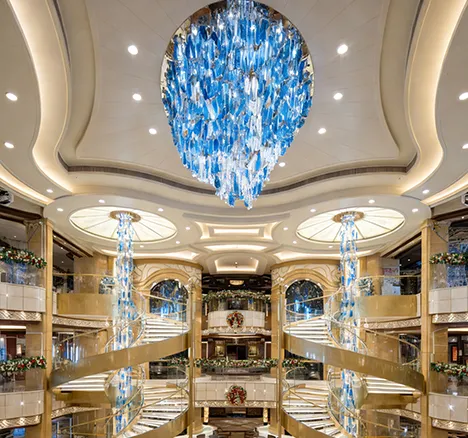
In a hotel, lighting finishes are viewed as a coordinated family. A brushed brass chandelier in the lobby may sit within sight of matching wall lights, pendants and decorative metalwork; repeated guest-room fixtures may appear side by side along the same corridor. Even a modest shift in hue, gloss, brushing direction or surface texture can therefore look like a project-wide quality problem rather than a small manufacturing variation.
Reliable hotel lighting finish consistency does not come from a final visual inspection alone. It is created by defining an approved physical standard, controlling the substrate and pretreatment, keeping sensitive work within managed production batches, recording process parameters and inspecting finished fixtures under repeatable conditions. The goal is not an impossible promise that every handmade surface will be identical. It is a controlled visual range that remains coherent in the installed hotel environment. For coordinated fixtures at property scale, see Cuslux large hotel projects.
Define the Custom Lighting Finish Standard Before Production
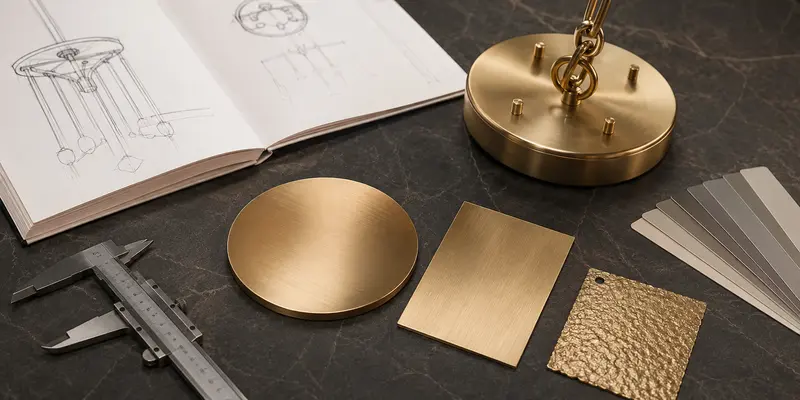
Descriptions such as antique brass, champagne gold, matte black or bronze are useful for design communication, but they are not complete production standards. The same name can describe different base metals, plating systems, patinas, clear coats and gloss levels. A manufacturer must convert the designer’s language into a finish specification that production and quality-control teams can repeat.
The release file should identify the substrate, surface process, color reference, texture or brushing direction, target gloss, protective topcoat and the components to which the finish applies. It should also state whether visible fasteners, suspension hardware, canopies and adjacent modules must match the decorative body. For custom hotel lighting, this prevents a finish from being approved on one sample while secondary components are produced to a different interpretation.
A digital rendering or screen image may show the intended mood, but it cannot serve as the sole color standard. Displays, cameras and ambient light alter color. The rendering should remain the design reference; the signed physical sample becomes the manufacturing reference.
Control Hotel Lighting Fixture Substrates and Surface Preparation
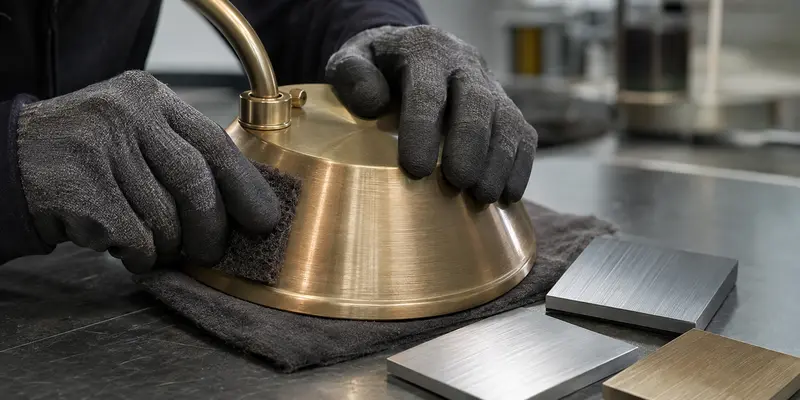
Finish variation often begins below the visible coating. Brass, stainless steel, aluminum and mild steel respond differently to polishing, brushing, plating and powder coating. Changes in alloy, sheet source, weld area or surface hardness can alter color and reflectivity even when the same finishing chemistry is used.
For a consistent hotel lighting fixture finish, visible parts should use the specified substrate and a controlled surface-preparation sequence. Oils, oxides, fingerprints, polishing compound and welding discoloration must be removed. Grinding marks need to be leveled, and brushed surfaces require a defined abrasive grade and direction. On adjacent metal panels, brushing in opposite directions can look like a color difference because each surface reflects light differently.
The factory should inspect the bare component before finishing rather than expecting the coating to hide dents, deep scratches or poor weld finishing. Powder coating, plating and transparent lacquers often make underlying defects more visible. Stable preparation is therefore the first practical control point for metal finish consistency.
Approve Physical Lighting Finish Samples Under Project Lighting
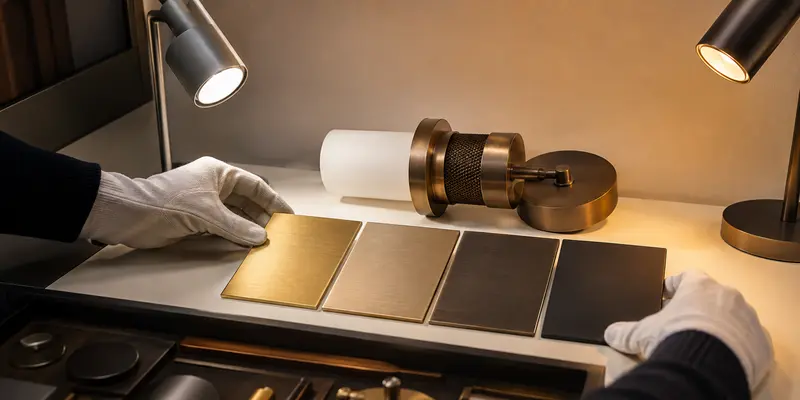
A lighting finish sample should represent the complete system, not just a convenient color chip. Whenever practical, it should use the project substrate, the intended polishing or brushing method, the actual finish process and the planned protective coating. Samples prepared on a different metal or with a different topcoat may match in the approval room but diverge in production.
Designers should review samples in neutral daylight and under a light source close to the hotel’s specified color temperature. Warm 2700K or 3000K light can intensify gold and bronze tones, while cooler light can make the same surface appear grayer. Gloss and directional finishes should be tilted and viewed from several angles because their appearance changes with reflection.
Once approved, the sample needs a code, date, finish name, process description and signatures or written approval. One controlled master should remain with the manufacturer; where possible, a duplicate should be retained by the designer or project team. Photographs are useful for records, but the physical master sample should govern production decisions. For the complete approval workflow, see this custom hotel lighting sample approval checklist.
Select the Right Process for Metal Finish Consistency
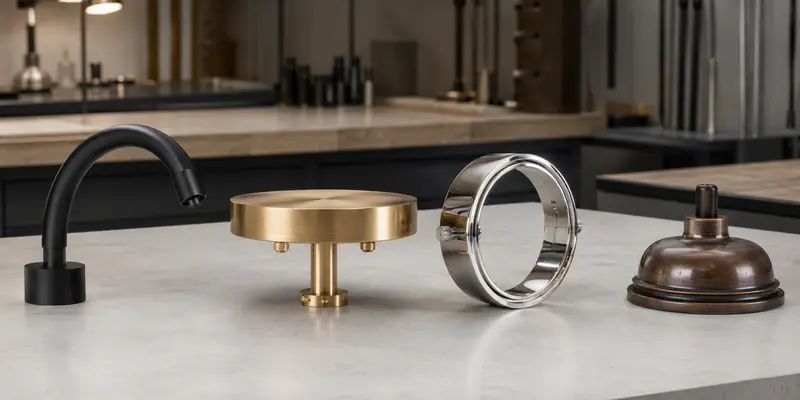
Different decorative lighting finishes require different controls. Powder coating is generally suitable for repeatable solid colors and durable surfaces, provided pretreatment, powder lot, application thickness and curing are stable. Plated finishes depend on base preparation, bath condition, layer thickness and subsequent clear coating. Brushed or polished metals depend heavily on workmanship, abrasive sequence and tool direction. Hand-applied patinas are intentionally more variable and need an approved visual range rather than a single numerical color target.
The process should be selected for the expected appearance, quantity, component size, operating environment and future maintenance. A process that works well on a small wall-light backplate may be difficult to keep uniform across several large chandelier modules. Where one installed fixture contains adjacent sections, the finish plan should prioritize how those sections look together rather than evaluating each piece in isolation.
The specification should also define the protective layer. A clear coat can shift color, reduce metallic brightness or change gloss. Its chemistry and film build must therefore be part of the approved custom lighting finish, not an unrecorded final step.
Manage Custom Hotel Lighting Materials by Production Batch
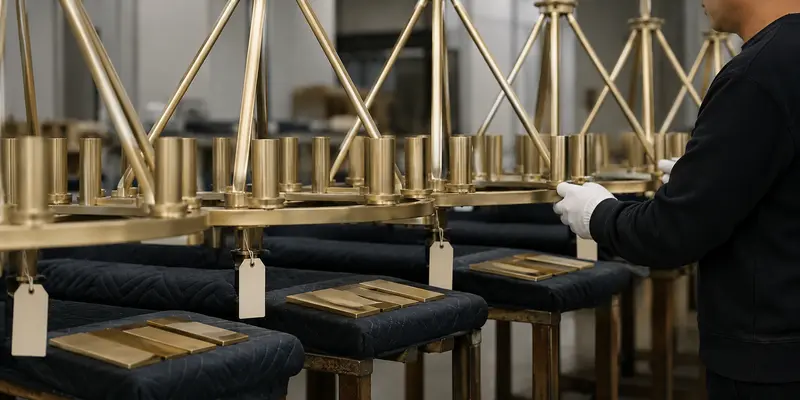
Batch control is one of the most effective ways to reduce visible differences. Powder, paint, plating chemistry, metal sheet and clear coating may vary slightly between lots. For sensitive finishes, the custom lighting manufacturer should allocate enough material for the approved quantity, expected rejects and agreed spare parts before production begins.
Components installed next to one another should be finished together whenever size and process capacity allow. Large chandeliers that must be produced in modules should be grouped by fixture and viewing relationship. After trial assembly, adjacent modules can be compared, paired and numbered so the installation team preserves the approved sequence on site.
If a project must be divided into several production runs, each run should be compared with the master sample and, ideally, with a retained part from the preceding batch. This does not remove every difference, but it prevents gradual drift. Batch numbers should remain traceable through inspection, packing lists and replacement-part records.
Maintain Custom Lighting Finish Process Parameters
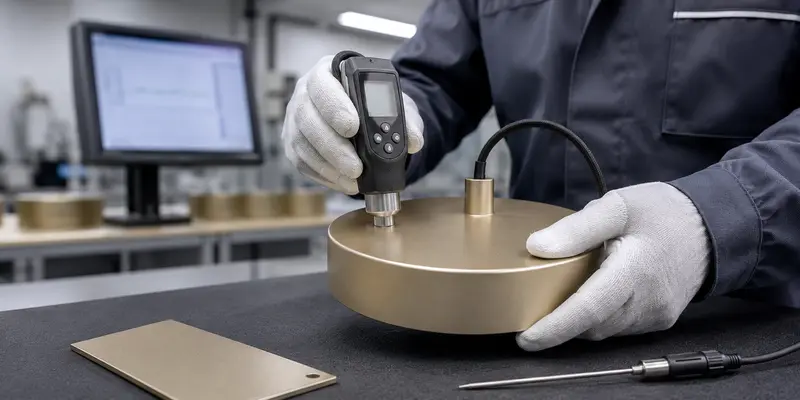
A good sample is only valuable if the factory records how it was achieved. Repeatability requires controlled parameters rather than reliance on an operator’s memory. Depending on the process, records may include cleaning sequence, abrasive grade, polishing direction, spray settings, powder or chemical lot, coating thickness, oven temperature, curing time, bath condition and topcoat application.
Process equipment also needs routine checks. Worn abrasives can change brushing texture; contaminated spray lines can affect color; poor grounding can cause uneven powder coverage; and incorrect oven profiles may change gloss or durability. Parts should be positioned consistently during coating and curing because orientation can affect deposition and appearance.
For bespoke lighting with hand-applied finishes, the control method is different but still systematic. The factory can use a trained team, a defined sequence, approved tools and reference panels representing the lightest and darkest acceptable limits. The craft remains manual, while the acceptance window is documented.
Inspect Decorative Lighting Finishes Under Controlled Light
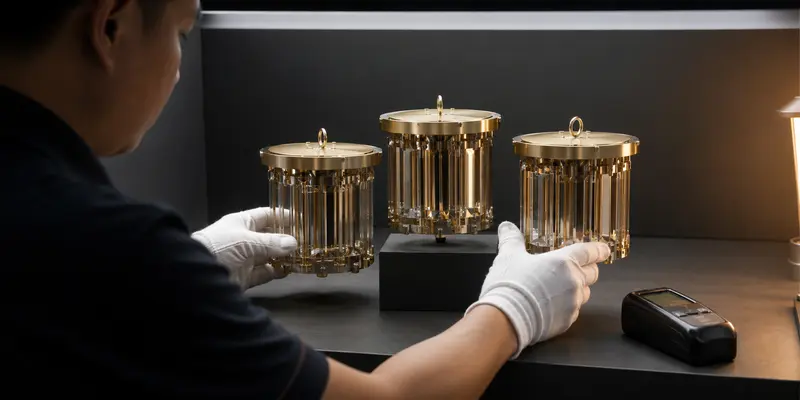
Finish inspection should use repeatable viewing conditions. Color, gloss and surface direction cannot be judged reliably if one batch is inspected near a window and another under mixed factory lighting. The project should define a primary inspection light, a viewing distance and the surfaces that are considered normally visible after installation.
A useful inspection begins with direct comparison against the approved master sample. The inspector then checks representative parts together, rotates directional finishes and evaluates completed modules from both close range and the expected hotel viewing distance. Instruments such as gloss meters, coating-thickness gauges or color-measurement devices can support the decision when the finish and tolerance justify them, but they do not replace visual review of metallic or highly reflective surfaces.
Acceptance criteria should distinguish critical defects from natural or non-visible variation. Peeling, blistering, contamination, bare areas, strong hue shifts and inconsistent brushing on adjacent visible parts normally require correction. Minor differences on concealed hardware should not be evaluated in the same way as a large lobby canopy seen from several floors.
Check Hospitality Lighting Finishes After Final Assembly
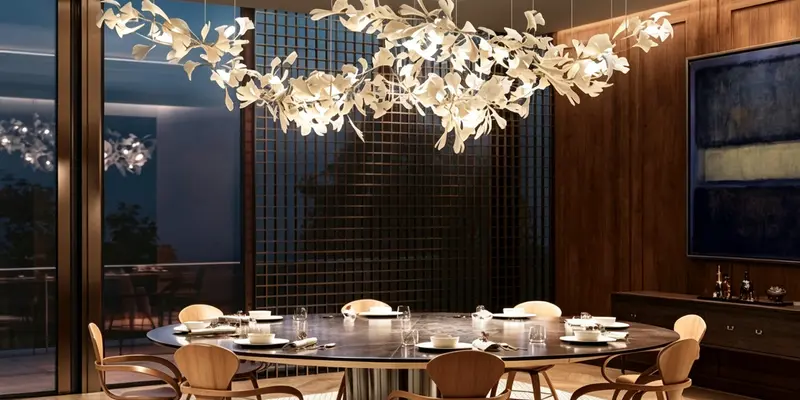
Parts that pass individual inspection can still appear inconsistent after assembly. Different angles change reflected light; fasteners may interrupt the finish; heat from welding or correction work can mark a surface; and handling during wiring can introduce scratches. Hospitality lighting should therefore receive a second finish review after assembly or factory trial installation.
The assembled check should include adjacent modules, canopy sections, suspension parts, decorative frames and any repeated fixtures intended for the same space. Fixtures should be inspected both switched off and illuminated, since internal light can reveal coating thin spots or change the apparent color of nearby metal. Protective films, gloves and padded work surfaces should be used after approval to prevent damage during testing and packing.
If large custom chandeliers cannot be fully assembled, the manufacturer can trial-fit the most visually sensitive interfaces and arrange modules in their installed order for comparison. Photographs should record the approved pairing and numbering before the pieces are separated for transport.
Separate Lighting Finish Consistency from Handmade Material Variation
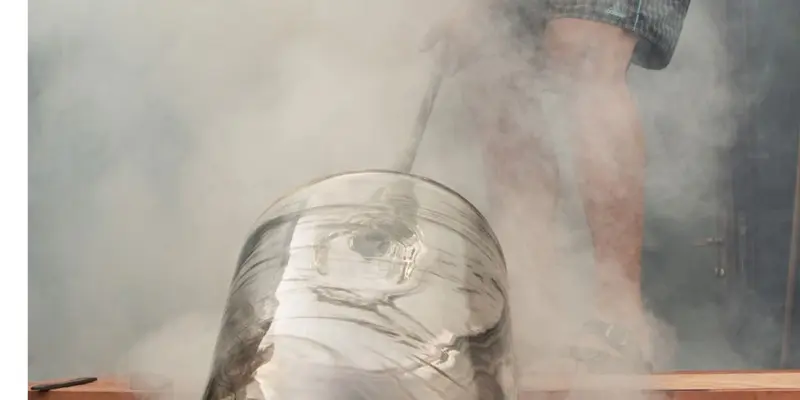
Hotel lighting frequently combines controlled metal finishes with hand-blown glass, crystal, ceramic, stone or resin. These materials do not follow the same definition of consistency. Handmade glass can show slight differences in shape, thickness, bubbles, color concentration and optical distortion. Such variation may be intrinsic to the chosen craft rather than evidence of poor quality. To see how individual glass pieces are composed into one fixture, read how glass pieces are arranged in a custom chandelier.
The project team should define which characteristics must remain consistent and which may vary within an approved range. For example, metal canopies may require close color matching, while glass leaves may intentionally vary in curvature and tone to avoid a mechanical appearance. Cuslux project material notes likewise distinguish series consistency from controlled variation: a master sample or 1:1 mock-up establishes key color, texture, thickness and transmission requirements, while an agreed range preserves the natural character of individual handmade pieces.
Mixed components should be sorted before assembly so lighter and darker pieces are distributed intentionally. The result should read as one composition, without accidental clusters that make one area appear off-color or visually heavier than another.
Preserve Hotel Lighting Finish Consistency for Spares and Reorders
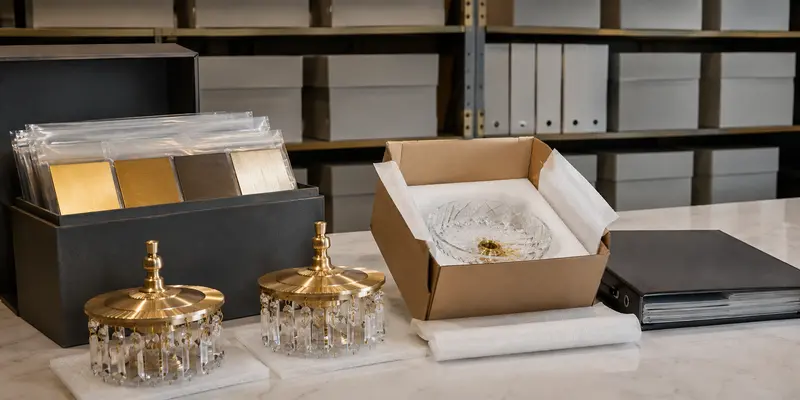
Finish control should continue after the initial shipment. Replacement canopies, arms, glass elements or complete guest-room fixtures may be ordered months or years later, when original material lots and process conditions are no longer available. Exact reproduction cannot always be guaranteed, especially for aged metal, patina and handmade glass, but accurate records reduce avoidable mismatch.
The closeout file should retain the approved sample code, finish formula or supplier reference, substrate specification, process route, batch records, gloss target, inspection photographs and the location of retained samples. Spare components produced with the original batch offer the best match for highly visible or repeated fixtures and should be included when the project risk justifies them.
For a later reorder, the manufacturer should compare a new sample with both the archived master and, where possible, an actual site component. Existing finishes may have changed through oxidation, UV exposure, cleaning chemicals or normal wear. The project team can then decide whether to match the original production standard or the current installed appearance.
Hotel Lighting Finish Consistency Control Checklist
Before mass production, the designer, buyer and manufacturer should confirm a single written baseline. The following checklist converts finish approval into evidence that can be used by purchasing, production and quality-control teams.
| Control point | Required evidence |
|---|---|
| Finish definition | Substrate, process, color, texture, gloss and topcoat recorded |
| Master sample | Coded physical sample approved and retained |
| Viewing conditions | Light source, angle and normal viewing distance agreed |
| Surface preparation | Cleaning, polishing and brushing sequence controlled |
| Batch plan | Adjacent parts, modules and spares assigned to managed lots |
| Process records | Material lots and critical operating parameters traceable |
| In-process inspection | First-off parts compared before full production |
| Final inspection | Color, gloss, texture, defects and coating integrity checked |
| Assembly review | Adjacent visible parts reviewed together, on and off |
| Packing protection | Approved surfaces protected from rubbing and fingerprints |
| Reorder records | Samples, formulas, photos and batch data archived |
FAQ About Hotel Lighting Finish Consistency
Can a RAL or Pantone code guarantee a matching lighting fixture finish?
No. A color code is an important reference, but substrate, texture, gloss, coating chemistry, film thickness and lighting conditions also influence appearance. A physical sample made with the intended process is required for decorative hotel fixtures.
Should all custom hotel lighting parts be produced in one batch?
Sensitive visible parts should be grouped in the same controlled batch where practical. When the project is too large, each batch should be checked against the master sample and retained production references, while adjacent modules are paired and numbered.
How much color variation is acceptable in handmade glass?
There is no universal tolerance. The acceptable range depends on the glass process, color, size and visual intent. Designers should approve representative light and dark limits or a full mock-up, then define how pieces will be distributed across the fixture. To choose between materials, compare glass vs crystal chandeliers for hotel lobbies and ballrooms.
When should finish consistency be inspected?
At minimum, review the approved sample, first-off parts, in-process batches, finished components and final assembly. A final check after assembly is essential because angle, adjacency, light and handling can reveal differences that are not visible on separate parts.
Can a replacement fixture match several years later?
A close match is more likely when the original substrate, formula, process records and retained samples are available. Exact matching may still be limited by aging, material-lot changes and handcrafted variation, so site comparison and a new approval sample are recommended.
Control Hotel Lighting Finish Consistency from Sample to Installation
Finish consistency is a chain of decisions, not a cosmetic check at the end of manufacturing. The approved physical sample defines the target; substrate preparation and process records make it repeatable; batch planning limits drift; controlled inspection verifies the result; and careful assembly, packaging and installation protect what has been approved.
Before releasing a custom hotel lighting package, align the finish standard with the broader production file. Review what should be confirmed before custom hotel lighting production. If the design is still a visual reference, see how a custom lighting manufacturer works from a rendering. Buyers planning supplier controls can also review how to avoid delays and quality issues when choosing custom lighting.
For manufacturer review, provide the fixture schedule, material and finish references, approved samples, destination, quantities, installation relationships and any spare-part requirement. This allows the finish plan to be built around the way the fixtures will actually be produced, viewed and maintained.