

What Should Designers Check During Custom Hotel Lighting Sample Approval?

Zoey
Lighting Designer
A custom lighting sample should not be approved simply because it looks attractive on a meeting-room table. For a hotel project, approval must establish whether the fixture expresses the design intent, fits the architecture, performs correctly and can be repeated consistently in production.
This applies to a guest-room wall lamp, a decorative pendant, a chandelier module, a metal finish plate or a complete lobby fixture. Once approval is issued, the custom lighting manufacturer may purchase materials, prepare tooling and schedule production. An unresolved color, dimension or electrical detail can then be repeated across dozens or hundreds of fixtures.
Designers should therefore treat custom hotel lighting sample approval as a controlled comparison between the approved design, the technical specification, the physical sample and the actual hotel environment. The review should answer what has been approved, what remains open and which reference the factory must reproduce.
Define the Purpose of the Custom Lighting Sample
Before inspecting a sample, confirm what it was made to prove. Different samples answer different questions, and approval of one aspect should not imply acceptance of the complete fixture.
A metal plate can confirm finish color, texture and sheen, but not the construction of a wall light. One handcrafted glass element can show color and transparency, but not the final density of a large chandelier. A non-working mock-up may confirm form and scale while leaving the LED, driver and dimming performance open.
The submission record should identify the fixture code, sample type, drawing revision, finish code and approval scope. For repeated guest-room fixtures, a complete functional sample is often appropriate. For a large custom chandelier, a representative module, full-size glass element, finish board and lighting test may provide better evidence than an early full fixture. Defining the purpose prevents the factory from treating a limited visual approval as permission to manufacture everything.
Compare the Hotel Lighting Sample with Approved Documents
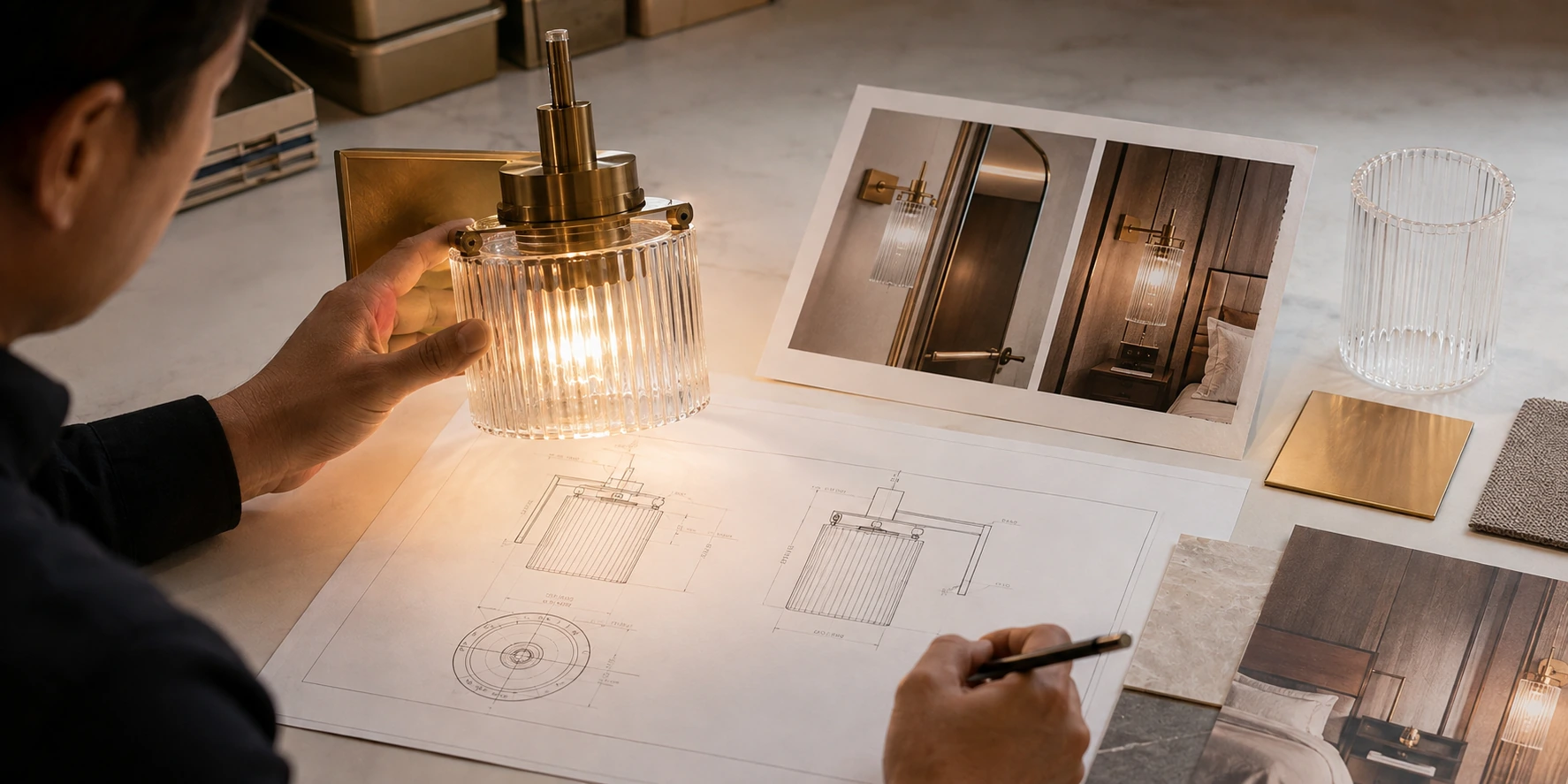
Review the hotel lighting sample together with the latest rendering, fixture schedule, specification, approved shop drawing and material references. Memory, screenshots and informal messages are not reliable comparison standards.
Confirm that the fixture code, dimensions, materials, lamping, finish, voltage and installation location all match the controlled documents. A sample may be well made and still be wrong because it follows an earlier drawing or quotation.
Design drawings communicate appearance and spatial intent; custom lighting shop drawings define manufacture and installation. If the sample reveals a necessary change, update the related drawing and specification before production approval. The final record should connect one physical sample with one document revision so purchasing, production, inspection and installation teams use the same reference.
Check Custom Hotel Lighting Dimensions and Proportion
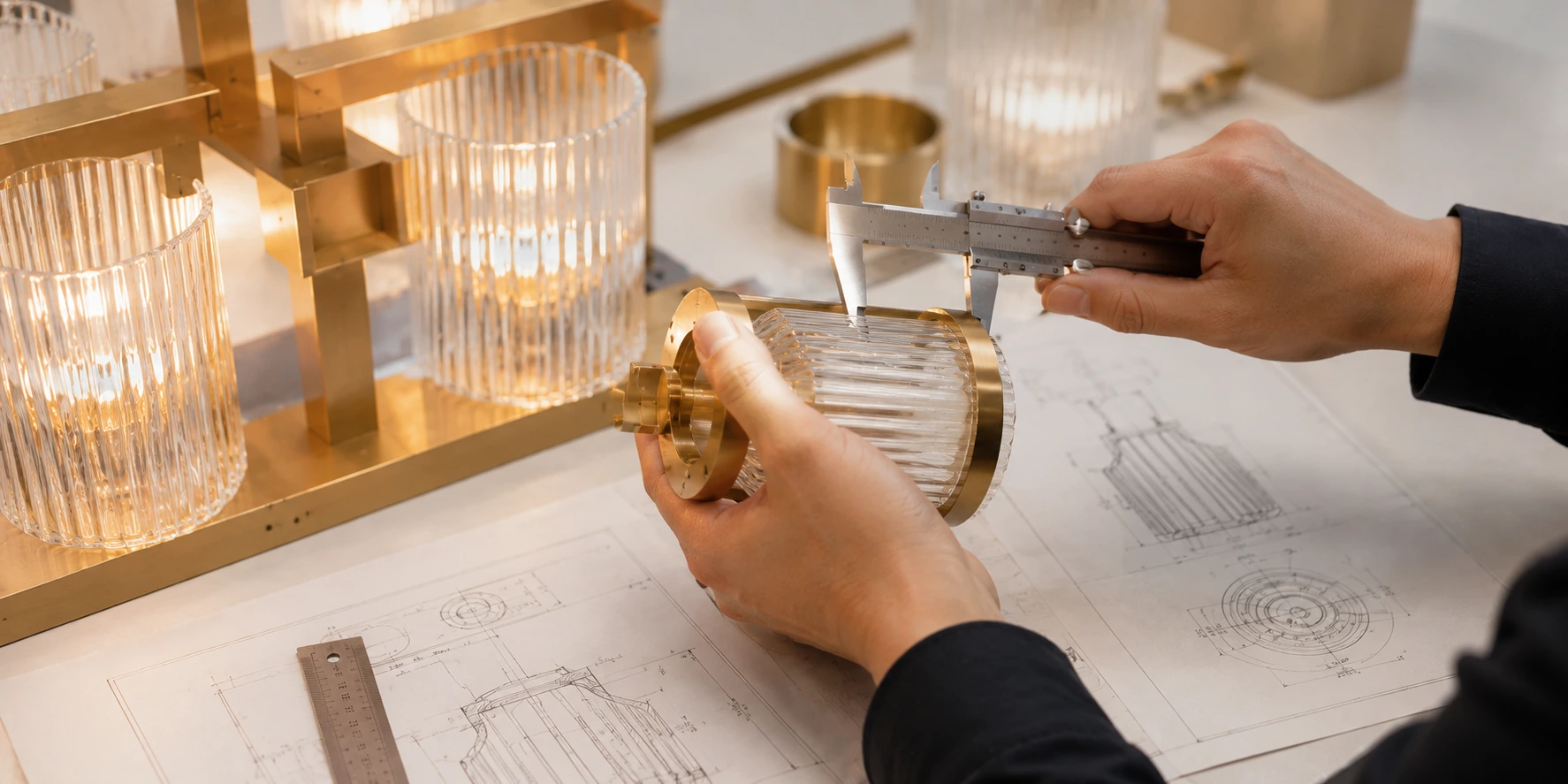
Measure the sample rather than judging scale by eye. Confirm overall width, height and depth, together with shade size, arm projection, canopy dimensions, suspension length and the location of visible components.
Small differences can change how custom hotel lighting relates to furniture, ceilings and circulation. A bedside wall lamp may conflict with a headboard. A pendant may sit too low above a restaurant table. One chandelier module may look correct alone but become too dense when repeated across a lobby installation.
Assess the sample from the expected viewing distance and angle. Fine details may disappear in a double-height lobby, while a thick frame or visible connector can become distracting from an upper floor. When possible, test guest-room fixtures inside the hotel mock-up room and compare public-area samples with elevations or full-size location templates. Approval should confirm architectural proportion, not only product dimensions.
Review Lighting Finish Samples under Project Conditions
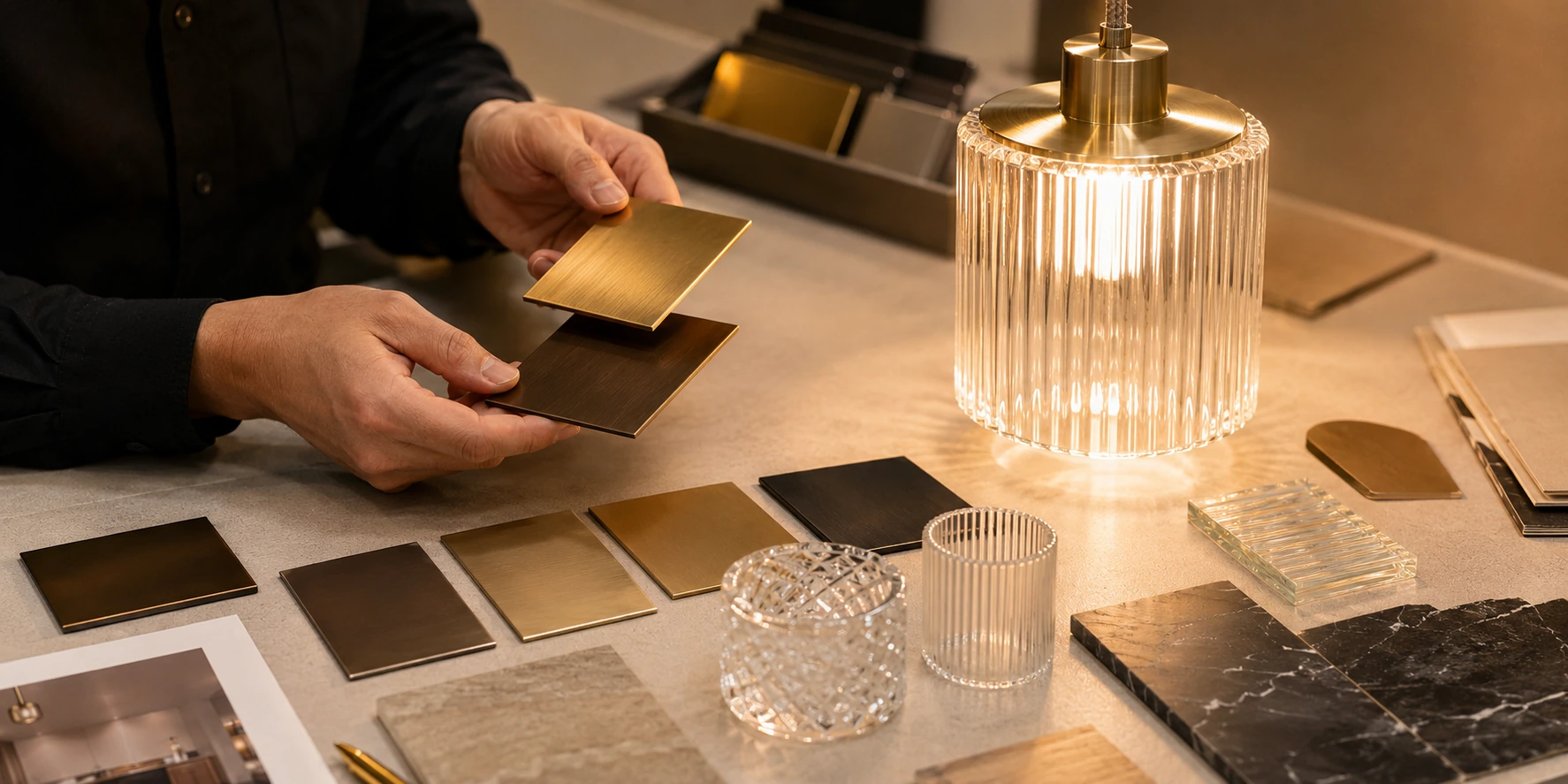
Metal finishes should be reviewed for color, sheen, texture, direction and consistency. Terms such as brushed brass, antique bronze and champagne gold are not precise production standards because different substrates and processes can create visibly different results.
Inspect lighting finish samples under neutral review light and under illumination close to the planned hotel condition. A finish that appears balanced in daylight may become too yellow under 2700K light or too grey under cooler light. Compare it with nearby stone, timber, fabric, mirrors and architectural metalwork where practical.
Check brushing direction, plating tone, edge coverage, pinholes, clouding, paint texture and gloss. Identify which surfaces remain visible after installation, since an acceptable mark on a concealed bracket may be unacceptable on an eye-level arm or canopy. Photographs should document the decision, but the coded physical master sample remains the primary reference when color and texture are critical.
Inspect Glass Chandelier and Crystal Chandelier Materials
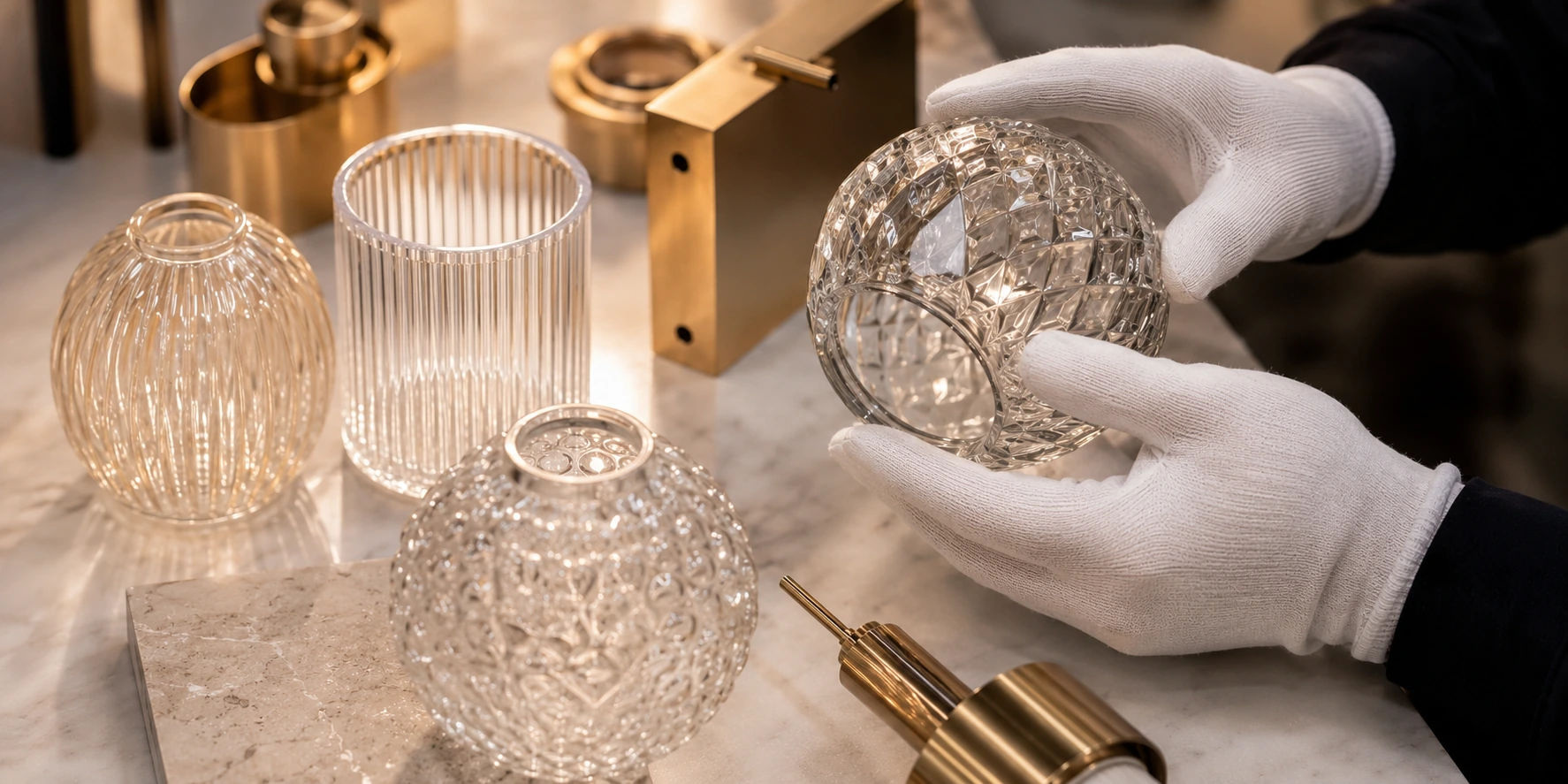
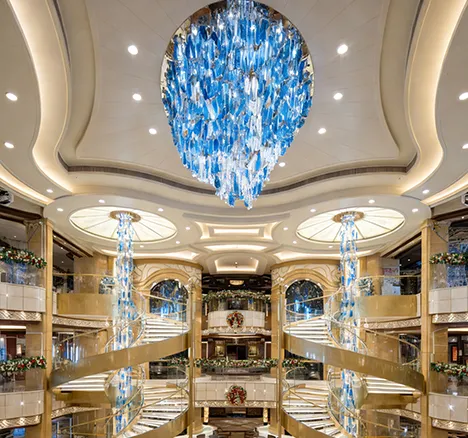
For a glass chandelier or crystal chandelier, review shape, dimensions, thickness, transparency, texture, edge treatment and the way each element responds to light. Inspect several pieces rather than approving one unusually perfect example.
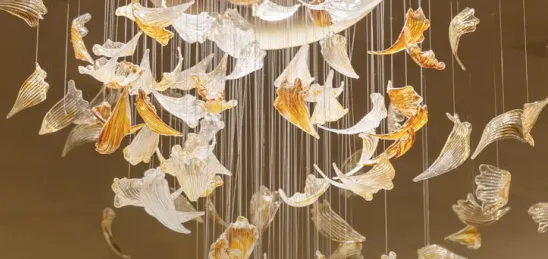
Handcrafted glass naturally carries controlled variation. Slight differences in size, color, weight, bubbles, surface texture or form may support the intended character rather than indicate a defect. The approval must define the acceptable range. For a project using hundreds of pieces, ask for representative minimum, typical and maximum examples so bulk inspection is based on a realistic standard.
View the materials illuminated and unlit. Tinted, sandblasted, frosted or textured glass can change substantially when backlit. For crystal, check clarity, cut consistency, edges, drill positions and visible inclusions. Confirm that hooks, pins, caps or cables are secure and visually acceptable. Each approved material should have a code that also appears on drawings, packing lists and replacement-part records.
Test Custom Lighting Color Temperature and Light Quality
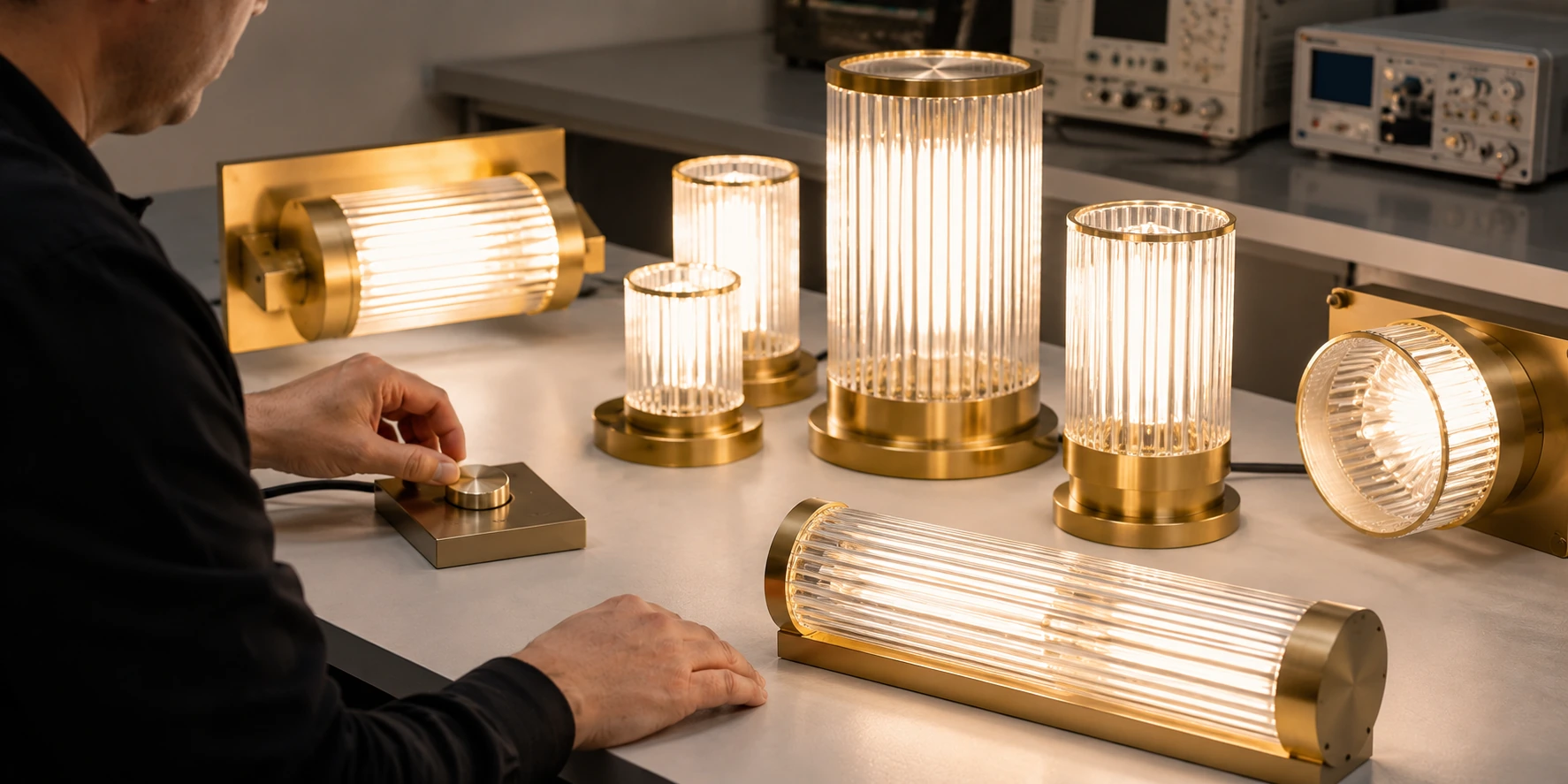
Energize the custom lighting sample and check the specified light source, wattage, color temperature, color rendering, brightness distribution and visual comfort. Do not approve color temperature only from a label. Two products marked 3000K can still look different because of LED binning, optics or surrounding materials.
Compare the sample with other sources planned for the same area. Review how the light affects glass, metal, stone, fabric and skin tones. Decorative glass fixtures should not show distracting LED hotspots or obvious brightness differences between similar elements.
Evaluate glare from realistic standing, seated and upper-level viewing positions. A source hidden from one direction may be exposed from another, and reflections can appear in mirrors, polished stone or glossy ceilings. If the fixture contributes to functional illumination, coordinate the sample with the lighting designer’s calculations or mock-up measurements and record whether approval covers decorative appearance only or also usable light performance.
Verify Hospitality Lighting Controls and Electrical Details
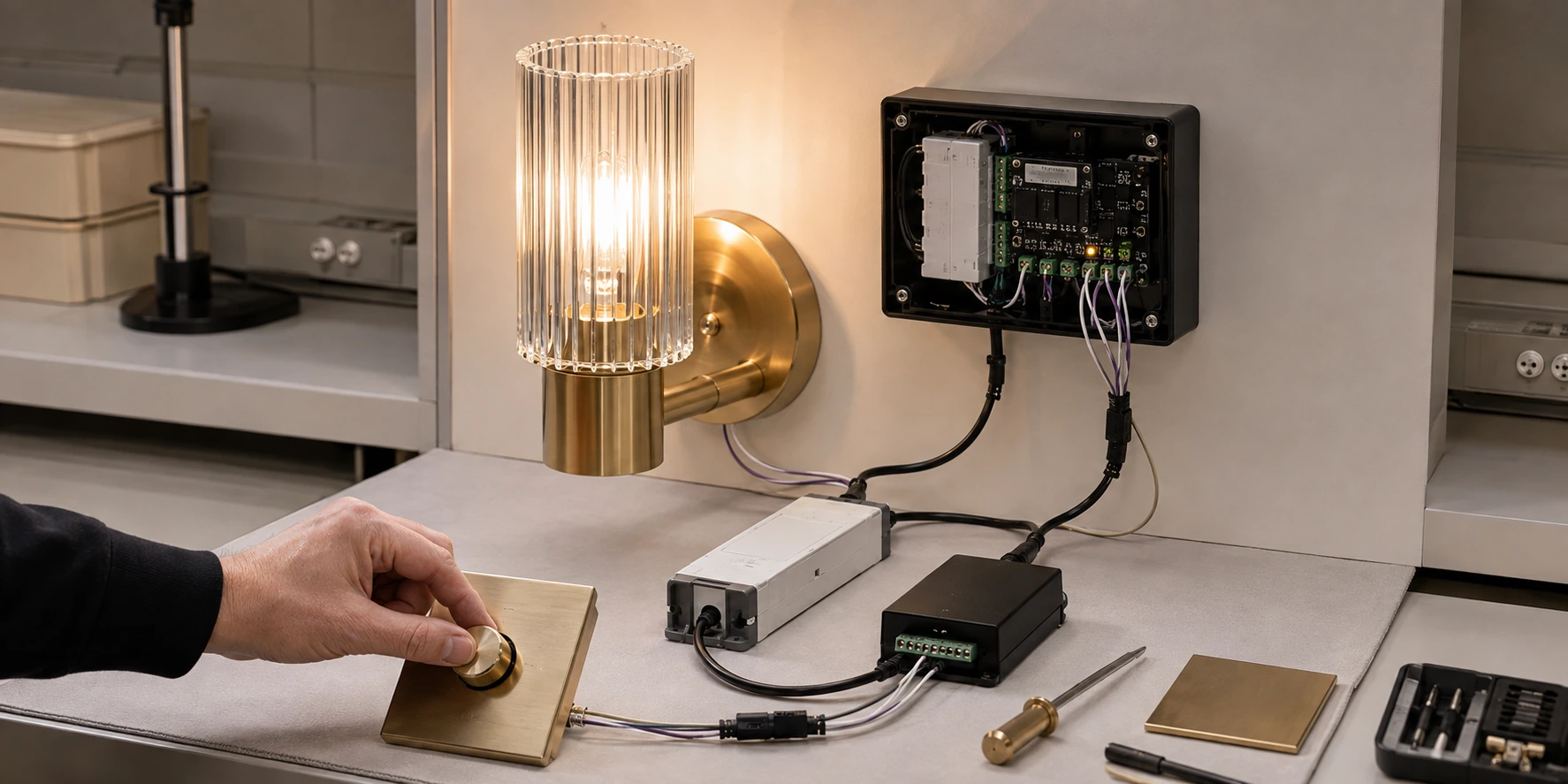
For hospitality lighting, switching the sample on is only the start of the electrical review. Confirm destination voltage and frequency, LED module or lamp holder, driver, grounding, wiring and control protocol.
Test the sample with the actual or technically equivalent dimming system where possible. A driver described only as dimmable may not work correctly with DALI, 0-10V, phase dimming or the hotel control system. Check the full range for flicker, abrupt cut-off, delayed response, audible noise and inconsistent behavior between modules.
Inspect driver location and maintenance access. A visually clean sample can conceal a driver that cannot be replaced after installation. If a temporary component is used, mark the related performance as open rather than approving the final electrical configuration. Production should use the same tested component set unless a documented substitution is reviewed.
Evaluate Custom Light Fixture Workmanship and Serviceability
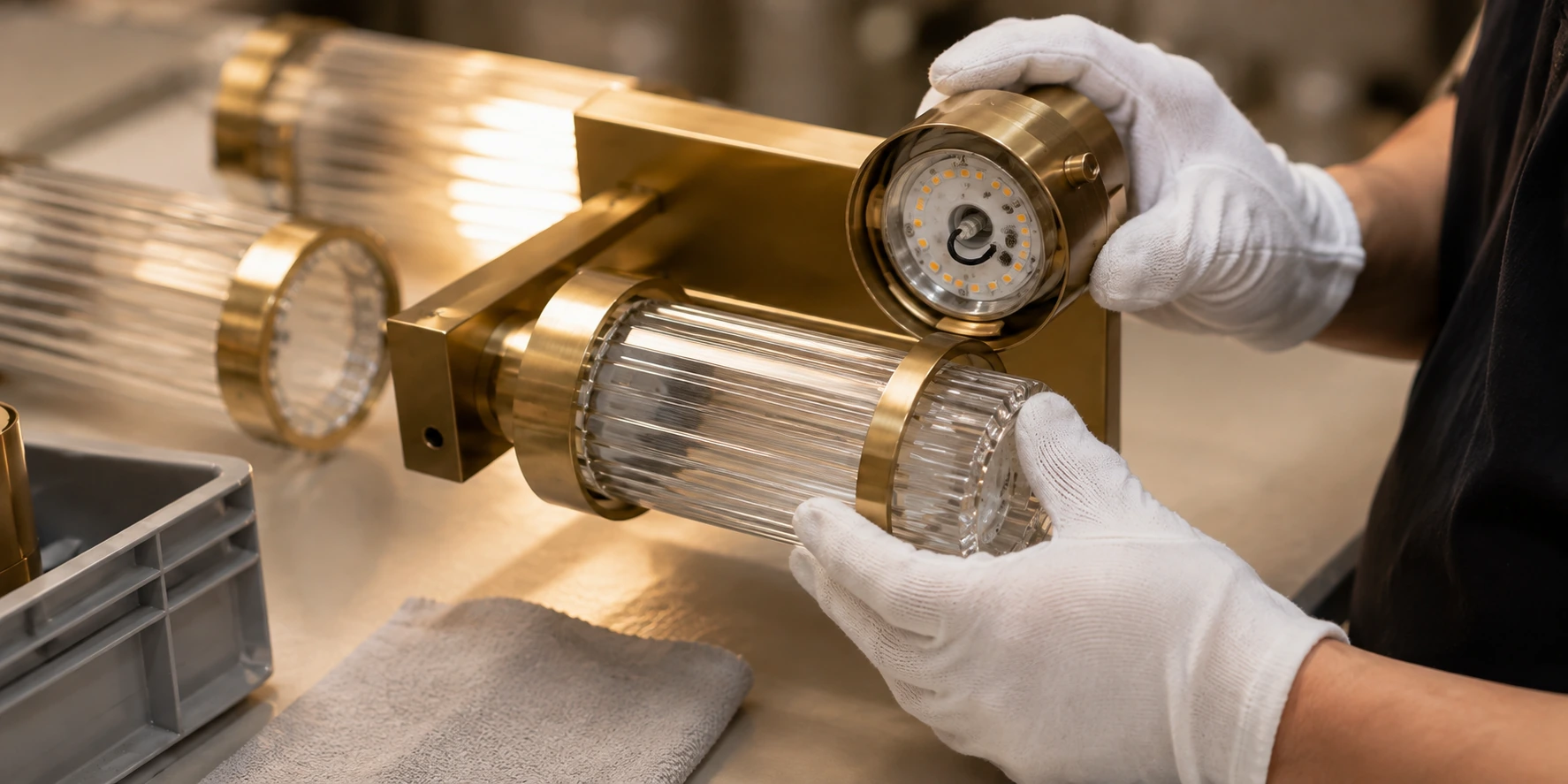
Hotel fixtures must withstand installation, cleaning, maintenance and continuous commercial use. Inspect the custom light fixture at normal viewing distance and close range for uneven welds, sharp edges, poor joints, loose parts, scratches, plating defects and inconsistent gaps.
Operate hinges, adjustable heads, switches and removable panels several times. Parts should remain aligned, and routine maintenance should not damage the finish. Confirm that shades, glass diffusers and decorative pieces can be removed safely where servicing requires it.
Acceptance should reflect visibility and function. A minor mark on a concealed ceiling component is not equivalent to a defect on an eye-level wall lamp, while a problem affecting stability, grounding or electrical integrity cannot be accepted because it is hidden. With bespoke lighting, the objective is controlled craftsmanship: retain intentional handmade character while rejecting variations that interrupt the design rhythm or prevent safe replacement.
Confirm Custom Chandelier Installation and Maintenance
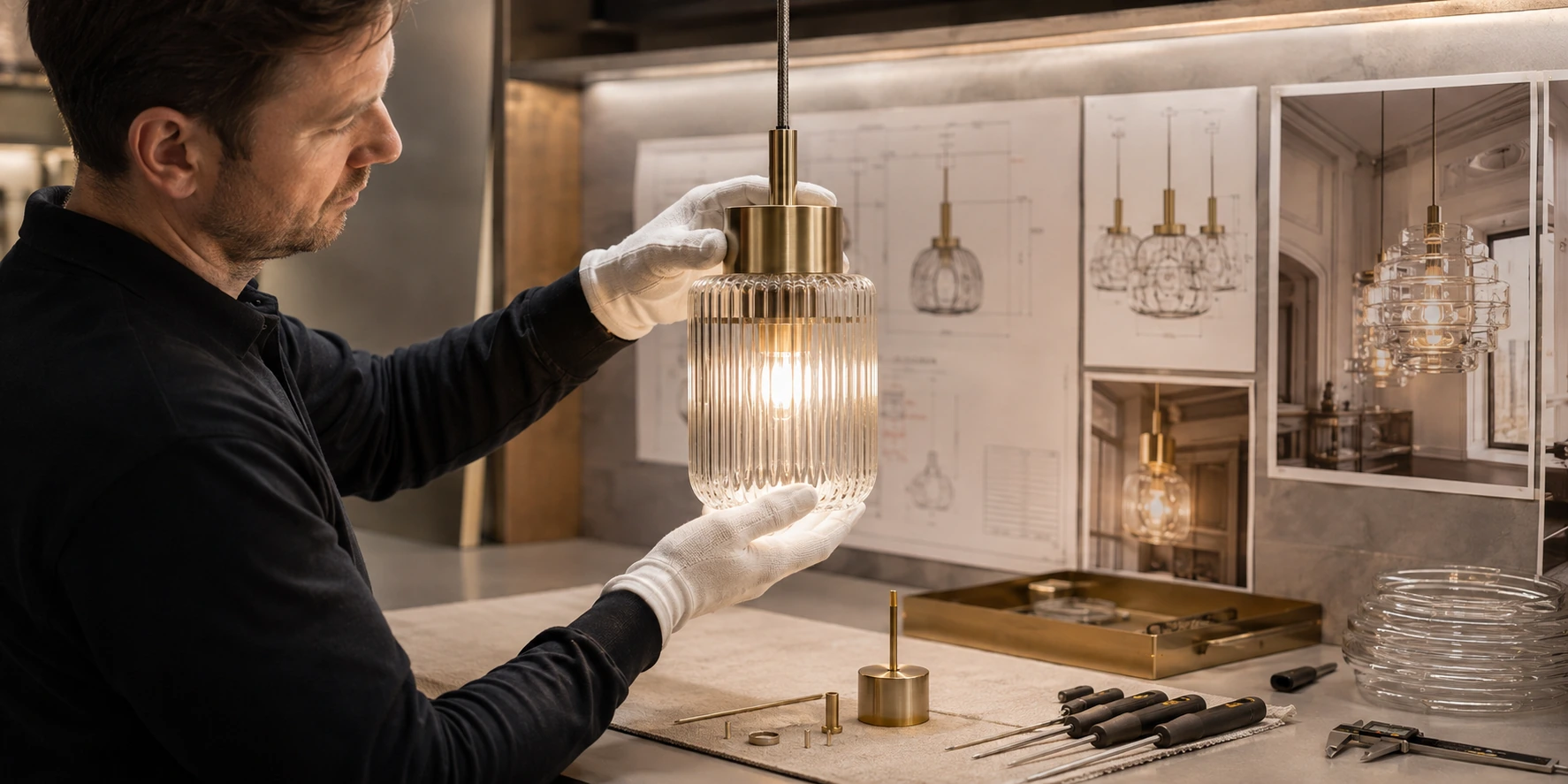
Before approving a custom chandelier sample, inspect the canopy, mounting interface, suspension components, cable exits, adjustment method and safety restraint. For a large fixture, a sample module can also test frame connections, decorative spacing, component attachment and assembly sequence.
Ask how the fixture will be packed and installed. Fragile glass or crystal may need to be attached after the main frame is suspended, levelled and electrically tested. Sample codes should correspond with shop drawings and eventual packing labels so installers can identify parts without guessing.
Maintenance access is part of design approval. Confirm how drivers, LED modules, wiring connections and decorative elements can be reached, cleaned and replaced. Agree on project spares for special glass, crystal, shades, LEDs, drivers and connectors that may be difficult to reproduce years later.
Turn Custom Hotel Lighting Sample Approval into a Master Standard
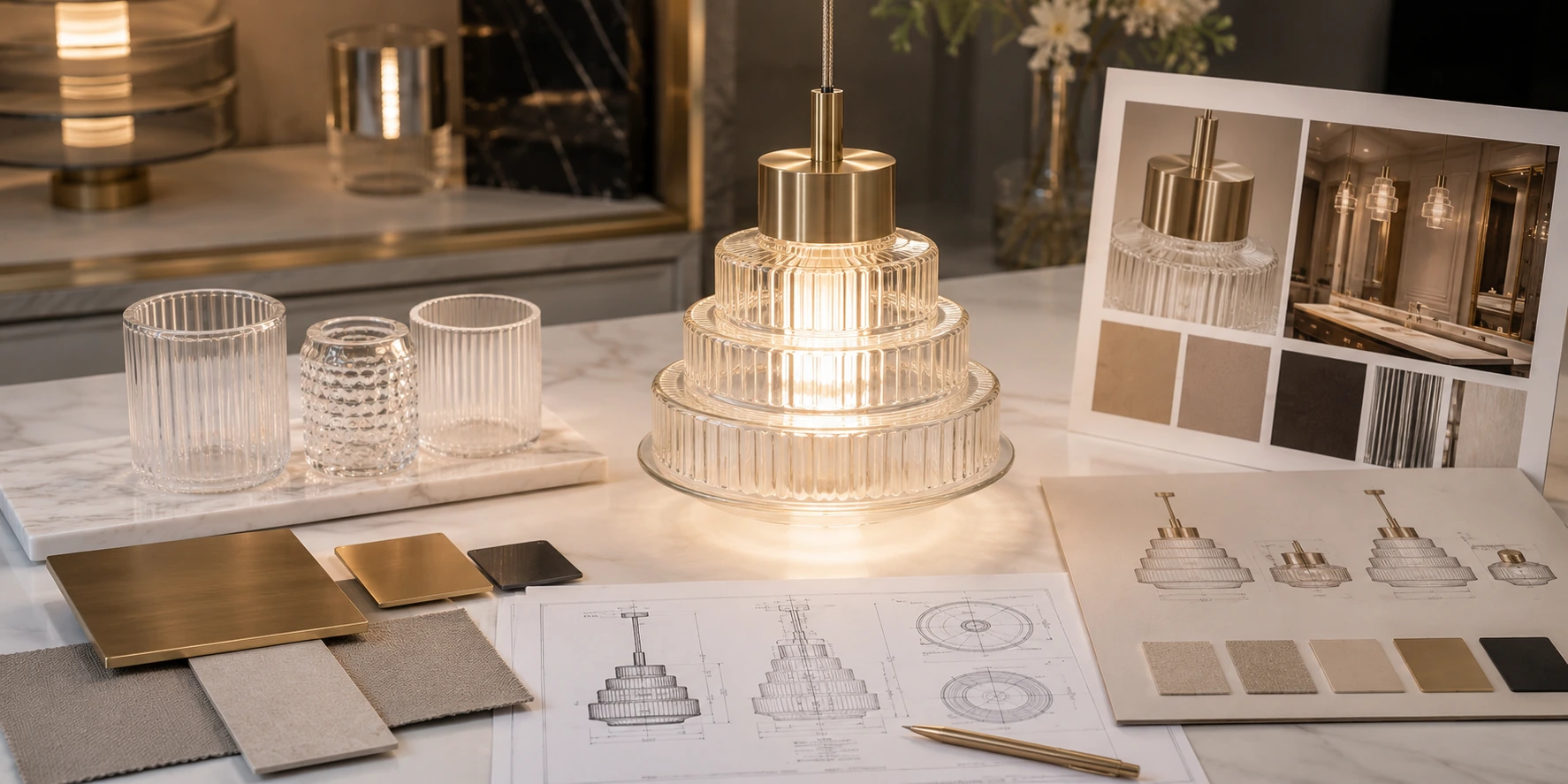
An approved sample is useful only when the manufacturer can repeat it and the inspector can judge production against it. Record the fixture code, sample number, date, drawing revision, approved material codes, electrical components, measurements and agreed tolerances. Attach photographs of the complete sample and critical details.
Use unambiguous approval status. “Approved” allows production to proceed against the recorded reference. “Approved with comments” is suitable only when corrections are specific, limited and assigned. “Revise and resubmit” means the sample cannot become the production standard. Avoid comments such as make it better, slightly warmer or same as rendering; tie every instruction to a measurement, code or physical reference.
If a requested change affects appearance, structure, cost, certification or lead time, revise the relevant documents before release. A signed sample that conflicts with the current shop drawing does not create a dependable production standard.
Custom Hotel Lighting Sample Approval Checklist
| Review item | Required evidence | Status |
|---|---|---|
| Sample identity | Fixture code, sample number and revision | Approve / Revise / Open |
| Approval scope | Material, finish, function or complete fixture | Approve / Revise / Open |
| Dimensions and proportion | Measured sample, drawing and hotel location | Approve / Revise / Open |
| Finish | Coded physical sample under project lighting | Approve / Revise / Open |
| Glass or crystal | Representative pieces and variation range | Approve / Revise / Open |
| Light quality | CCT, color appearance, glare and uniformity | Approve / Revise / Open |
| Controls and electrical | Voltage, driver, LED, wiring and dimming test | Approve / Revise / Open |
| Workmanship | Joints, alignment, edges and visible defects | Approve / Revise / Open |
| Installation | Canopy, mounting, assembly and labeling | Approve / Revise / Open |
| Maintenance | Access, cleaning, replacement and spares | Approve / Revise / Open |
| Production tolerance | Written acceptable variation | Approve / Revise / Open |
| Approval record | Photos, comments, status, signature and date | Approve / Revise / Open |
FAQ About Custom Hotel Lighting Sample Approval
Is a complete fixture required for every hotel lighting sample?
No. Match the sample format to the risk. A finish plate may be enough for color, while a repeated guest-room fixture usually benefits from a complete functional sample. A large chandelier may be assessed through a representative module and full-size decorative elements.
Can designers approve lighting finishes from photographs?
Photographs can support the record but should not replace physical samples when color, sheen or texture is important. Camera settings, screens and ambient light can materially change appearance.
How should handmade glass variation be approved?
Review several representative pieces and define an acceptable range for color, size, weight, bubbles, texture and shape. The same range should be available to production and quality-control teams.
Should the custom lighting sample use the final LED driver?
Preferably yes. If a temporary component is used, the approval record must identify electrical performance as open. The production-intent driver and control compatibility should be tested before final release.
Can production begin after conditional sample approval?
Only when every condition is specific, documented and assigned. If the open condition affects appearance, safety, electrical performance or an unverified production method, a revised sample or additional evidence should be required.
Release Custom Hotel Lighting with Clear Approval Evidence
Effective sample approval connects design intent with a repeatable production standard. Designers should compare the sample with the latest drawings, hotel architecture, physical finish references, electrical requirements and real viewing conditions—not simply decide whether the object looks attractive.
Before approving custom hotel lighting, define the sample purpose, measure critical dimensions, review materials under appropriate light, test LED and control performance, inspect workmanship and establish acceptable production tolerances. Record exactly what has been approved and what remains open.
For the broader release process, review what should be confirmed before custom hotel lighting production. If the project is still based on a concept image, see how a custom lighting manufacturer works from a rendering. Designers planning a tall installation can also review the custom chandelier design and approval stages. For safe installation of large fixtures, see how large custom hotel chandeliers are engineered for safe installation. For material choices, compare glass vs crystal chandeliers for hotel lobbies and ballrooms.
To prepare a sample review with Cuslux, send the fixture schedule, latest shop drawings, sample purpose, finish references, electrical requirements, hotel location and required approval date. The review can then be organized around clear visual, technical and production evidence rather than informal preference.