

How Are Complex Organic and Sculptural Lights Made from a Rendering?

Zoey
Lighting Designer
A rendering can show the mood, silhouette and visual rhythm of a sculptural light, but it does not explain how thousands of irregular parts will be supported, illuminated, assembled or installed. Turning that image into a dependable fixture requires design interpretation, 3D development, material trials, structural engineering, prototyping and a controlled production plan.
This guide explains how a professional custom lighting manufacturer develops complex organic lighting from a rendering while protecting the original design intent and making the final work practical for manufacturing, shipment, installation and maintenance.
Why Custom Chandelier Design Cannot Rely on a Rendering Alone
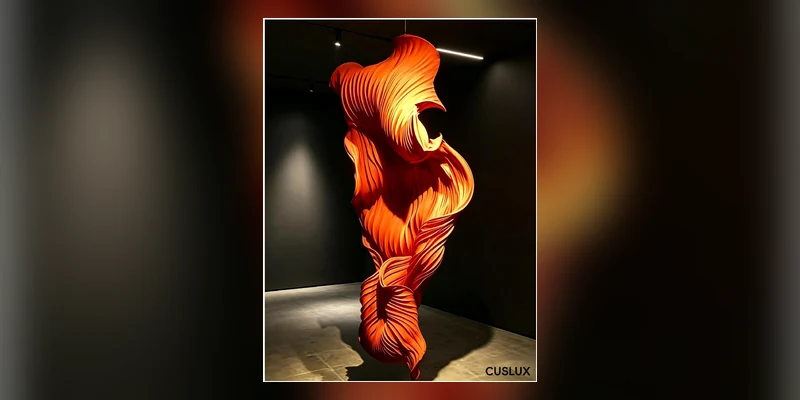
A rendering is a visual target, not a production instruction. It may communicate flowing petals, a cloud-like mass or a suspended field of glass, yet it rarely defines the precise dimensions, component count, fixing points, internal frame, cable routes or tolerances. Perspective can also hide conflicts between the visible form and the real ceiling, circulation space or maintenance access.
The first task in custom chandelier design is therefore to separate fixed design features from features that can be engineered. Overall scale, density, color direction and key viewing angles may be essential. Individual spacing, module size and hidden connections may remain adjustable. This distinction lets the engineering team solve technical problems without weakening the visual concept.
How Custom Sculptural Lighting Becomes a 3D Model
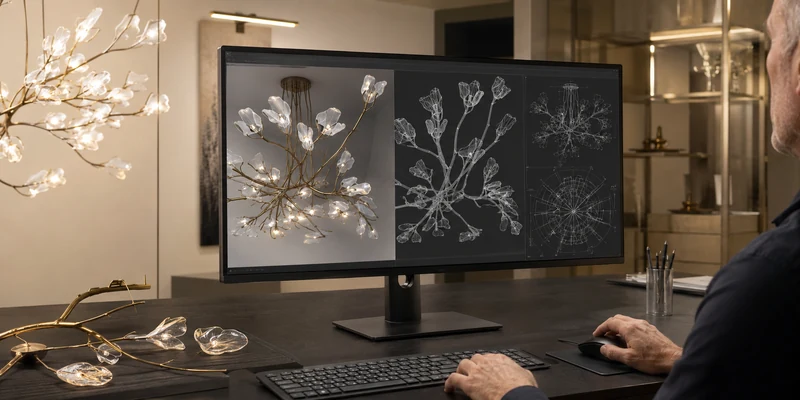
The rendering is rebuilt as measurable geometry. Designers establish the installation envelope, finished hanging height, ceiling relationship and important sightlines before developing individual layers and repeated components. For irregular compositions, the 3D model is not simply a smooth outer shell; it must show how the visual volume is created by real parts.
Digital development defines the location and orientation of each glass element, metal branch, light source, suspension point and serviceable component. It also allows the team to test density from the lobby entrance, upper floors and directly below the fixture. The resulting model becomes the basis for shop drawings, component schedules, numbering and installation coordinates.
How a Custom Lighting Manufacturer Evaluates Structural Feasibility
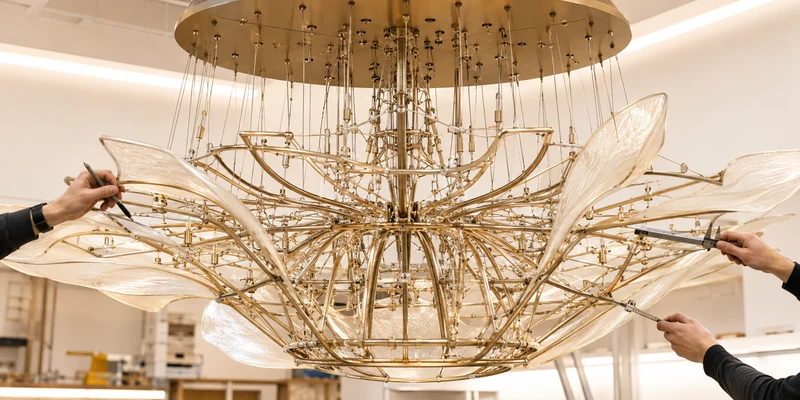
Before decorative details are finalized, the custom lighting manufacturer checks the total weight, center of gravity, module weight, number of suspension points and loads transferred to the building. Large sculptural installations may require a concealed steel frame, distributed aircraft cables or separately supported zones instead of one central canopy.
The fixture engineer can provide calculated product loads and a proposed interface, while the project structural engineer must verify the building support. Ceiling void depth, access panels, sprinklers, air-conditioning outlets and seismic requirements also affect the final arrangement. Resolving these conditions early prevents a beautiful design from becoming unsafe or impossible to install.
Creating Natural Variation in Organic Lighting Design
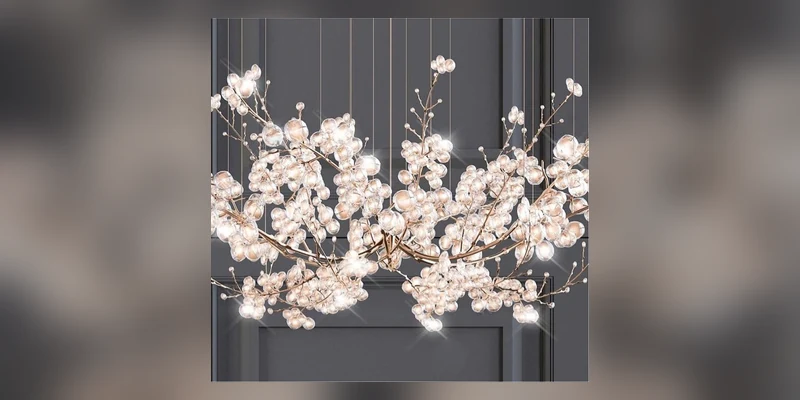
Organic compositions look spontaneous, but successful randomness is carefully controlled. If every element is identical and evenly spaced, the installation may appear mechanical. If variation has no rules, the result can become visually unbalanced, difficult to assemble and inconsistent with the rendering.
The designer normally creates families of sizes, angles, colors and suspension lengths, then establishes distribution rules. Denser zones can build a visual focal point while lighter edges soften the boundary. Controlled variation should also respect minimum clearances, component weight and access for wiring. This method gives organic lighting design a natural rhythm that production teams can repeat accurately.
Selecting Materials for Custom Artistic Lighting

Material choice determines both appearance and engineering. Handcrafted glass can create depth, bubbles, ripples and subtle color transitions that suit floral, cloud and water-inspired forms. Metal provides structure and can be finished in champagne gold, bronze, black or another approved tone. Acrylic, resin, ceramic or fabric may be suitable when weight, translucency or shape calls for a different solution.
Samples should be evaluated under the intended color temperature because transmitted and reflected light can change their appearance. The approval must also define acceptable handmade variation. A physical glass or finish sample provides a more dependable reference than a screen image and becomes the standard for bulk production.
Engineering Hidden Wiring in Custom Light Fixtures
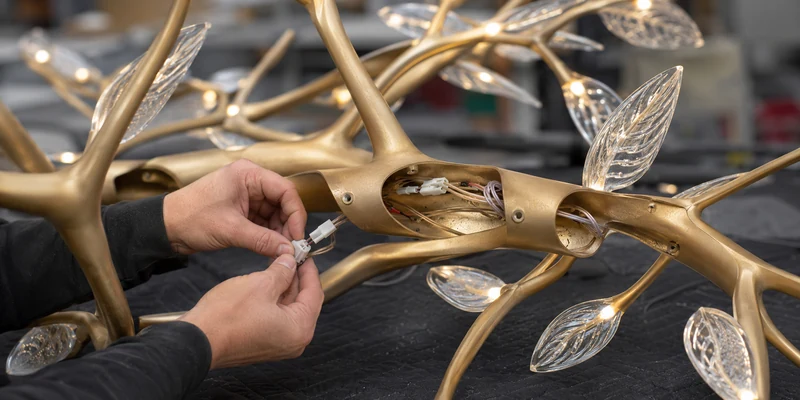
Wiring must disappear without becoming inaccessible. In complex custom light fixtures, cables may pass through slim branches, suspension wires, hollow rods or concealed channels. Drivers can be placed in the canopy, inside serviceable modules or remotely, depending on heat, ceiling access and control requirements.
The electrical plan confirms voltage, wattage, color temperature, CRI, dimming protocol, control zones, grounding and connector types. Light sources should illuminate the decorative material without creating distracting hotspots. Connectors and LED modules must remain replaceable where practical, especially when the finished fixture is installed high above a lobby or atrium.
Why a Bespoke Chandelier Needs a Physical Sample
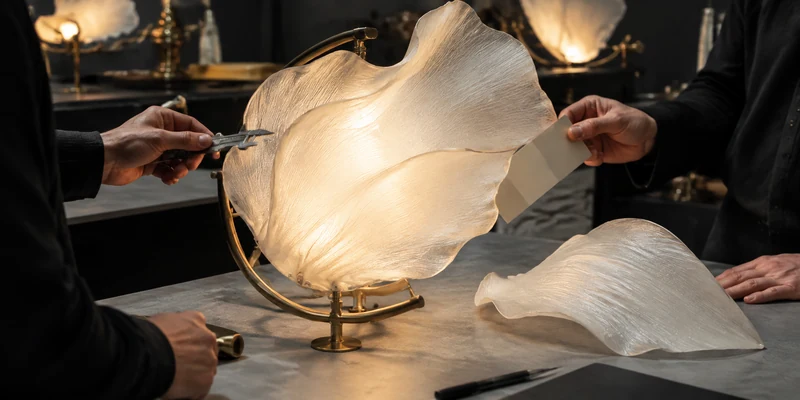
A screen cannot accurately prove glass thickness, edge quality, finish texture, brightness or the way light moves through a handmade surface. A physical sample is therefore one of the most important approval tools for a bespoke chandelier.
The sample does not always need to be the entire installation. A full-size decorative element, repeated module, illuminated branch or representative section can test the highest-risk details. The approval record should state exactly what the sample confirms—form, color, finish, light effect, connection method or assembly—and what remains subject to the shop drawings. The signed master sample then becomes a QC reference.
Modular Fabrication for Custom Made Chandeliers
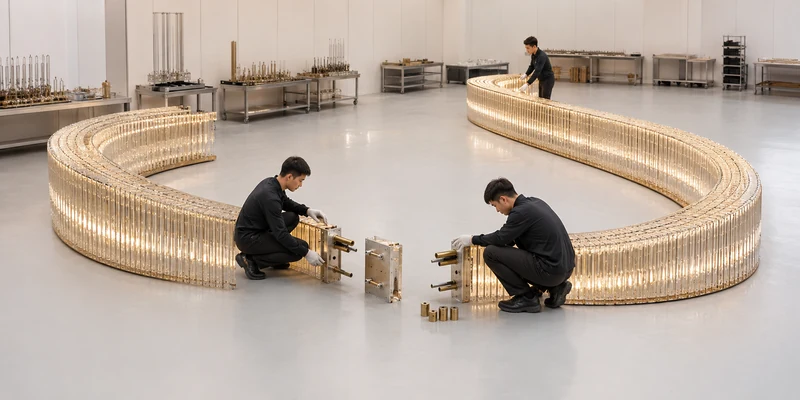
Large custom made chandeliers are usually divided into transportable modules. Module boundaries are positioned where joints can be concealed and where each section remains practical for factory handling, crates, lifts, doors and site hoisting. The system must still preserve continuous visual flow after assembly.
Each module, cable and decorative component receives a code that connects the 3D model, shop drawings, packing list and installation instructions. Standardized hidden connectors reduce site adjustment, while replaceable modules simplify future service. Modular thinking is not a compromise; it is what allows a large sculptural concept to be manufactured and installed with predictable control.
Fabricating Handcrafted Sculptural Lighting Components
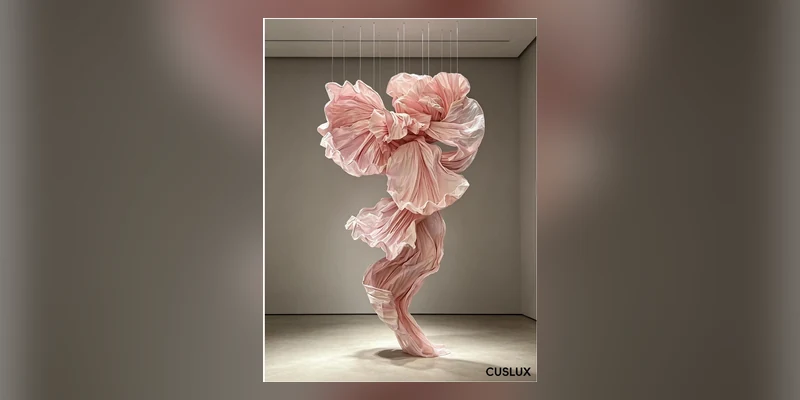
Production combines repeatable templates with skilled handwork. Glass may be blown, cast, kiln-formed or shaped to approved molds. Metal frames are cut, welded, polished and finished before electrical parts are integrated. Jigs keep critical dimensions and connection points consistent even when visible elements intentionally vary.
The production team compares early components with the approved sample before continuing the full batch. Color ranges, bubbles, texture and size variation are controlled within the agreed standard. This balance between craft and process gives sculptural lighting its individual character without allowing uncontrolled differences to affect assembly or quality.
Testing Custom Lighting Production before Shipment
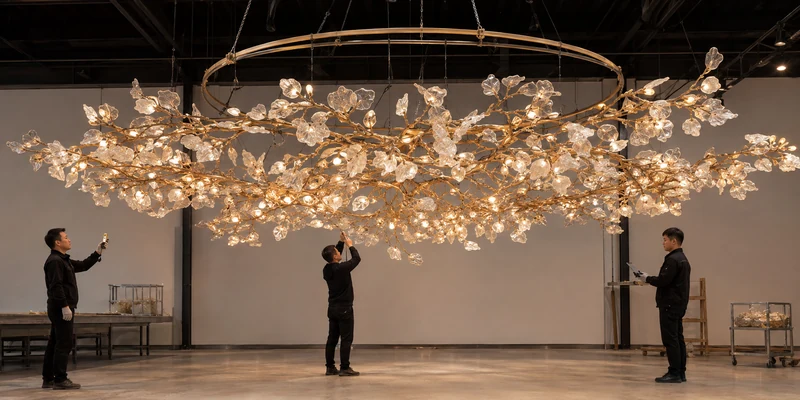
Complex fixtures should be tested as systems, not only as separate decorative parts. Factory checks cover dimensions, finish matching, assembly fit, wiring continuity, grounding, LED operation, color consistency, dimming and labeling. Where scale permits, a trial assembly reveals alignment, cable-length and connector issues before shipment.
For very large installations, representative modules or connection zones can be pre-assembled, while the complete arrangement is verified digitally and through numbered coordinates. Inspection photographs, videos and test records create a clear release file. Packaging is then organized according to the installation sequence so fragile parts remain protected until required.
Installing Custom Designed Luxury Chandeliers
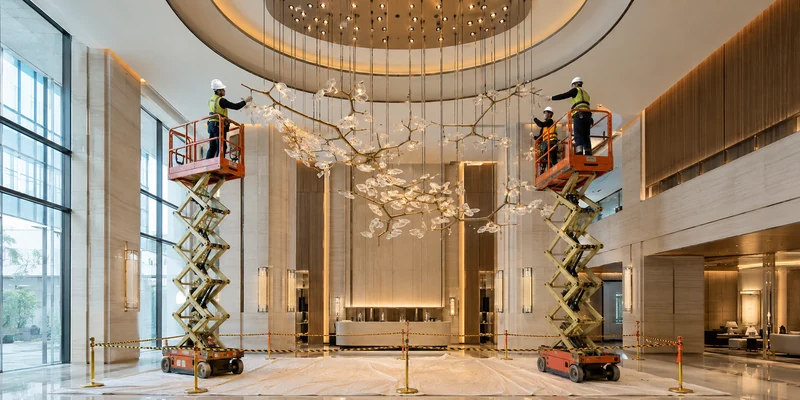
Installation planning begins during design. The team confirms structural support, ceiling interface, delivery access, lift or scaffold requirements, clean assembly space and the order in which frames, wiring and decorative elements will be installed. Long suspension cables may need temporary positioning templates to maintain the intended composition.
For custom designed luxury chandeliers, installation drawings should match the codes on every crate and component. After mechanical assembly, electricians test circuits and controls before the final glass is adjusted and cleaned. Clear responsibility between manufacturer, contractor and installer reduces site improvisation and protects both the fixture and finished interior.
Custom Sculptural Lighting Case: Large Floral Art Installation
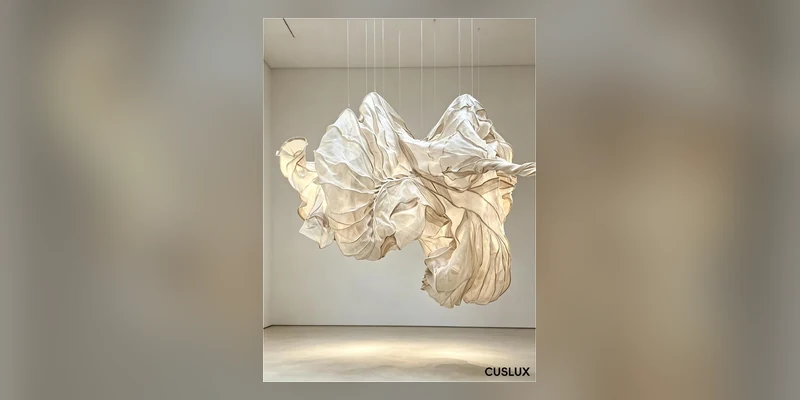
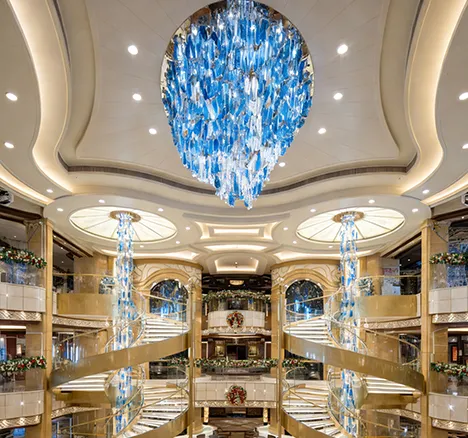
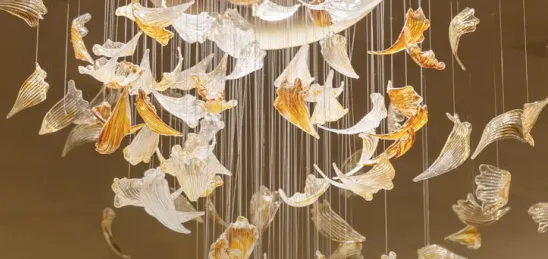
A large floral composition illustrates why this workflow matters. The rendering may show luminous petals flowing across a tall interior with no visible support. To manufacture it, the team must define petal families, color distribution, hanging coordinates, hidden frames, light-source positions and safe access.
The form is divided into numbered zones, while representative petals and finish samples establish the visual standard. The structural system is concealed above or within the composition, and lighting is distributed to avoid a few bright points dominating the work. Factory trials confirm connections before the modules are packed by installation sequence. The finished custom sculptural lighting can then retain the organic impression of the rendering while functioning as an engineered architectural installation.
How Closely Can Custom Chandelier Design Match the Rendering?

The goal is not to copy every pixel. A rendering may contain impossible overlaps, unbuildable thin sections or lighting effects created for presentation. A successful result preserves the characteristics that determine identity—silhouette, proportion, density, material character, color relationship and viewing experience—while resolving hidden technical details.
| Design element | Appropriate approval method |
|---|---|
| Overall shape and scale | 3D model and dimensioned shop drawings |
| Material, color and texture | Physical samples under approved lighting |
| Density and organic rhythm | Rendered views plus numbered distribution model |
| Light effect and dimming | Working module or illuminated sample |
| Connections and installation | Prototype, trial assembly and installation drawings |
Approval through several complementary references is more reliable than judging everything from one image. Changes introduced for safety or fabrication should be explained before production so the designer understands their visual effect.
How Cuslux Develops Custom Chandelier Design from a Rendering
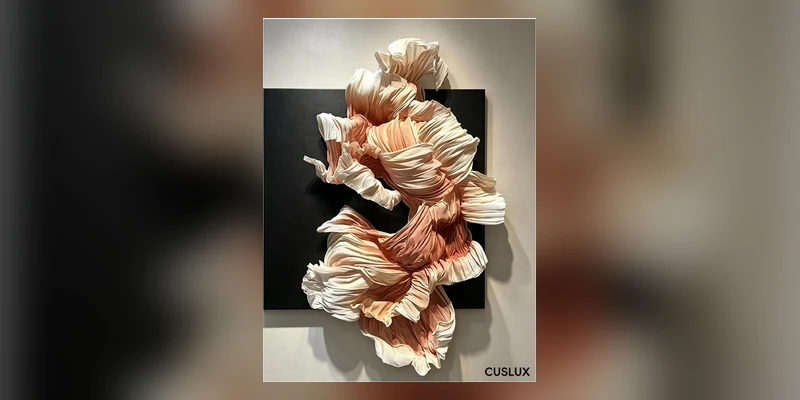
Cuslux reviews the rendering together with available plans, dimensions, ceiling information, material references, electrical requirements, quantity and destination. The team identifies open decisions, develops buildable geometry, proposes materials and prepares drawings or samples suited to the project risk.
For complex works, the process can include 3D coordination, handmade glass sampling, finish approval, modular engineering, factory testing, packing plans and installation documentation. If your concept is still at an early visual stage, see how a custom lighting manufacturer can work from a rendering. Before production release, use the custom hotel lighting pre-production checklist to align drawings, samples, electrical details, packaging and responsibilities.
FAQ About Custom Chandelier Design
Can a sculptural light be made from only one rendering?
A rendering can start the discussion, but production normally requires site dimensions, shop drawings, material references and technical decisions. Additional views or plans reduce assumptions.
Is a complete full-size prototype always required?
No. A representative module, full-size decorative element, finish board or working light sample may verify the highest-risk features more efficiently.
How are irregular components positioned accurately?
They are coordinated through a 3D model, numbered component schedule, shop drawings and installation coordinates. Controlled variation rules preserve an organic appearance.
Who confirms the ceiling can support the fixture?
The manufacturer provides fixture weights and proposed loads. The project structural engineer or responsible contractor verifies the building structure and site fixing conditions.
Can handmade glass exactly match every rendered element?
Handmade glass naturally varies. The project should approve representative samples and an acceptable range for color, texture, bubbles and dimensions rather than expect machine-like identity.
From Rendering to Finished Custom Chandelier Design
Complex organic lighting is created by translating visual intent into a coordinated production system. The rendering defines the experience; 3D design controls geometry; engineering makes the structure and wiring safe; samples establish material quality; modular fabrication enables delivery; and numbered installation information reconstructs the composition on site.
When these stages are connected, a custom chandelier design can remain expressive without depending on guesswork. To review a new concept, provide the rendering, available plans, target dimensions, ceiling information, finish references, electrical requirements, destination and installation schedule.