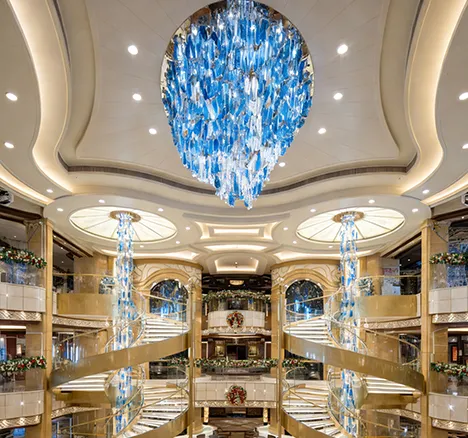
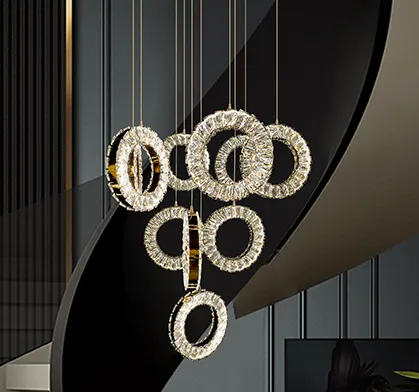


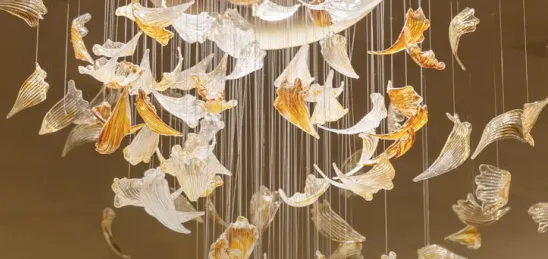
Glass vs Crystal Chandeliers for Hotel Lobbies and Ballrooms

Zoey
Lighting Designer
Choosing between glass and crystal is not simply a question of which material looks more luxurious. In hotel lobbies and ballrooms, a chandelier must support the interior concept, produce the intended light effect, fit the ceiling structure, withstand repeated cleaning, and remain serviceable after installation. The right specification therefore depends on the complete fixture—not on the material name alone.
Crystal is usually selected when a project needs sharp sparkle, formal symmetry and a ceremonial atmosphere. Decorative glass offers a wider range of shapes, textures and colors, making it especially useful for modern, artistic or brand-led interiors. Either can succeed in a luxury hotel, and either can underperform when optical quality, scale, suspension, maintenance or production control is not resolved before manufacturing.
This guide compares glass vs crystal chandeliers for hotel lobbies and ballrooms from a practical project perspective, so designers, owners and procurement teams can select the material that best supports the space and the hotel’s long-term operating needs.
Glass vs Crystal Chandeliers: The Essential Material Difference
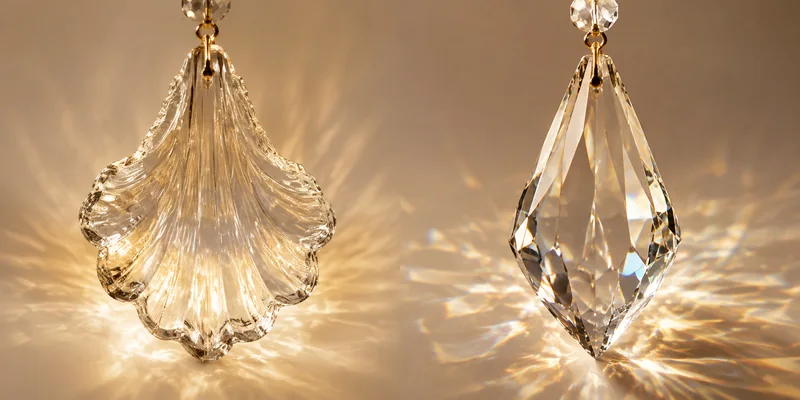
A glass chandelier can use clear, colored, frosted, textured, cast, pressed or hand-formed components. Its value often comes from shape, surface character and composition rather than maximum brilliance. Glass elements may be smooth and uniform or intentionally irregular, allowing a custom chandelier to resemble leaves, droplets, waves, clouds or other sculptural forms.
A crystal chandelier uses highly transparent decorative components designed to refract light. Cut facets divide and redirect light, creating stronger sparkle and more visible highlights than ordinary decorative glass. However, the word “crystal” is not a complete technical specification. Material grade, clarity, cut accuracy, polish, component size and the approved sample all affect the final result. Buyers should confirm these details rather than relying on the label alone.
The important distinction is therefore visual behavior. Crystal emphasizes refraction, rhythm and brilliance; glass emphasizes form, color, texture and artistic flexibility. The frame, light source, density and viewing distance can be as influential as the decorative material itself.
Hotel Lobby Chandelier Light Effects and Guest Experience
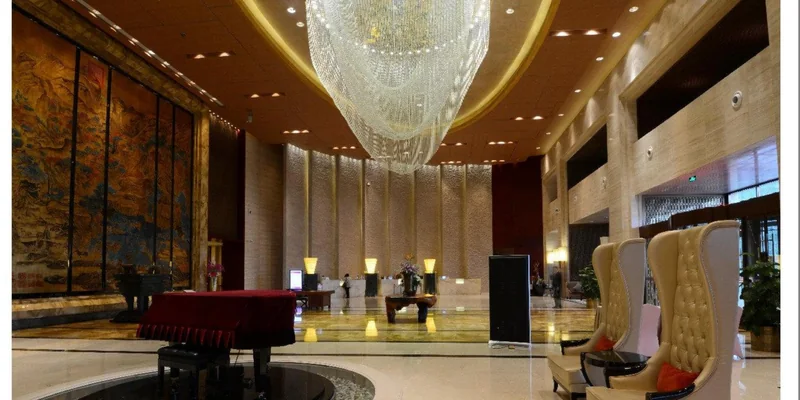
A hotel lobby chandelier is seen from several distances and often becomes the first recognizable object in the arrival sequence. It must read clearly from the entrance, remain attractive from reception and circulation routes, and contribute to the lobby after daylight changes. For this reason, material selection should begin with the intended guest experience.
Crystal works well when the lobby concept calls for brilliance, formality and a strong evening presence. Multiple cut components can create a layered shimmer that is visible across a large space. Yet glare must be controlled: exposed high-output sources or excessive reflections can make reception tasks uncomfortable and reduce visual refinement.
Glass is often more suitable for a modern hotel lobby chandelier because it can create a softer luminous volume or a sculptural silhouette. Clear, amber and smoked glass can be mixed in controlled ratios, while textured surfaces diffuse the source and add depth. For organic installations, three-dimensional data can define the outer contour, primary curves and density zones so that irregular components still form a deliberate composition.
Ballroom Chandelier Requirements for Events and Flexible Layouts
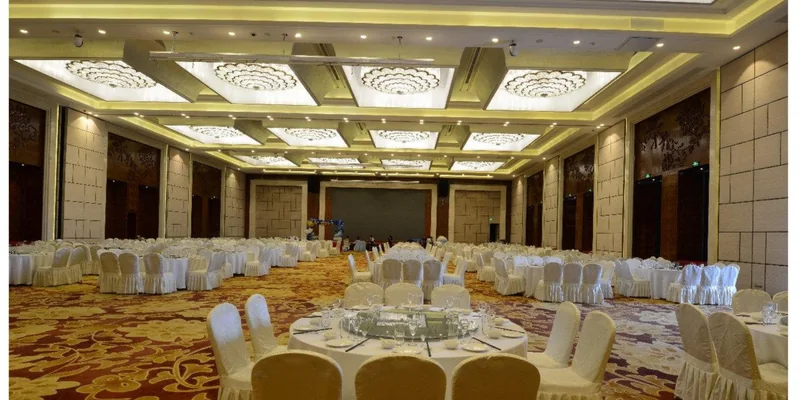
A ballroom chandelier operates under different conditions from a lobby feature. The room may host conferences, weddings, dinners and performances, each with its own scene setting, camera use and furniture layout. A successful ballroom chandelier must therefore coordinate with the general lighting, controls, ceiling services and event rigging rather than act as an isolated decorative object.
Crystal is a natural choice for formal ballrooms because its sparkle remains effective during evening events and supports a ceremonial atmosphere. Repeated fixtures can also establish symmetry across a large ceiling. Decorative glass can be the stronger option when the ballroom identity is contemporary, when a softer glow is required, or when the design needs a custom color or sculptural motif.
Before approval, review the chandelier under the actual dimming strategy. Confirm how it appears during full-output setup, banquet scenes, presentations and low-level wedding scenes. The decorative fixture should enhance the room without creating harsh reflections on screens, distracting hotspots in photography or conflicts with sprinklers, speakers and movable partitions.
Crystal Chandelier Advantages for Formal Hotel Interiors
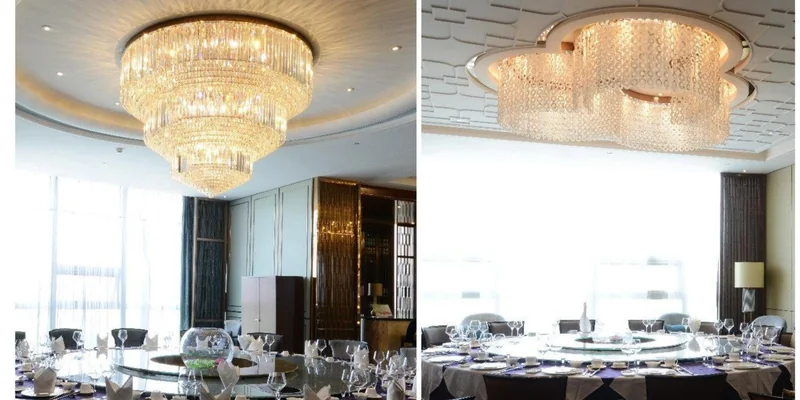
The principal advantage of a crystal chandelier is optical intensity. Well-cut, clear components create bright highlights and a sense of movement as guests change position. This makes crystal effective in classic, Art Deco and glamorous interiors where the chandelier is expected to communicate ceremony and prestige immediately.
Crystal also supports disciplined repetition. Drops, prisms, beads and rods can be arranged in tiers or geometric fields, producing a strong visual order that suits grand stair halls, ballrooms and formal reception areas. In a large installation, the specification should define acceptable clarity, cut, color and surface quality, because inconsistency is more visible when hundreds of similar elements are viewed together.
Crystal is not automatically the correct premium choice. A weak frame, unsuitable source, poor spacing or low-grade components can make the result look busy rather than refined. The design must use sparkle selectively and allow enough space for the individual elements to be read.
Glass Chandelier Advantages for Modern and Artistic Hotels
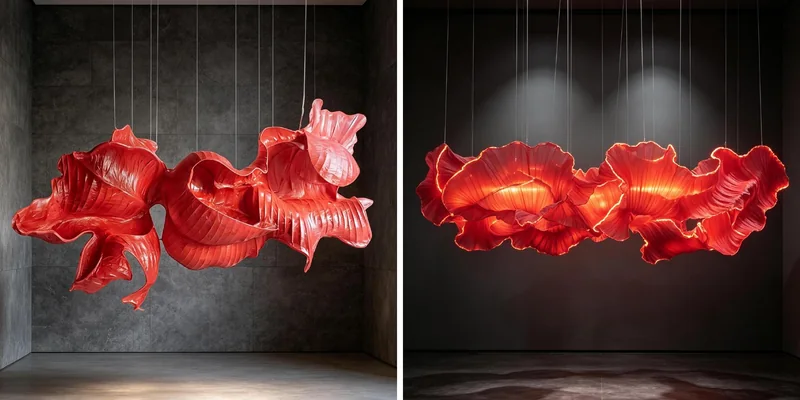
A glass chandelier offers greater freedom of form. Components can be elongated, curved, blown, cast, textured or layered, allowing the fixture to connect with a hotel’s architecture, landscape, cultural references or brand story. This makes decorative glass particularly valuable for lifestyle hotels, resorts and contemporary public spaces that need an identifiable art piece rather than a conventional tiered chandelier.
Color is another major advantage. Clear, amber, smoke, blue or custom tones can create depth without depending on intense sparkle. Surface treatments can shift the result from transparent and crisp to diffused and atmospheric. Because handmade pieces naturally vary, the approval standard should define an acceptable range for color, size, bubbles, texture and edge condition instead of demanding that every element be identical.
Glass does not always mean a lighter or simpler fixture. Thick cast pieces, dense clusters and large blown forms can add substantial weight, while complex arrangements may require many suspension points. The final structural load must be calculated from the approved design and sample, not inferred from the material category.
Glass vs Crystal Chandeliers Comparison for Hotel Projects
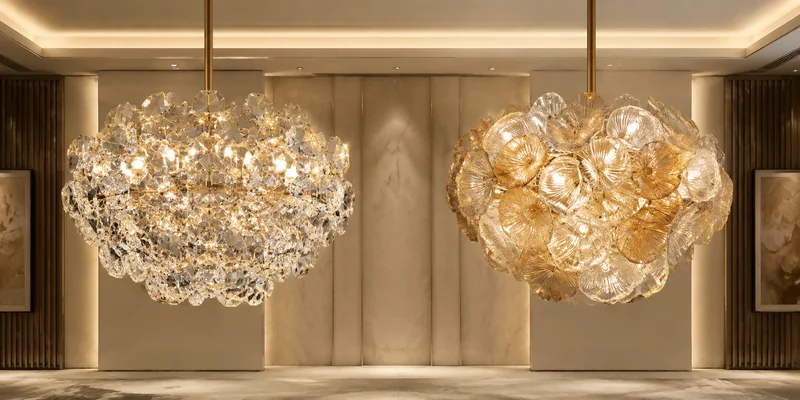
The following comparison is a project-selection guide. Actual performance depends on the component specification, fixture construction, light source and installation environment.
| Decision factor | Crystal chandelier | Glass chandelier |
|---|---|---|
| Primary visual effect | Sharp sparkle, refraction and formal brilliance | Form, color, texture and sculptural depth |
| Typical design fit | Classic, glamorous, Art Deco and ceremonial interiors | Modern, organic, artistic and brand-led interiors |
| Customization focus | Cut, clarity, scale, density and arrangement | Shape, color, texture, opacity and composition |
| Weight | Can be high in dense or large installations | Varies widely; thick or clustered glass can also be heavy |
| Maintenance | Many faceted pieces may require detailed cleaning | Large smooth pieces may clean faster, but textured clusters can be demanding |
| Replacement planning | Standardized components can be easier to match if documented | Handmade pieces require coded samples, tolerances and spares |
| Best question to ask | Is the material grade and optical sample approved? | Are form, color and acceptable variation clearly controlled? |
Custom Chandelier Weight, Structure and Installation
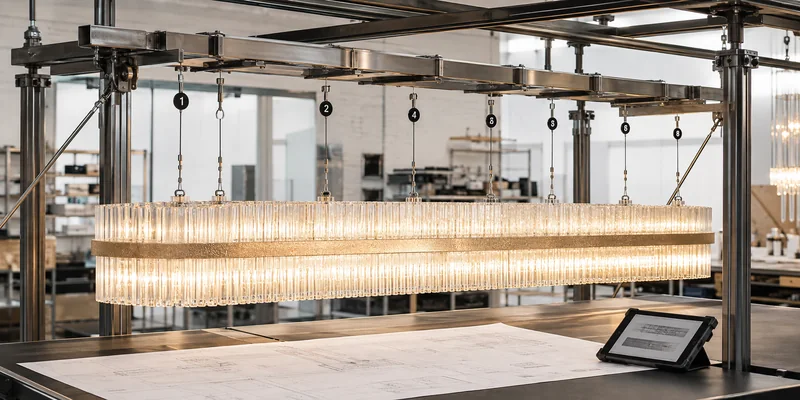
The weight of a custom chandelier depends on the complete assembly: decorative components, frame, canopy, cables, drivers and connection hardware. Crystal installations are often heavy because they use many dense elements, but a large glass composition can equal or exceed that load. Neither material should be approved from appearance alone.
The production drawing should state total weight, module weight, suspension-point count and the proposed load at each point. The hotel’s structural engineer or contractor must confirm that the building support is suitable. Long suspension drops, seismic conditions, vibration, air movement and public access may require secondary safety cables or additional restraint.
Installation strategy matters as much as structure. Large hotel chandeliers are commonly divided into modules so they can pass through doors and lifts and be assembled safely at height. Each suspension point and decorative component group should be numbered consistently across drawings, packaging and installation instructions. A factory pre-assembly or trial hang can reveal alignment and connection problems before the fixture reaches site.
Custom Hotel Lighting Maintenance and Replacement Planning
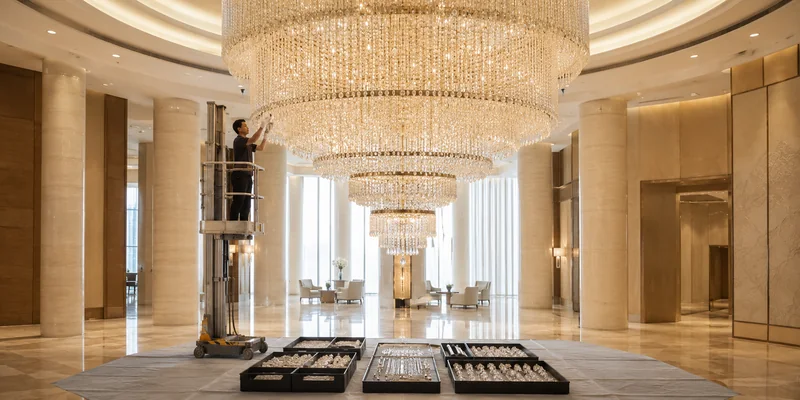
Maintenance is determined more by geometry, component count, access and surface texture than by the single choice of glass or crystal. Crystal prisms show fingerprints and dust easily and may require individual cleaning. Smooth glass pieces can be faster to wipe, but ribbed, frosted or densely clustered glass may trap dust and be equally labor-intensive.
Before approving custom hotel lighting, the project team should confirm:
- how cleaners will safely reach the fixture;
- whether decorative components can be removed without dismantling the frame;
- where drivers, LED modules and connectors can be accessed;
- which cleaning agents are compatible with the metal and decorative finishes;
- how replacement pieces will be identified; and
- which glass, crystal, LED and driver spares will be supplied.
For handmade glass, replacement planning should include an approved master sample and an acceptable variation range. For crystal, record the cut, size, hole position and supplier reference. Fragile elements should be individually protected and coded so that hotel staff can identify a replacement without comparing loose parts by eye.
Bespoke Chandelier Samples and Material Approval
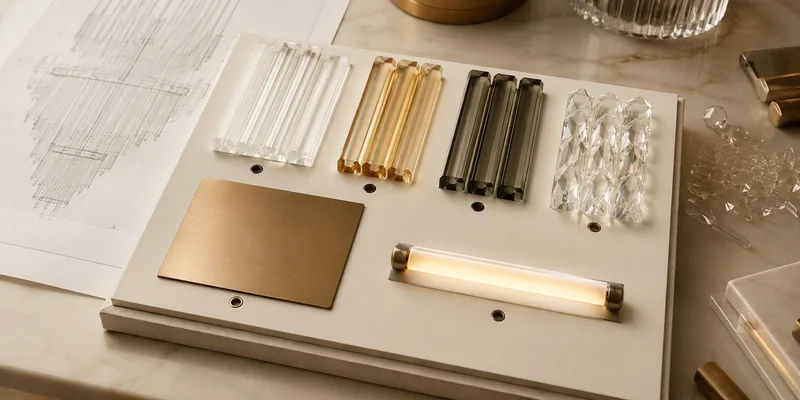
A bespoke chandelier should not enter production on the basis of a rendering alone. Renderings communicate shape and atmosphere, but screens cannot reliably reproduce transparency, refraction, surface texture or color under the project’s selected light source. Physical approval remains essential when the decorative material defines the visual result.
For crystal, the sample should demonstrate clarity, cut quality, edge finish and sparkle at the intended color temperature. For glass, it should show color, transparency, texture, thickness and acceptable handmade variation. When the chandelier is too large for a full prototype, a representative module can confirm density, spacing, suspension logic and the relationship between lit and unlit materials.
The approved sample should be coded, dated and retained as the production standard. Photographs are useful records, but they should not replace the physical sample when small differences in amber, smoke, clear glass or metal finish can change the appearance of the complete installation.
Custom Lighting Manufacturer Quality and Production Control
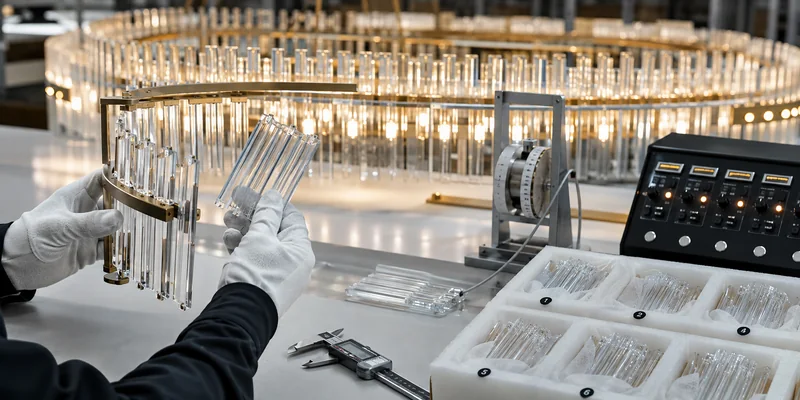
A custom lighting manufacturer must convert aesthetic approval into measurable production controls. For organic glass or crystal clusters, three-dimensional data can define the outer contour, primary curves, dense zones and transition areas. Suspension points and lengths can then be numbered so the installation reproduces the intended silhouette rather than relying on improvised adjustment on site.
Quality inspection should cover more than visible defects. It should verify overall dimensions, frame alignment, finish consistency, decorative-element quantity, cable lengths, electrical operation, grounding, dimming behavior, labels and packaging. The inspection standard must also distinguish acceptable material character from defects. Controlled bubbles or dimensional variation may be appropriate in hand-formed glass, while chips, sharp edges, cracks or deviations outside the agreed range are not.
Bulk production should be compared against approved drawings, material samples and, where practical, a master unit or representative module. Pre-assembly is particularly valuable for large hotel chandeliers because it confirms connections, balance and numbering before shipment.
Mixed Glass and Crystal Chandeliers for Hotel Spaces
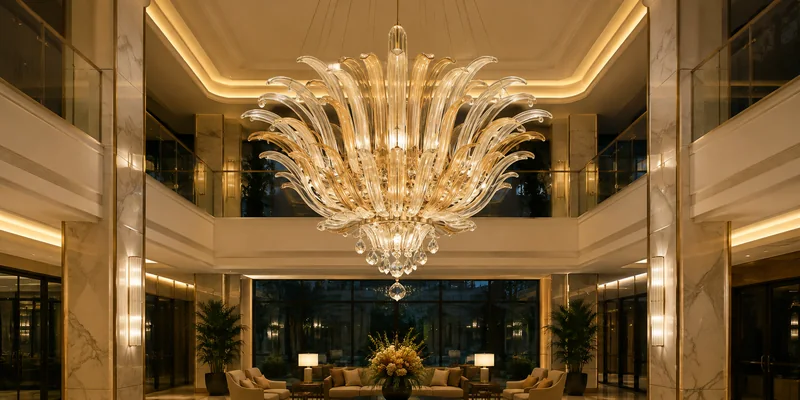
Glass and crystal do not have to be mutually exclusive. A mixed chandelier can use crystal to create concentrated sparkle and glass to establish volume, color or an organic silhouette. This approach is useful when a hotel wants ceremonial impact without making the entire installation highly faceted or visually formal.
The two materials should have distinct roles. If they are mixed without hierarchy, the chandelier may appear inconsistent. A clearer strategy is to use crystal at focal points or lower viewing zones and glass to form the surrounding composition. Samples should be assessed together under the intended light source, because differences in transparency and reflection become more pronounced after illumination.
A mixed specification also requires careful replacement records. Every component type should have its own code, approved sample and packing reference so that installation and future maintenance do not depend on subjective identification.
Choosing Glass or Crystal Chandeliers for Each Hotel Area
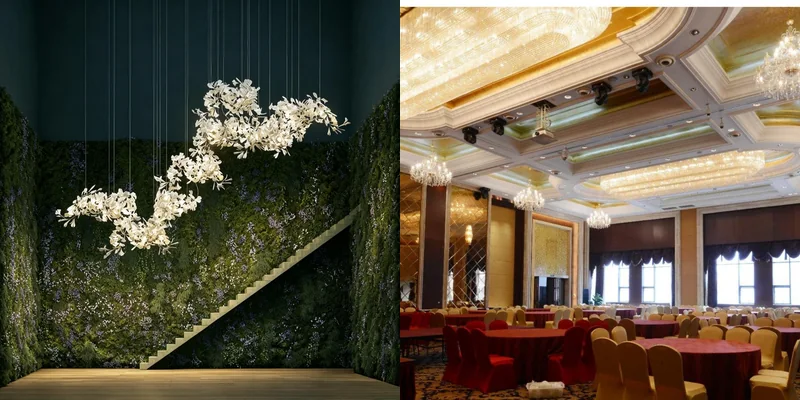
Choose a crystal chandelier when the design brief prioritizes formal brilliance, repeated geometry and an unmistakably ceremonial atmosphere. It is especially effective in traditional luxury lobbies, wedding ballrooms, grand stair halls and reception rooms where sparkle remains part of the identity across many event settings.
Choose a glass chandelier when the project prioritizes a distinctive silhouette, custom color, material texture or an artistic connection to the architecture. Glass is often the better foundation for modern lobbies, destination resorts, contemporary restaurants and double-height spaces that need a sculptural installation visible in daylight as well as at night.
For either choice, evaluate the concept against the same project criteria: viewing distance, ceiling height, dimming scenes, structural load, cleaning access, replacement strategy, production tolerances and the quality of the approved sample. Material prestige should not override operating reality.
FAQ About Glass vs Crystal Chandeliers
Are crystal chandeliers always more expensive than glass chandeliers?
No. High-grade cut crystal can increase material and labor costs, but large hand-formed glass components, complex molds, special colors and dense suspension systems can also be costly. Compare the complete engineered fixture, not the decorative material alone.
Which material is better for a hotel lobby chandelier?
Crystal is often better for formal sparkle and ceremonial impact; glass is often better for modern, organic or brand-specific forms. The stronger choice is the one that supports the lobby concept while meeting structural, maintenance and lighting requirements.
Is a glass chandelier easier to maintain than a crystal chandelier?
Not necessarily. Large smooth glass pieces may be quicker to clean than many small prisms, but textured surfaces and dense clusters can be demanding. Access, component count and replacement planning matter more than the label.
Can glass and crystal be used in the same custom chandelier?
Yes. A controlled mix can combine crystal sparkle with the color and sculptural freedom of glass. The design should assign each material a clear visual role and approve them together under the final color temperature.
What should be approved before chandelier production?
Approve shop drawings, dimensions, structure, total weight, suspension details, material and finish samples, light source, dimming, sample or mock-up, acceptable variation, packaging, spare parts and quality-control criteria before release.
Final Choice for Glass vs Crystal Chandeliers
There is no universal winner in the glass vs crystal chandeliers decision. Crystal is strongest when a hotel needs precision, sparkle and formal presence. Glass is strongest when the project needs shape, color, texture and artistic individuality. The final result depends on how the material is engineered, illuminated, installed and maintained.
Before selecting a material, define the guest experience and verify it against site conditions. Review the approved sample under the intended light source, calculate the complete fixture load, plan cleaning and replacement access, and make sure the production file converts the design into controlled dimensions, component codes and inspection criteria.
For more planning guidance, review our custom hotel lobby chandelier ideas, explore large hotel lighting projects, and use the custom hotel lighting pre-production checklist. If the design currently exists only as a visual concept, see how complex sculptural lighting is developed from a rendering.
To request a material and engineering review, send the hotel area, ceiling height, target dimensions, reference images, preferred glass or crystal effect, quantity, destination, installation date and any local certification requirements. Cuslux can use this information to organize the drawings, samples and production controls required for a custom chandelier project.