

Sculptural Lighting Ideas for Hotels and Commercial Interiors

Zoey
Lighting Designer
Quick Answer
Use sculptural lighting when a hotel or commercial space needs a visual focal point, not just general brightness.
High-ceiling lobbies and atriums need suspended forms to fill vertical space and guide the eye upward.
Lounges and reception areas suit softer organic chandelier shapes that create a relaxed atmosphere.
Restaurants and themed spaces can use art-inspired fixtures to support a clear interior story.
Retail stores, galleries, and showrooms often work better with glass or metal forms that feel clean, structured, and easy to integrate.
Before choosing a fixture, confirm ceiling height, viewing angle, material weight, lighting effect, dimming system, installation structure, and maintenance access.
Summary
Sculptural lighting combines light, shape, material, and spatial impact. In hotels, restaurants, lounges, galleries, and commercial interiors, it can create a memorable focal point while supporting the atmosphere of the space.
This guide focuses on practical selection. It explains where sculptural light fixtures work best, which forms suit different commercial spaces, what materials to consider, and what buyers should check before choosing a sculptural pendant light, organic chandelier, art light sculpture, or metal lighting piece.
What Is Sculptural Lighting?
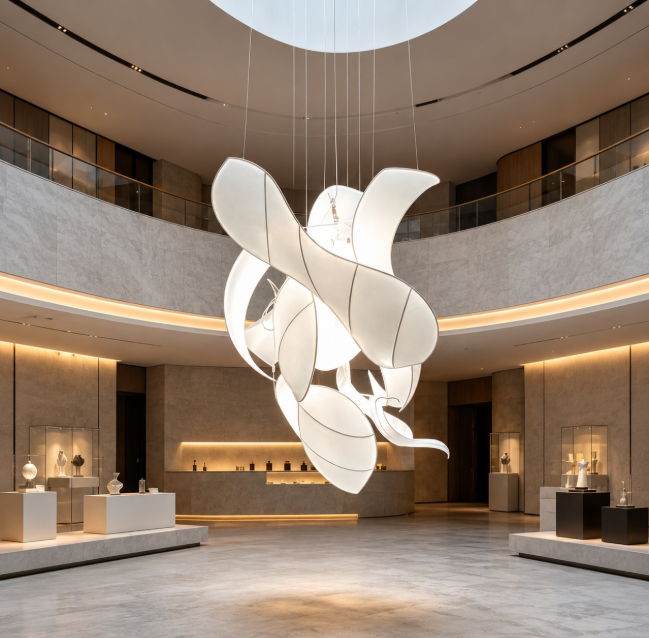
How Is a Sculptural Light Fixture Different from Ordinary Lighting?
A sculptural light fixture is designed to be part of the interior composition, not only a source of illumination. It may use flowing curves, layered glass, metal frames, fabric-like textures, organic forms, or abstract structures to create a strong visual feature.
Ordinary lighting usually solves brightness first. Sculptural lighting adds form, rhythm, texture, and spatial identity. This makes it useful in hotel lobbies, restaurants, reception areas, lounges, galleries, and other commercial interiors where the lighting needs to support the design story.
The practical difference is important. A sculptural fixture still needs proper brightness, color temperature, glare control, installation height, and maintenance access. If it only looks dramatic but creates glare, blocks movement, or becomes difficult to clean, it may not be suitable for a real commercial project.
Why Sculptural Lighting Works in Commercial Interiors
How Does Statement Lighting Improve the First Impression?
Statement lighting improves the first impression by giving visitors one clear visual point to remember. In a hotel lobby, restaurant entrance, showroom, or club space, people often notice the lighting feature before smaller design details.
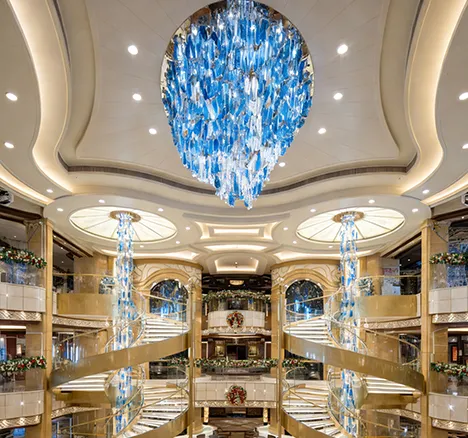
High-ceiling hotel lobbies often require vertically oriented sculptural pendants because the fixture can bridge the visual gap between floor and ceiling. This helps direct guest attention upward and reinforces a stronger sense of arrival.
For restaurants and retail spaces, the goal may be different. A sculptural lighting design can help define a dining mood, guide visitors toward a product display, or make the space more photogenic for social sharing.
When Is Sculptural Lighting More Than Decoration?
Sculptural lighting becomes more than decoration when it supports both visual identity and daily operation. It should work with ceiling lights, wall lights, downlights, track lights, and natural light instead of replacing the whole lighting plan.
For commercial interiors, the fixture should answer several practical questions. Does it provide the right visual focus? Can guests move safely below it? Is the light too bright at eye level? Can the fixture be cleaned after installation? Will the material and finish still look good after long-term use?
This is where sculptural lighting becomes functional art. It should look artistic, but it also needs to work for guests, staff, maintenance teams, and the overall project budget.
Popular Sculptural Lighting Ideas for Hotels and Commercial Spaces
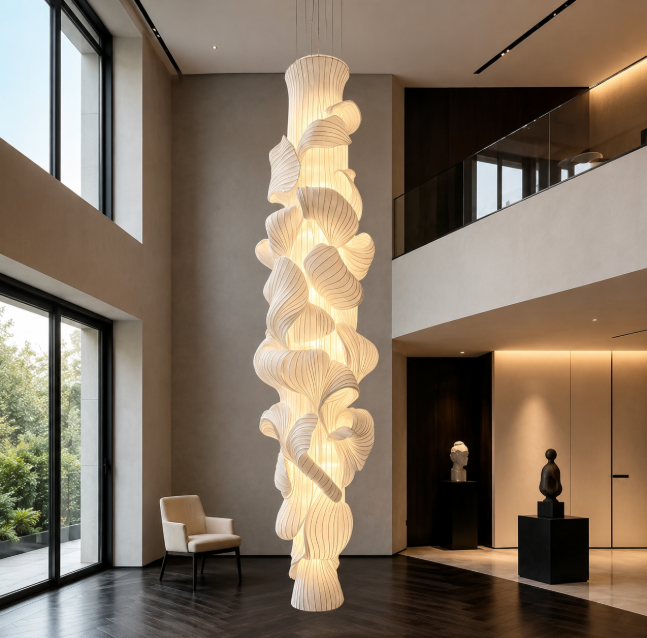
Different spaces need different forms. A large pendant may work well in a high lobby, but it may feel too heavy in a small reception area. Before choosing a design, buyers should look at ceiling height, main viewing angle, furniture layout, and whether the fixture needs to become the main visual focus.
Sculptural Pendant Light Ideas for Hotel Lobbies
Sculptural pendant lights are most suitable for hotel lobbies, atriums, and staircases with enough vertical height. They help fill empty ceiling space and create a stronger arrival experience.
For these areas, the fixture should be visible from the entrance, balanced with the reception area, and high enough to avoid blocking guest movement. Flowing shapes, vertical forms, floral structures, fish-inspired forms, and large organic designs can work well when the scale is controlled.
The key is proportion. A fixture that is too small may disappear in a large atrium, while one that is too dense may make the space feel crowded. The drop length, fixture width, lighting density, and main viewing distance should be checked together.
Organic Chandelier Ideas for Lounges and Reception Areas
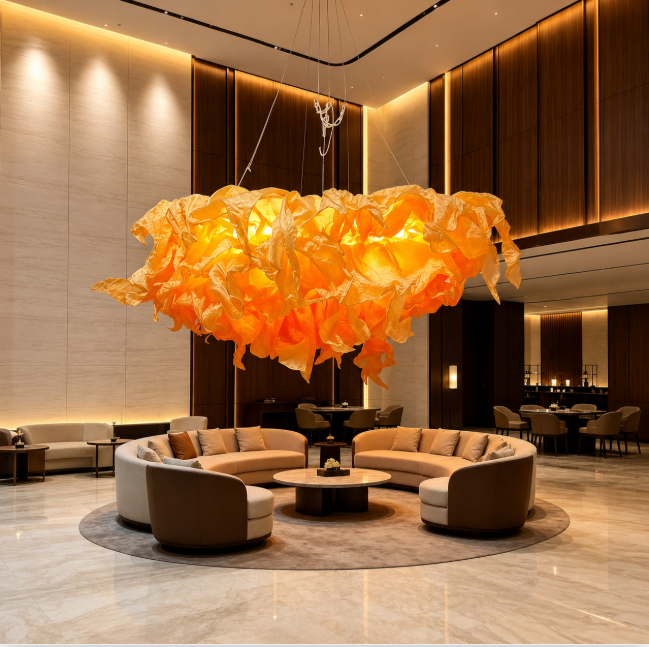
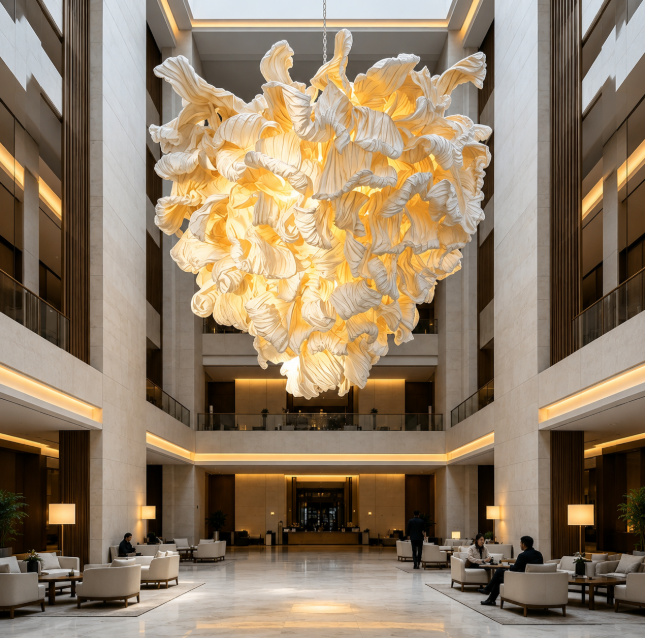
Organic chandeliers are better for spaces that need a softer and more relaxed mood. Lounges, reception areas, resort interiors, and villa-style hospitality spaces often use curved, petal-like, cloud-like, or wave-shaped forms to reduce the hardness of large commercial interiors.
An organic modern chandelier should not feel overly complicated. Soft colors, translucent materials, and warm lighting effects usually work better than very bright colors or crowded shapes. This type of organic chandelier lighting is useful when the space needs elegance without too much visual pressure.
For relaxed luxury interiors, diffused golden glow, soft shadow play, and seamless ceiling integration can make the fixture feel more natural. The lighting should enhance the room, not dominate every view.
Art Light Sculpture Ideas for Restaurants and Themed Spaces
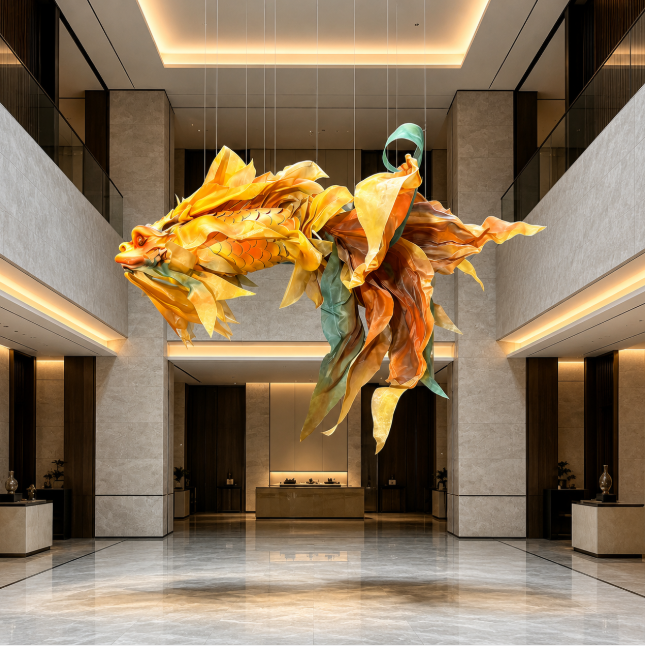
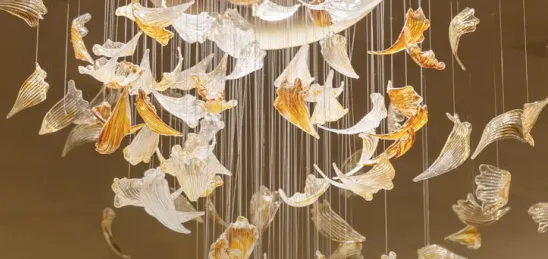
An art light sculpture is useful when the space needs a stronger story. Restaurants, themed hotels, galleries, cultural spaces, and entertainment venues can use animal forms, floral shapes, or abstract structures to make the interior more memorable.
The key is control. A themed fixture should support the space, not dominate every view. If the color, size, or shape is too strong, it may look decorative rather than refined.
For restaurants, the lighting piece should also avoid glare on dining tables. A fixture may look beautiful when viewed from the entrance, but if it creates harsh reflections on tableware or uncomfortable light on guests’ faces, the design needs adjustment.
Glass and Metal Forms for Modern Commercial Interiors
Glass and metal are suitable when the space needs a cleaner, more modern look. Glass creates reflection, transparency, and softness, while metal adds structure, lines, and architectural strength.
For glass sculptural lighting, common choices include hand-blown borosilicate glass, textured frosted glass, clear glass, smoked glass, and colored glass. Hand-blown glass can create irregular organic forms, while frosted or textured glass helps diffuse LED light and reduce harsh glare.
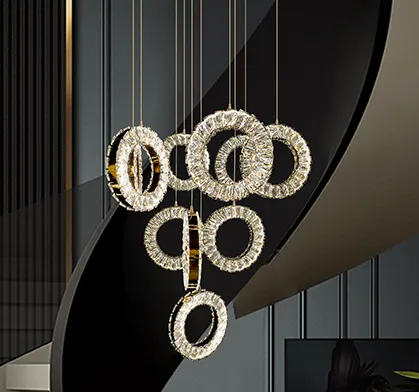
For metal light sculpture, buyers may consider anodized aluminum, brushed brass, matte black iron, stainless steel, or powder-coated finishes. Anodized aluminum is often useful when weight control matters, brushed brass can add a warm luxury tone, and matte black metal works well in modern or industrial-style interiors.
Lighting Direction | Best Use | What to Check |
Sculptural pendant light | Hotel lobby, atrium, staircase | Ceiling height, drop length, viewing angle |
Organic chandelier | Lounge, reception, resort space | Shape softness, color, material texture |
Art light sculpture | Restaurant, themed hotel, gallery | Story relevance, proportion, glare control |
Metal light sculpture | Retail, showroom, modern lobby | Weight, structure, finish, installation |
Glass sculptural fixture | Hotel, dining, lounge | Reflection, cleaning, light diffusion |
Where to Use Sculptural Light Fixtures in Commercial Projects
Sculptural light fixtures work best in places where visitors naturally stop, look, enter, wait, dine, or take photos. They should not be placed randomly just because the design looks attractive.
Space Type | Suitable Lighting Idea | Design Purpose |
Hotel lobby | Large sculptural pendant light | Create a clear arrival focus |
Reception area | Soft organic chandelier | Add warmth and visual direction |
Restaurant | Art light sculpture | Strengthen dining atmosphere |
Lounge / club | Organic modern chandelier | Build a relaxed luxury mood |
Retail store | Metal light sculpture | Highlight brand personality |
Gallery / showroom | Minimal sculpture light | Support display and storytelling |
Atrium / staircase | Vertical sculptural lighting | Connect height and movement |
How to Choose the Right Sculptural Light Fixture for Each Space?
The right fixture should match the space size, ceiling height, viewing distance, interior style, and maintenance condition. A large organic chandelier may suit a tall atrium, while a smaller sculptural pendant light may work better in a lounge, private dining room, or reception area.
Buyers should also think about how people will see the fixture. A light viewed from below needs a different structure from one viewed from an upper floor or staircase. A fixture near tables needs softer glare control than one placed in an entrance hall.
Buyer’s Checklist for Commercial Sculptural Lighting
A sculptural fixture should be reviewed before production, especially for hotel and commercial projects. Misordering can affect cost, installation safety, maintenance difficulty, and final lighting quality.
Step | When to Check | What to Confirm | Why It Matters |
Building load and ceiling structure | Early design stage | Embedded parts, hanging points, fixture weight, suspension method | Large glass or metal fixtures may require reinforced ceiling support |
Lighting control system | Electrical design stage | DALI, 0-10V, TRIAC, DMX, or smart control compatibility | Avoids flicker, dimming failure, or driver mismatch |
Safety and compliance | Before order confirmation | UL, CE, RoHS, local electrical code, fire safety needs | Helps the fixture meet project and market requirements |
IP rating and environment | Before material selection | Dry indoor area, humid area, semi-outdoor area, dust exposure | Ensures the fixture suits the installation environment |
Cleaning and maintenance access | Before installation planning | Scissor lift access, motorized hoist option, replaceable modules | Reduces future service cost in high-ceiling spaces |
Spare parts and packaging | Before shipment | Drivers, glass pieces, connectors, labeled sections, protection method | Reduces replacement delay and on-site installation confusion |
For lobbies above 6 meters, maintenance should be discussed early. Some projects may need a motorized hoist, while others require enough access for a scissor lift or maintenance platform. This decision affects ceiling planning, installation cost, and long-term operation.
What Lighting Is in Style Right Now for Hotels and Commercial Spaces?
Are Sculptural Pendant Lights Still in Style?
Sculptural pendant lights are still in style because hotels and commercial interiors need lighting that creates atmosphere and identity. Current designs are less about being overly ornate and more about clean form, soft diffusion, material texture, and spatial harmony.
Organic shapes, layered materials, warm light, and artistic silhouettes remain popular because they make interiors feel memorable without relying only on luxury finishes.
What Light Fixtures Are Outdated?
Outdated light fixtures are usually those that do not fit the space, rather than one fixed style. A fixture can feel outdated when it is poorly proportioned, too bright, difficult to maintain, made with weak materials, or disconnected from the interior design.
Even a classic chandelier can look current if the scale, material, and lighting effect are right. A trendy fixture can also look wrong if it feels forced into the space.
How to Plan Sculptural Lighting Without Overdecorating the Space
How Can Designers Balance Art and Function?
Designers can balance art and function by using one main sculptural lighting feature in each key area. The fixture should work with ceiling lights, wall lights, accent lights, and natural light, instead of trying to do everything alone.
If too many strong fixtures compete in one space, the room can feel crowded. For hotels and commercial interiors, the lighting should support the guest experience, not make the space difficult to read.
What Should Buyers Confirm Before Choosing Sculpture Lights?
Buyers should confirm project conditions before choosing sculpture lights. This helps avoid problems during production, installation, and long-term maintenance.
Important details include:
Space size
Ceiling height
Main viewing angle
Hanging position
Material and color direction
Light effect and brightness
Dimming system
IP rating if needed
Installation structure
Cleaning and maintenance access
These details help decide whether a sculptural pendant, organic chandelier, metal light sculpture, or glass lighting piece is the right choice.
FAQ About Sculptural Lighting
1.What is sculptural lighting?
Sculptural lighting is lighting designed with artistic form and visual impact. It provides light, but it also works as a feature element in the interior.
It is often used in hotels, restaurants, lounges, galleries, staircases, and commercial spaces that need a stronger visual identity.
2. What are the main types of sculptural lighting?
Common types include sculptural pendant lights, organic chandeliers, art light sculptures, metal light sculptures, glass sculptural fixtures, and abstract statement lighting.
The best type depends on the ceiling height, room size, interior style, material preference, and the level of visual impact needed.
3. Where can sculptural pendant lights be used?
Sculptural pendant lights can be used in hotel lobbies, atriums, staircases, restaurants, reception areas, lounges, galleries, and showrooms.
They are especially useful in spaces with enough height and a clear viewing angle.
4. Is sculptural lighting practical or only decorative?
Sculptural lighting can be practical when it is planned with brightness, glare control, installation height, dimming control, and surrounding lighting layers.
It should be both functional and artistic. If it only looks dramatic but does not support real use, it may not be suitable for commercial interiors.
5. What should buyers confirm before ordering sculptural lighting?
Buyers should confirm ceiling height, fixture size, material weight, control system, IP rating, installation method, maintenance access, and required certifications such as UL, CE, or RoHS.
For large commercial projects, these details should be checked before production instead of after the fixture arrives on site.
6. How do I choose an organic chandelier or sculptural light fixture?
Choose based on ceiling height, room size, interior style, material, color, viewing angle, lighting effect, and maintenance access.
For example, a large organic chandelier can work well in a tall lobby or atrium, while a softer sculptural light fixture may be better for a lounge, reception area, or private dining space.
Conclusion
Sculptural lighting is useful when a hotel or commercial interior needs a clear focal point and a stronger sense of atmosphere. The right fixture should fit the space scale, material direction, lighting purpose, installation method, control system, and long-term maintenance plan.
For projects that need artistic lighting fixtures, organic chandeliers, sculptural pendant lights, or feature lighting for commercial interiors, Cuslux can support early design discussion, material selection, size planning, production coordination, and project-based lighti