


A Practical Guide to Custom Hotel Lighting for Luxury and Commercial Projects

Zoey
Lighting Designer
Custom hotel lighting helps hotels and commercial spaces create a stronger visual identity while meeting daily operational needs. In luxury hotels, resorts, restaurants, clubs, and commercial buildings, lighting is not only about brightness but also about atmosphere, safety, navigation, comfort, and brand expression.
A well-planned custom light fixture can make a lobby more memorable, a corridor easier to navigate, a restaurant more inviting, and an outdoor entrance more professional. For project owners, designers, contractors, and procurement teams, early planning of custom lighting solutions can reduce design changes, production risks, and installation problems.
Why Custom Hotel Lighting Matters for Luxury and Commercial Projects?
Custom hotel lighting matters because it connects design appearance, guest experience, and long-term commercial operation. Standard fixtures may work for simple spaces, but hotels and commercial buildings often require special sizes, finishes, structures, materials, and lighting effects.
How Custom Hotel Lighting for Luxury Projects Differs from Standard Lighting?
Custom hotel lighting for luxury projects is more demanding because it must match high-end interiors, large spaces, and strict project requirements. A residential lamp mainly serves personal taste, while hotel lighting must consider durability, safety, ceiling structure, maintenance, and visual consistency.
Comparison Area | Standard / Residential Lighting | Hotel & Commercial Lighting |
Main purpose | Basic use and decoration | Guest experience and project identity |
Space scale | Small or medium rooms | Lobbies, corridors, restaurants, public areas |
Product type | Ready-made fixtures | custom light fixture production |
Design focus | Personal preference | Brand image and interior coordination |
Maintenance | Simple replacement | Long-term servicing and spare parts planning |
Why Custom Lighting Solutions for Hotels Support Brand Identity?
Custom lighting solutions for hotels support brand identity by turning a design concept into a visible guest experience. A luxury hotel may use a large artistic chandelier to express elegance, while a resort may choose warm pendant lighting and natural textures to create a relaxed atmosphere.
Lighting can also connect different areas of the same project. For example, lobby chandeliers, corridor wall sconces, restaurant pendants, and lounge fixtures can share similar metal finishes, glass textures, or warm color temperatures to create a consistent hotel atmosphere.
How to Plan Commercial Building Lighting Zones by Guest Journey?
Commercial building lighting should be planned according to how people enter, move, stay, and interact with each area. Different zones require different brightness levels, fixture types, decorative effects, and maintenance strategies.
1.Lobby and Reception Public Space Lighting for First Impressions
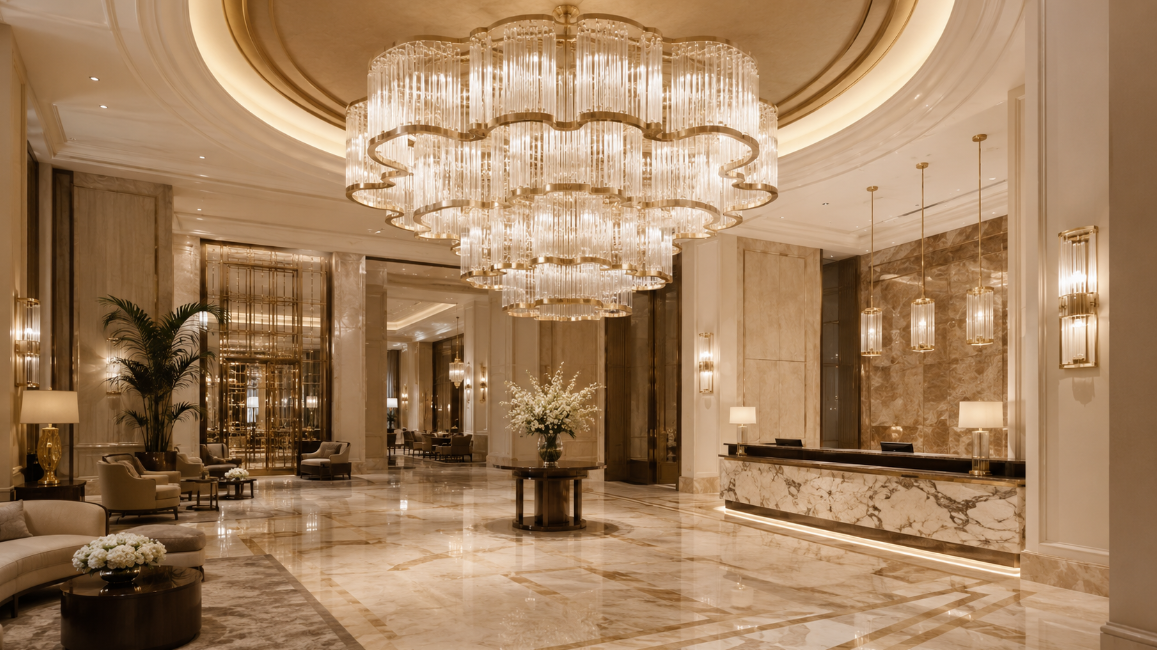
Public space lighting in a hotel lobby should create a strong first impression while keeping the entrance, reception desk, and waiting area easy to use. The lobby is usually the first visual contact between the guest and the hotel brand, so lighting must balance decorative impact with practical visibility.
Large chandeliers, artistic pendant installations, and ceiling feature lights are common choices for luxury hotel lobbies. The fixture size, hanging height, material weight, and lighting direction should be coordinated with the ceiling structure, interior style, and viewing angle from the entrance.
2.Hotel Corridor Lighting Design for Safe Guest Movement
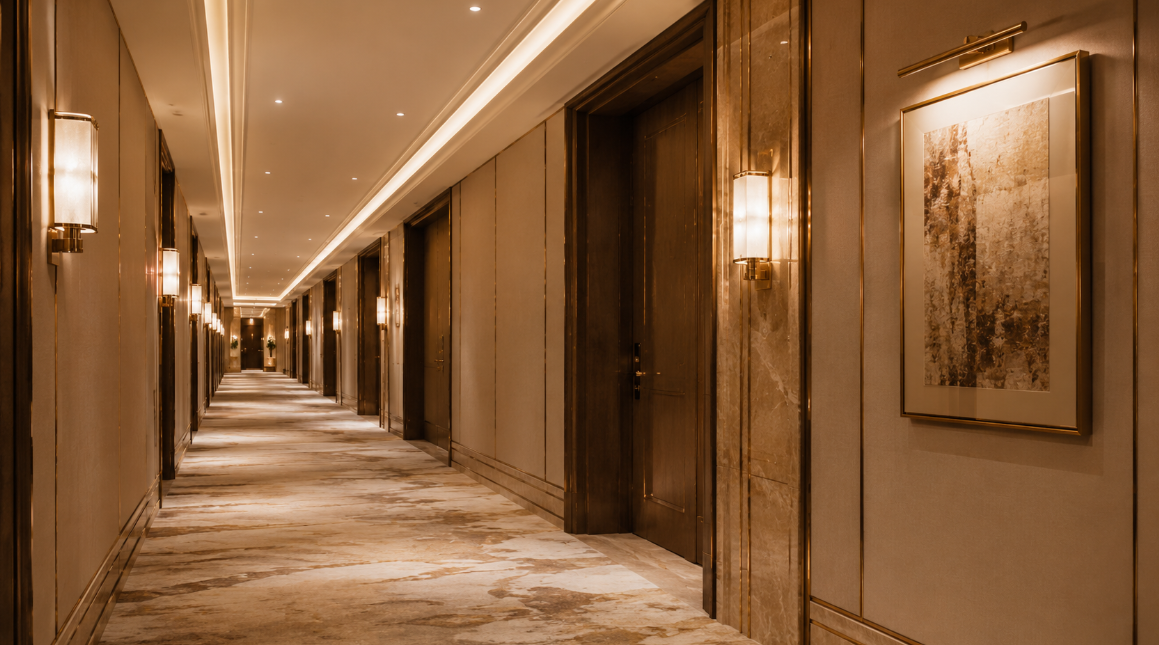
Hotel corridor lighting design should help guests move safely and comfortably without glare, dark corners, or visual fatigue. Corridors may not be the most dramatic area of a hotel, but they strongly influence the guest’s sense of quality and security.
Wall sconces, recessed downlights, linear lights, and small ceiling fixtures can be combined to create a soft lighting rhythm. For hotel corridor lighting, warm color temperature and controlled brightness are usually more suitable than strong direct light.
3.Outdoor Lighting Commercial Building Areas for Entrances and Facades
Outdoor lighting commercial building areas should focus on visibility, durability, weather resistance, and architectural appearance. Hotel entrances, drop-off areas, terraces, façades, signage zones, and pathways need lighting that works reliably in outdoor conditions.
For hotels and commercial buildings, exterior lighting also shapes the night-time impression of the project. Entrance canopy lights, façade lighting, bollard lights, and wall-mounted outdoor fixtures can make the building safer, easier to recognize, and more attractive after dark.
What Types of Custom Light Fixture Designs Are Used in Hotel Projects?
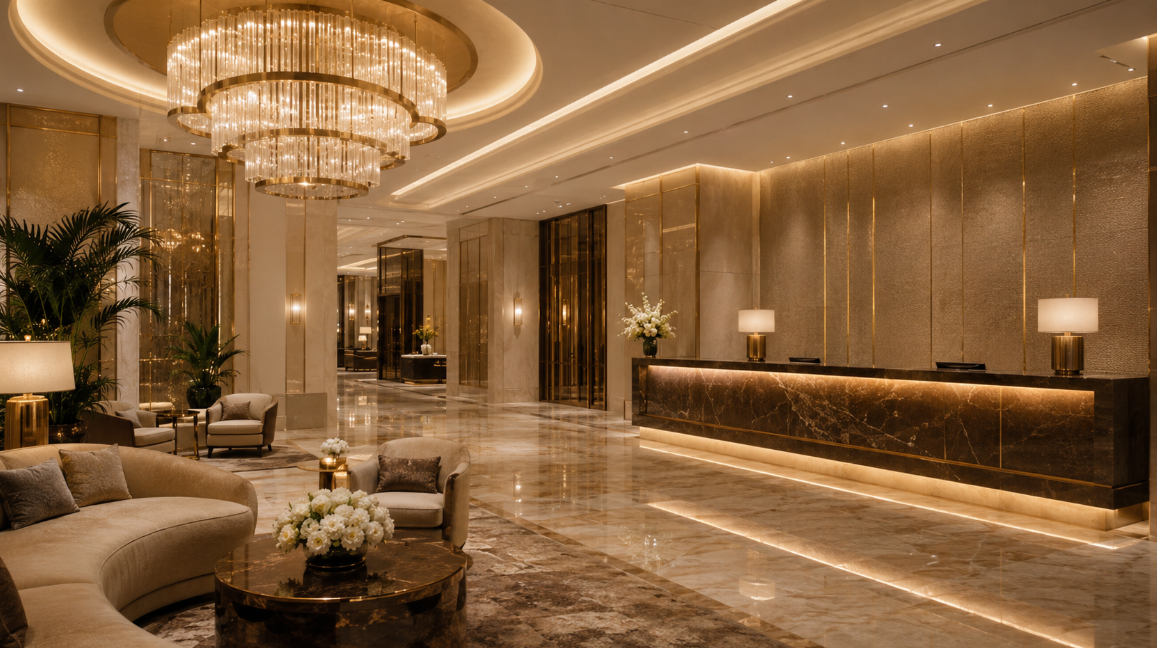
A custom light fixture can be developed in different forms to match the function and design identity of each hotel area. Common types include chandeliers, pendant lights, wall sconces, ceiling lights, linear lighting, and outdoor decorative fixtures.
1.Signature Chandeliers as a Custom Light Fixture for Hotel Lobbies
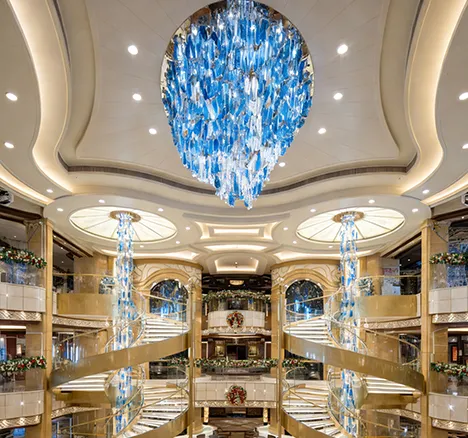
A signature chandelier is often the most important custom light fixture in a hotel lobby, ballroom, banquet hall, or grand staircase. It can become the visual center of the project and help guests remember the space.
Chandeliers can be made with crystal, glass, metal, acrylic, fabric, or mixed materials. Before production, the supplier should confirm fixture weight, suspension structure, electrical system, installation method, packaging plan, and maintenance access.
2.Custom Light Fixtures for Commercial Projects: Pendants and Ceiling Lights
Custom light fixtures for commercial projects are useful when standard products cannot match the ceiling height, finish color, room proportion, or interior design concept. Pendant lights and ceiling fixtures are often used in reception areas, restaurants, corridors, meeting spaces, lounges, and retail-style hospitality interiors.
A hotel may need a pendant series that visually connects with the main lobby chandelier but fits smaller side areas. This approach keeps the design language consistent while giving each space the right lighting scale.
3.Wall Sconces and Linear Lights for Hotel Corridor Lighting
Wall sconces and linear lights are useful for hotel corridor lighting because they create rhythm and guide movement. Long corridors can feel empty or dull if lighting is only placed on the ceiling.
Wall-mounted fixtures can also enhance the interior style. When paired with soft ceiling lights or hidden linear lighting, they help create a more refined and comfortable passage experience.
How Custom Lighting Solutions Balance Ambience, Function, and Brand Style?
Custom lighting solutions should balance atmosphere, practical function, and brand style by matching visual design with real project use. A lighting concept may look impressive in renderings, but it must also perform well after installation.
1.Ambience Planning for Luxury Hotel Interiors
Ambience planning should use layered lighting to make luxury hotel interiors feel comfortable, warm, and visually rich. Decorative fixtures, indirect lighting, accent lighting, and functional lights can work together to create depth instead of a flat lighting effect.
Warm light, soft shadows, and controlled brightness are commonly used in hotels because they help guests feel relaxed. However, ambience should not reduce safety or usability, especially in public areas and circulation routes.
2.Commercial Building Lighting for Public Spaces and Daily Operation
Commercial building lighting for public spaces should support safety, visibility, and daily operation. Entrances, corridors, stairways, restaurants, reception zones, and lounges must remain easy to use at different times of day.
Brightness should be planned according to the purpose of each area. Reception desks may need stronger task lighting, while bars and lounges usually need softer decorative lighting to create a more relaxed atmosphere.
3. Material and Finish Choices for a Brand-Matched Custom Light Fixture
Material and finish choices decide whether a custom light fixture truly matches the hotel’s brand style. Metal color, glass texture, crystal clarity, acrylic finish, and surface treatment can all change the final visual effect.
A modern business hotel may prefer clean metal lines and simple geometric forms. A luxury resort may use organic shapes, warm finishes, and softer decorative lighting to create a natural and relaxing feeling.
What Should Be Confirmed Before Producing Custom Light Fixtures for Commercial Projects?
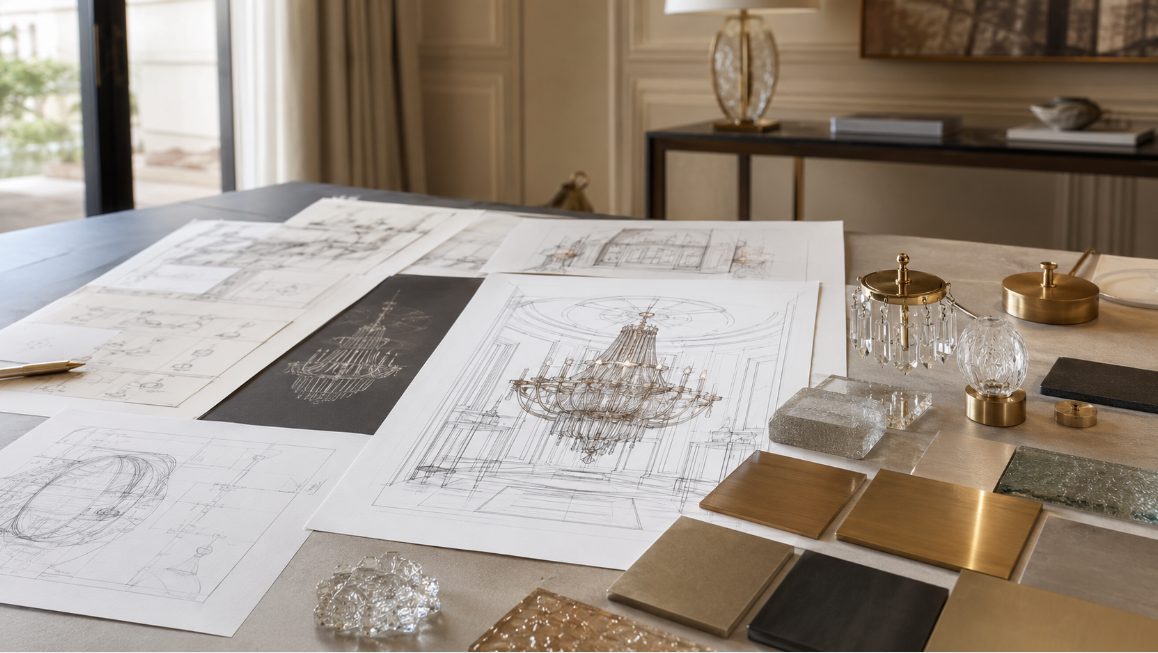
Custom light fixtures for commercial projects should only enter production after key design, technical, and installation details are confirmed. Hotel projects often involve designers, owners, contractors, and suppliers, so clear communication helps reduce delays and rework.
1.Size, Structure, and Installation Details for Each Fixture
Size, structure, and installation details should be confirmed before manufacturing any hotel fixture. Diameter, height, hanging method, ceiling load, wiring position, and maintenance access all affect the final installation result.
For large chandeliers or artistic installations, the production team should work from approved drawings. This helps avoid incorrect proportions, weak support points, difficult assembly, or unexpected site adjustments.
2.Electrical Requirements in Commercial Building Lighting
Electrical requirements in commercial building lighting should be clarified early to avoid technical conflicts during installation. The project team should confirm voltage, wattage, color temperature, dimming method, driver position, emergency lighting needs, and control system compatibility.
This is especially important in hotels because different areas may require different lighting scenes. A lobby may need brighter lighting during the day and softer lighting at night, while a restaurant may need dimmable lighting for different dining periods.
3.Material Samples for Custom Hotel Lighting Quality Control
Material samples are important because custom hotel lighting must match the design concept and project quality level. Samples allow designers and owners to check whether the finish, color, texture, and transparency are suitable before mass production.
For luxury hotel projects, sample approval can reduce disputes and prevent costly changes. It also helps the supplier maintain consistency when producing multiple fixtures for different areas of the same project.
Common Mistakes in Custom Hotel Lighting and Commercial Projects
Common mistakes in custom hotel lighting projects include choosing products only by appearance, ignoring site conditions, and starting production before technical details are ready. These mistakes can lead to poor lighting effects, installation delays, or extra costs.
1.Choosing a Custom Light Fixture Only from Renderings
Choosing a custom light fixture only from renderings can create problems because renderings do not always show real structure, weight, brightness, or material details. A fixture may look suitable in a design image but fail to match the actual site.
Before production, the supplier should review dimensions, drawings, materials, ceiling structure, wiring, and installation requirements. This process helps turn the visual concept into a practical product.
2.Ignoring Maintenance in Public Space Lighting
Ignoring maintenance in public space lighting can increase long-term operating costs. Hotel lighting fixtures are used frequently, so cleaning, lamp replacement, driver access, and spare parts should be considered from the beginning.
For large chandeliers, maintenance planning is especially important. If the fixture is difficult to access, future cleaning and repair work may become expensive and time-consuming.
3.Weak Coordination in Commercial Building Lighting Projects
Weak coordination in commercial building lighting projects can cause delays between design, production, shipping, and installation. Lighting suppliers should communicate with designers, contractors, and project owners before fabrication begins.
Clear drawings, confirmed samples, production schedules, installation instructions, and packaging plans can reduce misunderstandings. This is especially important for overseas hotel and commercial projects.
Supplier Checklist for Custom Lighting Solutions for Hotels
Custom lighting solutions for hotels require a supplier with design understanding, engineering ability, production capacity, quality inspection, and export experience. A hotel lighting supplier should do more than provide decorative lamps.
1.Design and Engineering Support for Custom Lighting Solutions
Design and engineering support helps turncustom lighting solutions from concepts into buildable products. A reliable supplier should be able to review drawings, suggest materials, adjust structures, and confirm installation feasibility.
This support is valuable when a project includes special shapes, large dimensions, unique materials, or complex ceiling conditions. Early engineering review can reduce risk before full production begins.
2.Production Capability for Every Custom Light Fixture
Production capability affects the quality, delivery time, and design accuracy of every custom light fixture. A capable supplier should manage material sourcing, metal processing, surface finishing, assembly, wiring, testing, and final inspection.
For complex hotel lighting, trial samples or mock-ups can help confirm the fixture before mass production. This is useful when the project requires a special structure, unusual finish, or high visual accuracy.
3.Quality Control for Custom Light Fixtures for Commercial Projects
Quality control for custom light fixtures for commercial projects should include material inspection, finish checking, electrical testing, assembly review, and packaging inspection. These steps help ensure the fixtures arrive safely and perform correctly on site.
Good packaging is also important, especially when fixtures include glass, crystal, or large metal structures. Strong export packaging can reduce damage during long-distance transportation.
Planning Table for Hotel and Commercial Building Lighting for Public Spaces
A clear planning table helps project teams match each area with the right fixture type and design focus. It also makes commercial building lighting for public spaces easier to communicate among designers, owners, contractors, and suppliers.
Lighting Area, Fixture Type, and Design Focus
The table below shows how different hotel and commercial areas can be matched with suitable lighting solutions.
Hotel / Commercial Area | Recommended Lighting Type | Main Design Focus |
Lobby | Custom chandelier, pendant installation | First impression and brand identity |
Corridor | Wall sconces, linear lights, ceiling lights | Safety, comfort, and guidance |
Restaurant | Pendant lights, accent lights, indirect lighting | Dining atmosphere and visual depth |
Ballroom | Large chandeliers, ceiling feature lights | Luxury effect and event flexibility |
Lounge / Bar | Decorative pendants, wall lights | Relaxed mood and social experience |
Outdoor entrance | Weather-resistant fixtures, façade lighting | Visibility, durability, and arrival experience |
Public areas | Mixed custom lighting solutions | Function, comfort, and visual consistency |
FAQ About Custom Hotel Lighting and Commercial Lighting Projects
What Is Custom Hotel Lighting?
Custom hotel lighting is lighting designed or adjusted for a specific hotel space, design concept, fixture size, material requirement, and installation condition. It is often used when standard lighting products cannot meet the project’s visual or technical needs.
Where Are Custom Light Fixtures for Commercial Projects Commonly Used?
Custom light fixtures for commercial projects are commonly used in hotel lobbies, corridors, ballrooms, restaurants, bars, lounges, staircases, entrances, and outdoor public areas. These spaces often need lighting that supports both decoration and daily operation.
Why Is Hotel Corridor Lighting Design Important?
Hotel corridor lighting design is important because it affects guest safety, comfort, movement, and the overall feeling of quality. Good corridor lighting should guide guests naturally while matching the hotel’s interior style.
When Should a Supplier Join Custom Lighting Solutions for Hotels?
A supplier should join custom lighting solutions for hotels before final production drawings are confirmed. Early involvement helps review structure, material, size, lighting effect, installation method, production feasibility, and packaging requirements.