


Plan Repeat Lighting Orders Across Restaurant Locations

Zoey
Lighting Designer
Quick Answer
Plan repeat lighting orders with a controlled fixture catalogue and a separate release for each restaurant. Record approved variants, quantities, destinations and revisions, and authorize substitutions before committing affected orders.
The pendant selected for your first restaurant is a starting point for the next opening. A later branch may have a lower ceiling, a different dimming system or a construction programme that moves after quantities have been discussed. “Same as the first store” leaves those differences unresolved.
Multi-location restaurant lighting procurement needs a way to reuse the approved design while identifying exactly what each branch is buying. This guide begins after the first fixture has been selected. It explains how to turn that selection into an orderable catalogue, release restaurant chain lighting orders in phases and preserve the information needed for future replenishment.
Key Takeaways
- Give each fixture family a master code and each orderable configuration its own identifier.
- Keep forecast demand separate from quantities authorized for a particular store.
- Record whether a substitution applies to one branch or changes the shared standard.
- Link repeat custom lighting orders to the configuration actually supplied at that location.
Build a Fixture Catalogue for Multi-Location Restaurant Lighting Procurement
A useful fixture catalogue lets a buyer identify an order without interpreting a mood board. Start with the selected fixture family, then connect its code to the approved drawing revision and the options that determine what will be manufactured. A decorative name such as “branch chandelier” is too broad if the same design exists in different lengths, suspension arrangements or electrical configurations.
Separate the shared visual design from choices that require a site decision. A dining pendant might retain its decorative form across the group while its suspension length changes for a particular ceiling. A different driver or input voltage needs its own recorded configuration and technical review. Neither change should disappear into a general description such as “adjust to site.”
Use the following catalogue record for each fixture family. It is a suggested purchasing tool; your team and supplier should agree the identifiers and approval process.
| Catalogue field | What the controlled record should contain |
|---|---|
| Master fixture code | One stable reference for the design family and its intended restaurant application |
| Orderable variant | A distinct code for the selected dimensions, suspension and electrical configuration |
| Document revision | Drawing and specification references, with the approval date and responsible person |
| Permitted options | Choices already reviewed for the programme, including any limits on their use |
| Site review required | Conditions that need a new decision, such as a different ceiling arrangement or market |
| Current status | Available, under review, superseded or withdrawn from new orders |
Define the boundary of an allowed option. If two suspension lengths are approved, an unreviewed third length should remain an exception until it is assessed. This prevents the catalogue becoming an open-ended permission to change the product. It also helps a new contractor distinguish a selectable option from a design request.
Central specifications and coordinated purchasing are established features of multi-site lighting programmes, as illustrated by Acuity Brands’ National Accounts guidance. The practical starting point for a custom decorative programme can be a shared spreadsheet with an assigned owner. An online ordering platform is optional; reliable product identity is essential.
Separate Restaurant Chain Lighting Orders by Store and Delivery Phase
The catalogue describes what can be ordered. A store release records what has actually been authorized. A forecast covering future openings does not, by itself, confirm every branch quantity or authorize production for all locations. State explicitly which figures are planning estimates and which are committed under the agreed purchase order.
For each branch, create a release record that points back to the catalogue rather than copying a shortened product description. A supplier should be able to trace the order line to its variant and revision even if different contractors issue the purchase orders. Keep the contracting party, delivery recipient and brand contact identifiable where they differ.
| Store order field | Entry needed before the affected release |
|---|---|
| Site and order identity | Branch code, purchase order, order line and authorized buyer |
| Fixture configuration | Master code, variant code and catalogue or drawing revision |
| Quantity | Confirmed units by configuration; identify spare units separately |
| Destination | Delivery address, receiving contact and any agreed intermediate receiving point |
| Delivery phase | Shipment group and the store or installation phase it serves |
| Milestones | Approval deadline, required arrival window and supplier-confirmed schedule |
| Exceptions and authority | Open changes, approval reference and the person permitted to release them |
Consider an illustrative programme with a full-height flagship and a smaller mall branch. They may use the same fixture family but different suspension configurations and quantities. One supplier purchase order can cover both if its lines and delivery instructions preserve that separation. A single total with two addresses leaves allocation and scheduling ambiguous.
Keep the required site arrival window distinct from the dispatch date. Work backwards with the supplier and logistics team, using the actual configuration, destination and receiving arrangements. If a branch opening moves, identify whether the change affects production, dispatch or receipt. Confirm any storage, redirection or additional handling arrangements before assuming another party will absorb them.
At receipt, reconcile the delivered quantity and configuration against the correct store release. Record shortages and items held for a later shipment against that same order line. This keeps a partial delivery from appearing to be a completed branch package and gives the next buyer a reliable starting point.
Approve Substitutions in Restaurant Chain Lighting Orders
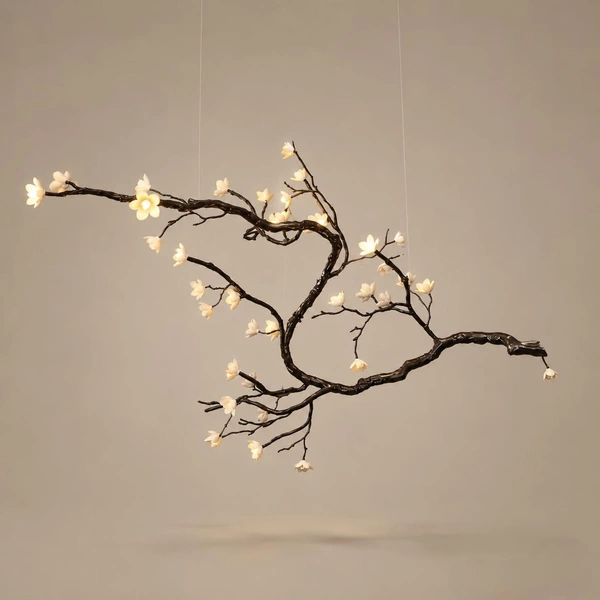
A discontinued driver, an unavailable decorative component or a revised store concept can interrupt a repeat programme. Ask the supplier to identify the affected catalogue item and propose a specific alternative. “Equivalent replacement” is insufficient if the buyer cannot see what changed or which branches will receive it.
Open an exception record before accepting the alternative. Record the original and proposed references, reason for the change, affected orders, supporting documents and response deadline. The review should identify consequences for appearance, dimensions, mounting, electrical operation, maintenance and relevant certification scope. Refer technical questions to the responsible designer, engineer or certification body as appropriate.
Purchasing authority and technical approval may belong to different people. A procurement manager can agree a revised commercial arrangement without being authorized to approve a different electrical construction. Identify the required reviewers in advance, and keep the affected order line pending until the necessary decisions are documented. Other unchanged, separately authorized lines can follow their own agreed releases.
State the reach of the decision. An alternative accepted for one low-ceiling branch should not automatically become the standard for every future restaurant. Record it as a site exception, a temporary option with defined limits or a new catalogue revision. Preserve the previous revision so that maintenance teams can still identify equipment in earlier stores.
Before the next release, obtain confirmation that the supplier has received the approved revision and its effective scope. Then check which open orders still reference the earlier version. This is the point where an approval becomes a purchasing instruction rather than an email that never reaches the order record.
The wider requirements for drawings, samples and commercial release are covered in the custom lighting pre-production confirmation guide. For a restaurant rollout, add the affected branch list and the decision about future orders to that project record.
Identify the Right Version for Repeat Custom Lighting Orders
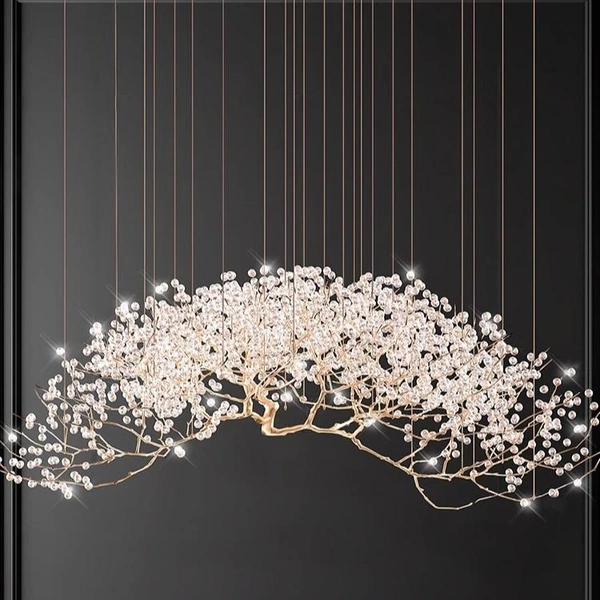
A replacement for an operating restaurant and a fixture package for a new branch are different purchasing tasks. The operating site needs compatibility with what was supplied there. The new branch may use the current catalogue revision. Ordering both against the newest design name can conceal that distinction.
For an existing location, retrieve the original purchase order, fixture and variant codes, approved drawing revision and delivery record. Add a label photograph or supplier reference where available. State whether the request concerns a complete fixture, a decorative unit, an electrical component or an accessory. A photograph of the restaurant helps identify the location and appearance, but it cannot establish the full configuration.
Ask the supplier to confirm whether the original version remains available and what information is needed to assess compatibility. If a successor is proposed, return it to the substitution process and record the relationship between the old and new references. Do not overwrite the historical record simply because new orders have moved to another version.
Finish matching needs a separate assessment when a replacement will sit beside older fixtures. Retained references, age and the condition of the installed product can affect the comparison. The lighting finish consistency guide explains that review. A catalogue reference supports identification; it does not guarantee an exact match years later.
If spare parts are being considered, agree which configuration they serve, who will hold them and how withdrawals will be recorded. A spare assigned to one variant should not become general stock for every branch without a compatibility check. Review availability before later order phases rather than assuming the original materials, price or production arrangements remain unchanged.
Prepare a Cuslux Enquiry for Multi-Location Restaurant Lighting Procurement
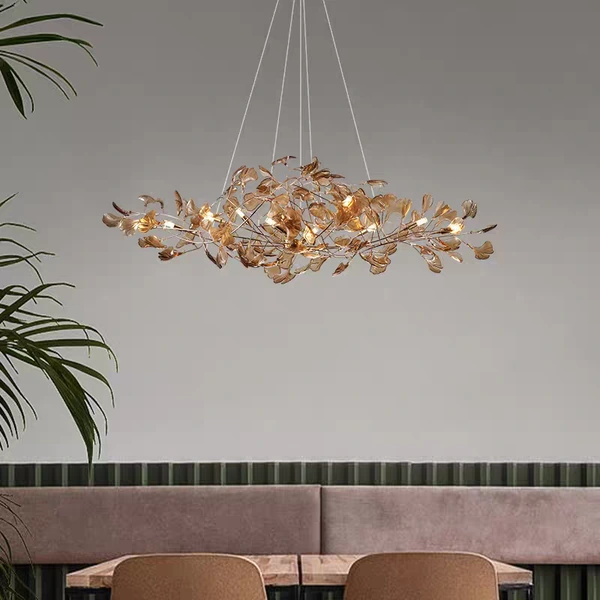
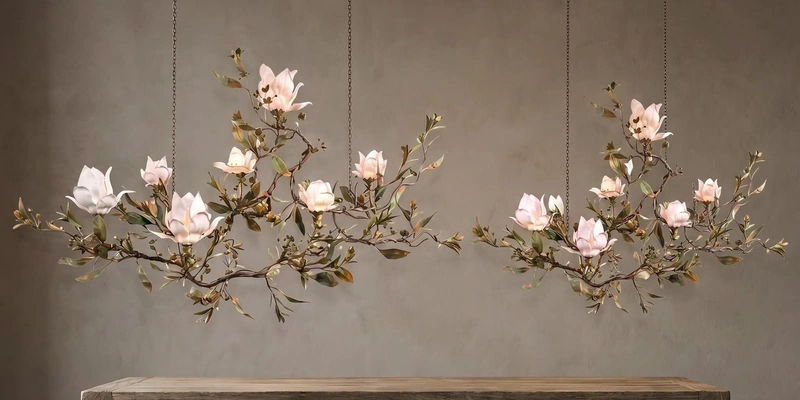
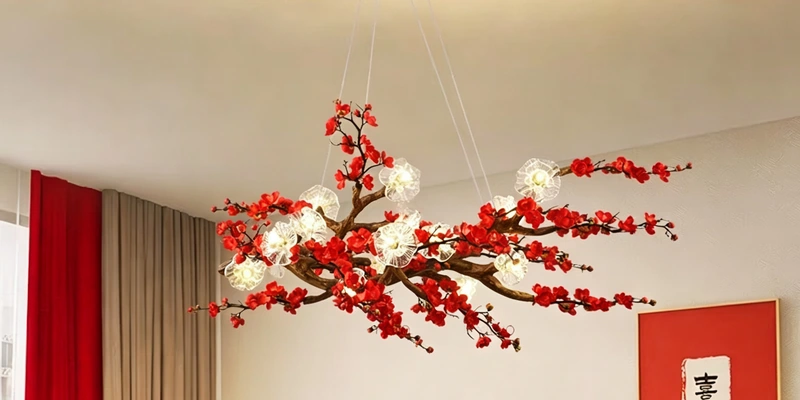
Cuslux offers lighting for restaurant chains, including decorative lighting intended to support a shared visual style across different store layouts. The range shown includes linear chandeliers, flower and leaf forms, and coordinated dining lighting. Those examples can help explain the design family you want to repeat; your order still needs its own configuration and delivery agreement.
For a rollout enquiry, send the first-store fixture schedule or approved references, the number of planned locations and the differences already known for each branch. Distinguish confirmed openings from provisional ones. Include quantity by configuration, destination, required arrival window and the person who owns the shared standard. Mark unresolved site details so they can be assessed before the affected release.
Ask for a response that identifies which configurations appear repeatable, which need further development or review, and what information is missing. Discuss production and shipment phases separately. If you need reserved materials, storage or a future pricing arrangement, request explicit terms for this programme rather than treating them as automatic features of repeat ordering.
Use Cuslux’s custom lighting project support to discuss the proposed configuration and workflow. To begin, send your restaurant rollout requirements with the subject “Restaurant repeat lighting programme.” Include your catalogue or fixture references, branch differences and phased timing so the discussion can focus on a configuration your team can order again.
Restaurant Chain Lighting Orders FAQs
Should all restaurant locations use one lighting SKU?
Only where the same configuration suits every location. A shared fixture family can have separate orderable variants for reviewed site differences. Keep a stable master reference, and identify the exact variant on each branch order rather than using one SKU to conceal different products.
How should a local voltage or drop-height change be recorded?
Record the changed specification, affected branch, drawing revision and approval reference under a distinct variant or controlled exception. Ask the responsible technical reviewer to assess the change. Do not treat a different voltage as an administrative edit or leave suspension changes to an informal site instruction.
Can a later store reorder from a sample photo alone?
A photo is useful supporting information, but it does not identify every dimension, component or revision. Provide the original order or master fixture reference and the intended site configuration. If records are incomplete, request identification and confirmation before treating the enquiry as an unchanged repeat order.
Who should approve a substitute for a discontinued component?
Use the authority agreed for the programme. Procurement should coordinate the request, while the relevant design, engineering and certification specialists assess effects within their scope. The standards owner should record whether the decision applies to one store or changes the catalogue for future restaurant chain lighting orders.