


Lighting Manufacturer or Reseller? Verify Your Supplier

Zoey
Lighting Designer
Quick Answer
Verify a lighting supplier by connecting its contracting entity, production site and actual processes to dated evidence for your fixture type. Record what remains unverified before paying for development or production.
Key Takeaways
- Verify the specific lighting being offered rather than the supplier’s entire catalogue.
- Connect legal names and addresses to the organizations performing the work.
- Ask how subcontracted processes are controlled and who accepts the finished fixture.
- Record the method, date and limits of each verification before making a commitment.
The lighting manufacturer vs reseller distinction is useful when it tells you who will perform the work and who can resolve a production question. A manufacturer performs identified manufacturing activities. A reseller purchases products for resale. A business can also manufacture one product range while sourcing another, or sell through a separate company within its group.
For a custom chandelier, establish the proposed arrangement for that fixture. A workshop photograph, a business registration or an impressive product range can contribute information without establishing the complete relationship. Your decision needs evidence connecting the seller, the production location and the work being purchased.
Lighting Manufacturer vs Reseller Checks Start with Legal Entities

Obtain the full legal name of the proposed contracting seller and the manufacturing organization. Record the registered address and the actual production address separately. An office, showroom and workshop may occupy different locations. Ask the supplier to explain those relationships rather than treating every address difference as evidence of misrepresentation.
Match the quotation and proposed order documents to the seller you are onboarding. Then connect that seller to the named production facility. Where another company manufactures the fixture, ask who appoints it, who controls the agreed specification and who accepts responsibility for the supply. An unexplained relationship needs clarification even if the companies use similar names or share branding.
Registration evidence helps identify an organization and its stated business scope. Cross-check it through the relevant issuing source or public registry where available, using the original legal name and registration reference. Keep the result and date with the supplier record. Registration alone does not show that a particular workshop currently performs the process claimed for your chandelier.
Reconcile invoice and payment details through your established supplier onboarding procedure. If an unexpected entity or payment-information change appears, resolve it through that procedure before committing funds. A salesperson’s explanation should lead to a consistent record that the responsible purchasing team can review.
Lighting Supplier Factory Verification Must Identify Each Process
Ask which activities are performed at the proposed facility and which are assigned to other organizations. For decorative lighting, the relevant scope might include drawing development, metal fabrication, decorative component sourcing, surface finishing, wiring, final assembly and packing. Select the activities that matter to the offered design instead of using an unrelated factory checklist.
A manufacturer does not need to make every material or component itself for its role to be meaningful. Specialist glass work or finishing may involve another business. Identify that arrangement and ask how specifications are passed to the specialist, how incoming work is checked and who handles a rejected or changed part. The buyer needs to understand the control of the work as well as its location.
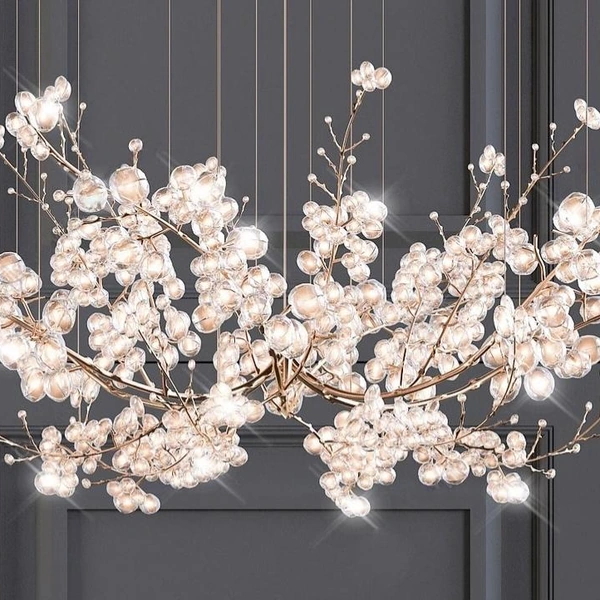
For a suspended composition, ask who prepares the component layout and suspension information, who supplies the decorative elements and where final assembly is checked. For a curved metal fixture, ask where forming and joining occur and how the proposed modules are checked together. These questions connect the manufacturing claim to the product without assuming every decorative lighting supplier needs an electronics production line.
Request evidence relevant to the current offer: an identifiable drawing revision, process record, assembly record or permitted view of comparable work. A showroom containing many styles does not establish which styles are made at that facility. Equally, a manufacturer’s use of purchased components does not by itself establish that it is merely reselling the complete fixture.
Keep broader supplier selection separate. The existing hotel lighting supplier evaluation guide covers design capability, capacity and quality considerations. This verification establishes which organization and process those claims describe.
Verify Lighting Manufacturer Claims Beyond Factory Photos
Use a photograph for the information it actually contains. It may show a work area, equipment or an assembly, but it does not establish the site’s ownership, the date of production or the relationship to your proposed seller. Ask for the facility, activity and date associated with the image. Treat an unidentified marketing image as a lead for further questions.
A live walkthrough can add current, directed observation. Agree the relevant stages beforehand and ask the host to identify the location, explain the work and answer questions about the fixture family being reviewed. Include the process handovers that matter to your order. If finishing occurs elsewhere, a tour of the assembly area leaves finishing as a separate item to verify.
Record the limits of remote viewing. You see the areas and activities made available during the session. That observation does not independently establish legal ownership, every subcontractor relationship or future production performance. An on-site visit can provide closer observation, but it also needs a defined purpose and a written record of the scope actually examined.
Where independent assessment is appropriate, specify the questions the assessor must answer. SGS describes vendor assessment and technical audit as examining areas including workload, equipment capability, material controls, fabrication procedures and workshop facilities. Use that scope to commission a relevant review, then read its findings, exclusions and date. The existence of an assessment service is not evidence that a particular supplier has been assessed.
Read certificates according to their purpose. ISO explains ISO 9001 as a quality management system standard. An ISO 9001 certificate concerns its stated organization and scope; it does not trace a particular chandelier through fabrication. ISO/CASCO also distinguishes management system certification from product certification marks. Check the issuer, validity, named organization, covered locations and scope, then verify the relevant manufacturing work separately.
Record Lighting Supplier Factory Verification Gaps Before Development

Create an evidence entry for each important claim or manufacturing stage. This makes it possible to distinguish a confirmed observation from a supplier statement awaiting verification. It also allows another buyer to understand the basis of the decision without reconstructing calls and messages.
| Evidence field | Record for the proposed fixture or process |
|---|---|
| Product reference | Fixture type, offered configuration and drawing revision |
| Contracting entity | Legal name, registration reference and proposed seller’s role |
| Production organization and address | Named operator and location for the activity being reviewed |
| Process scope | Activity performed there; disclosed partner work and responsible controller |
| Evidence and method | Document reference, live review, visit or independent assessment; what it establishes |
| Date and reviewer | When the evidence was checked and who reviewed it |
| Verification status | Verified within the stated scope, pending verification or not applicable |
| Open action and owner | Missing explanation or evidence, responsible person and agreed next step |
Consider a hypothetical supplier that shows current final assembly during a video call, while a finishing record identifies a separate partner. The assembly observation can be recorded for its stated scope. The finishing relationship needs its own evidence and explanation. Marking the entire factory “verified” would hide that distinction; recording the two activities separately identifies the remaining question.
Prioritize gaps that affect the commitment you are about to make. If you are paying for development, establish who will produce and deliver that work. If you are authorizing production, confirm the proposed manufacturing arrangement and the evidence supporting it. Avoid assigning an invented pass score that allows a significant identity or process gap to disappear among less important positive answers.
Respect confidentiality when requesting records or access. Agree what can be shown without exposing another customer’s designs or commercial information. Redacted records may still preserve the site, process, date and reference needed for your review. If relevant evidence cannot be provided, record the limitation and decide what further verification is necessary before proceeding.
Keep supplier verification distinct from technical acceptance. The custom lighting sample approval checklist addresses whether the sample meets the agreed requirements. A good sample and a verified manufacturing arrangement answer different procurement questions, so retain both records.
Request Cuslux Details for Lighting Supplier Factory Verification

Begin a Cuslux enquiry with the fixture type, reference design, approximate quantity and manufacturing activities you need to understand. Our custom lighting service covers development from drawings, concepts and reference images. Request information tied to that proposed work rather than asking for a general catalogue as proof of manufacturing scope.
Ask us to identify the contracting company and intended production location for the order, then connect those details to the relevant development and manufacturing information. You can use the Cuslux company information as a starting point for the enquiry. The order-specific record should establish the entities and activities you intend to verify.
For a glass composition, useful questions concern the decorative components, layout information, assembly and component identification. For a large curved design, ask about module development, forming and trial fitting. Define which activities need supporting records or observation. Discuss any proposed walkthrough or independent assessment, including the scope, access arrangements and information that can be shared.
Request manufacturing information for your lighting project with the evidence fields above and your outstanding questions. The next step should resolve the relevant identity and process gaps before you approve development or production. The separate production confirmation guide then helps connect the accepted technical and commercial requirements to the order.
Lighting Manufacturer vs Reseller FAQs
Can a real manufacturer use subcontractors?
Yes. Identify which processes it performs and which use specialist partners. Ask how the specifications, incoming checks and corrections are controlled, and who accepts responsibility for the finished supply. Verification should make that arrangement visible for your fixture rather than require every process to occur under one roof.
Does an ISO certificate prove that a supplier made the fixture?
No. First identify what the certificate covers. An ISO 9001 certificate concerns a quality management system within its stated scope; it does not show who manufactured a particular fixture. Check the named organization, locations, issuer and validity, then connect the offered product to relevant production evidence.
What can a video factory tour verify?
It can show the activities and areas made available at the time of the review and allow questions about them. Record the site, date, participants and observations. A video does not independently establish ownership, unseen processes or future performance; use additional evidence for those questions.
Should the sales company and factory always have the same legal name?
No. They may be separate group companies or businesses with an agreed supply relationship. Ask for a consistent explanation connecting the contracting seller to the proposed factory and its responsibilities. Match that explanation to the relevant records before treating the manufacturing arrangement as verified.