


How Custom Chandeliers and Layered Lighting Create Better Hotel Lobby Experiences?
Abstract:
Custom chandeliers and layered lighting create better hotel lobby experiences by combining visual impact, guest comfort, and practical function in one coordinated lighting plan. A hotel lobby should not depend on one beautiful fixture alone. It should use a complete lighting strategy that makes the space feel welcoming, memorable, and easy to use.
A lobby is the first interior moment guests experience. It tells them what kind of hotel they have entered before they reach the reception desk. With the right mix of decorative lighting, ambient brightness, and task lighting, a lobby can feel more luxurious, more comfortable, and more aligned with the hotel’s brand.
Why hotel lobby lighting shapes the guest experience?
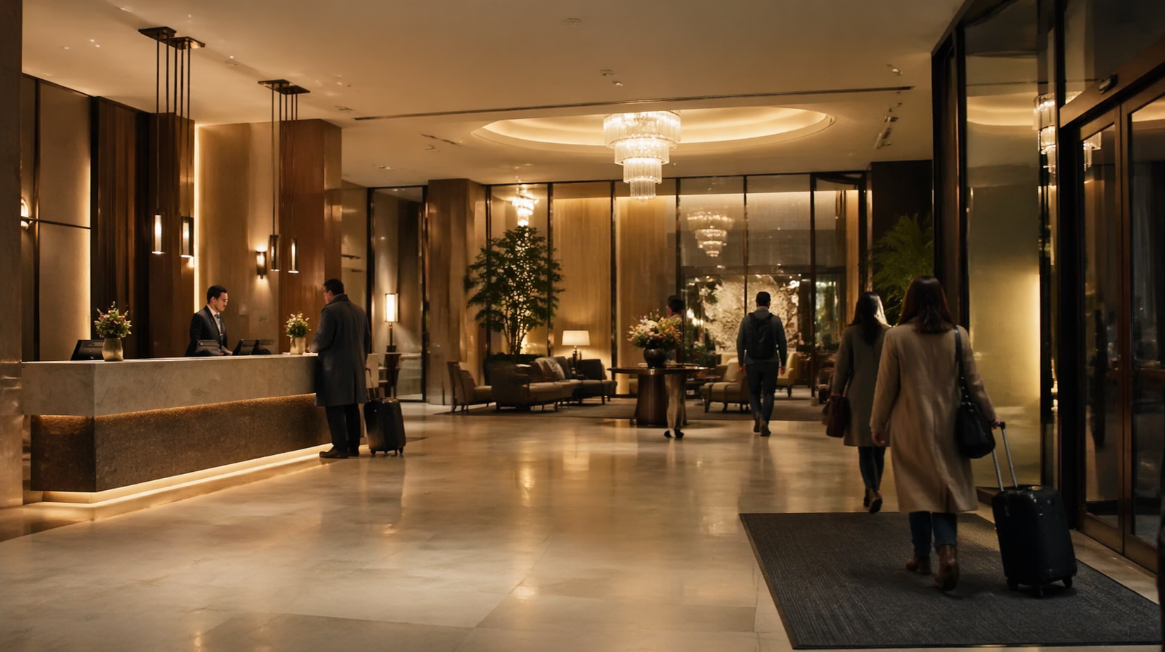
Hotel lobby lightingshapes the guest experience because it affects first impressions, mood, movement, and brand perception. A bright but flat lobby may feel functional, but it can also feel ordinary. A dramatic chandelier without supporting light may look impressive, but the space may feel uneven or uncomfortable.
Good lobby lighting should answer three needs at once:
| Need | Lighting role | ||
| First impression | Creates a memorable arrival moment | ||
| Comfort | Makes the space feel warm and welcoming | ||
| Function | Supports reception, circulation, and waiting areas |
For hotels, lighting is not only decoration. It helps guests understand where to go, where to wait, and how the space should feel.
Start with layered lighting, not one fixture
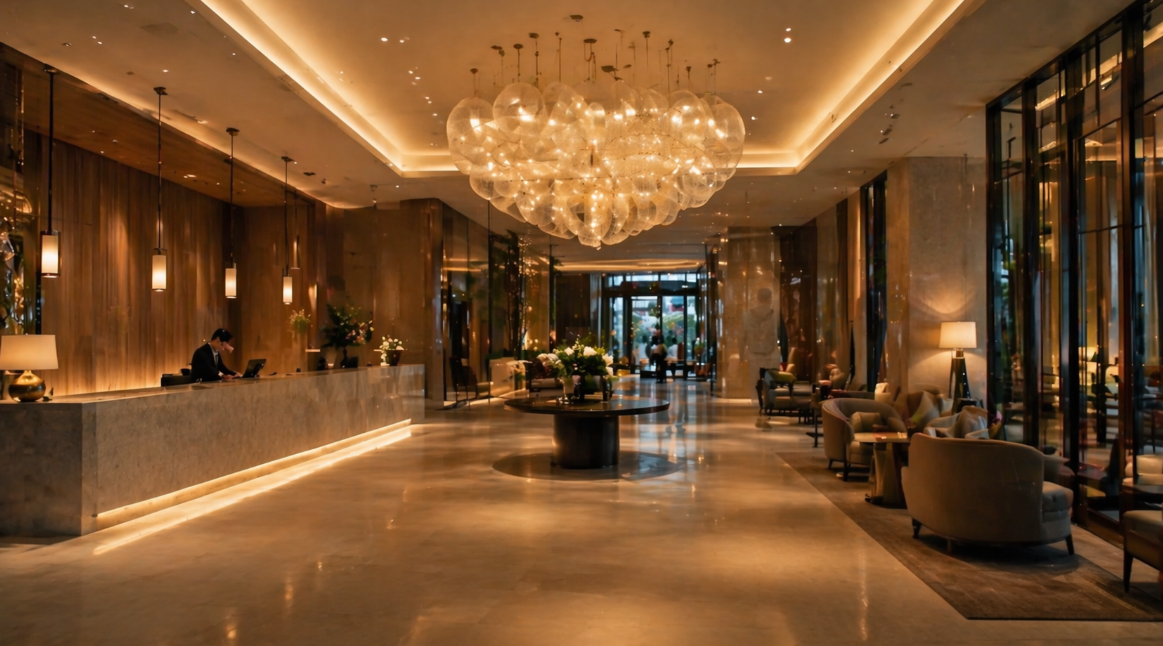
The best hotel lobby lighting starts with layers: ambient lighting, decorative lighting, and task lighting. This layered approach makes the space more balanced than relying on one chandelier or one ceiling light type.
Ambient lighting provides the general brightness of the lobby. It may come from recessed ceiling lights, cove lighting, ceiling fixtures, or soft indirect lighting.
Decorative lighting creates the visual highlight. This is where chandeliers, pendants, and statement fixtures become important.
Task lighting supports practical areas such as the reception desk, concierge point, circulation path, or seating area.
| Lighting layer | Main purpose | Example fixtures | ||
| Ambient lighting | Overall brightness | Downlights, cove lighting, ceiling lights | ||
| Decorative lighting | Visual identity | Custom chandeliers, pendants, statement lights | ||
| Task lighting | Practical visibility | Reception lighting, wall lights, directional lights | ||
When these layers work together, the lobby feels more complete. The chandelier becomes a focal point, while the rest of the lighting supports comfort and usability.
How custom chandeliers become a lobby focal point?
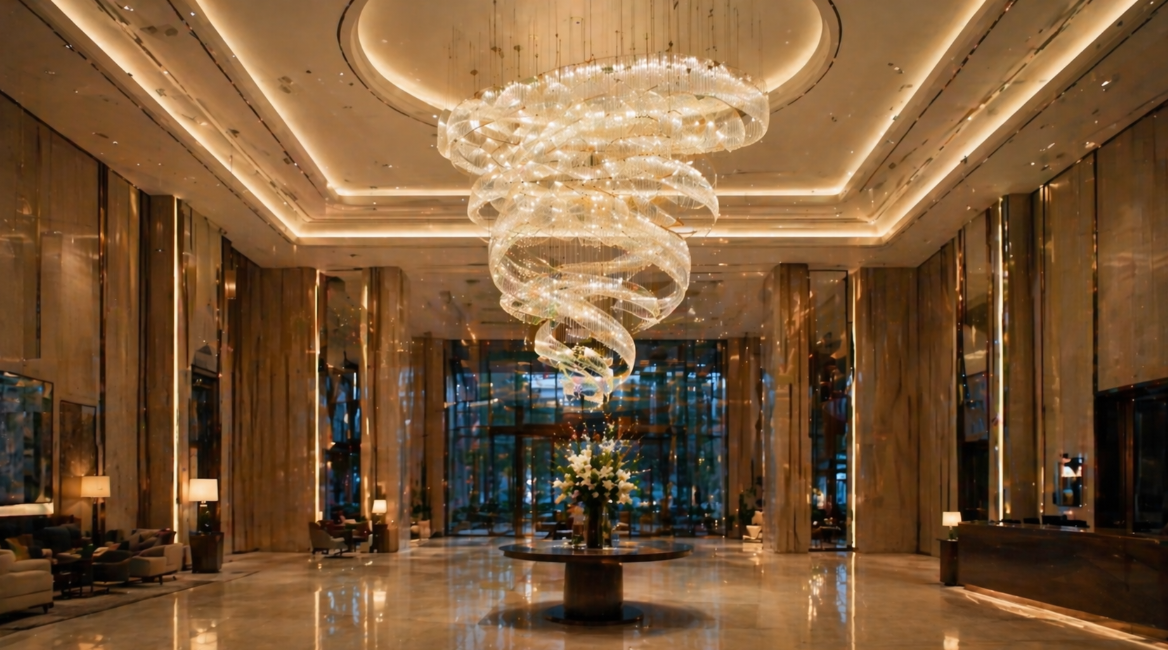
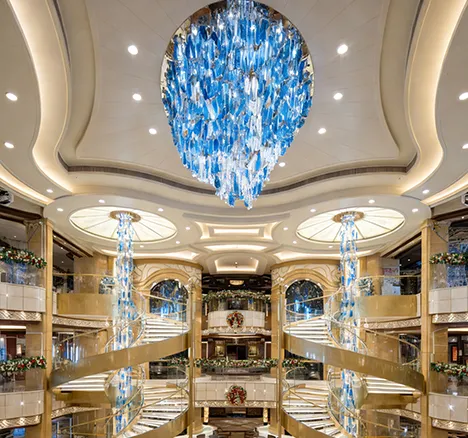
A custom chandelier becomes a strong lobby focal point when its scale, style, material, and placement match the hotel space. In a large lobby, a fixture that is too small may disappear. In a lower-ceiling lobby, a heavy chandelier may feel crowded or uncomfortable.
Custom chandeliers are useful because they can be adapted to the architecture instead of forcing the hotel to accept a standard size or shape. The height, width, finish, glass type, crystal detail, and lighting effect can be adjusted to fit the project.
For a luxury hotel, a chandelier may use refined crystal, brass, glass, or layered metal details. For a boutique hotel, the design may be more sculptural or artistic. For a modern hotel, a cleaner chandelier or pendant composition may create a better fit.
The goal is not simply to choose the most decorative fixture. The goal is to create a lighting feature that feels like part of the hotel’s identity.
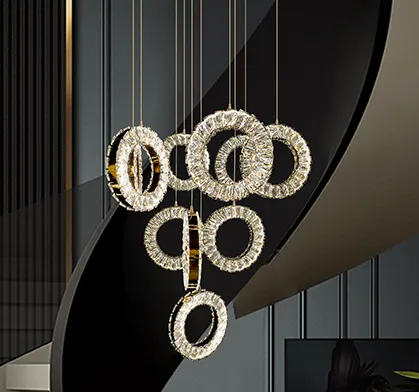
Use pendants and supporting lights to connect lobby zones
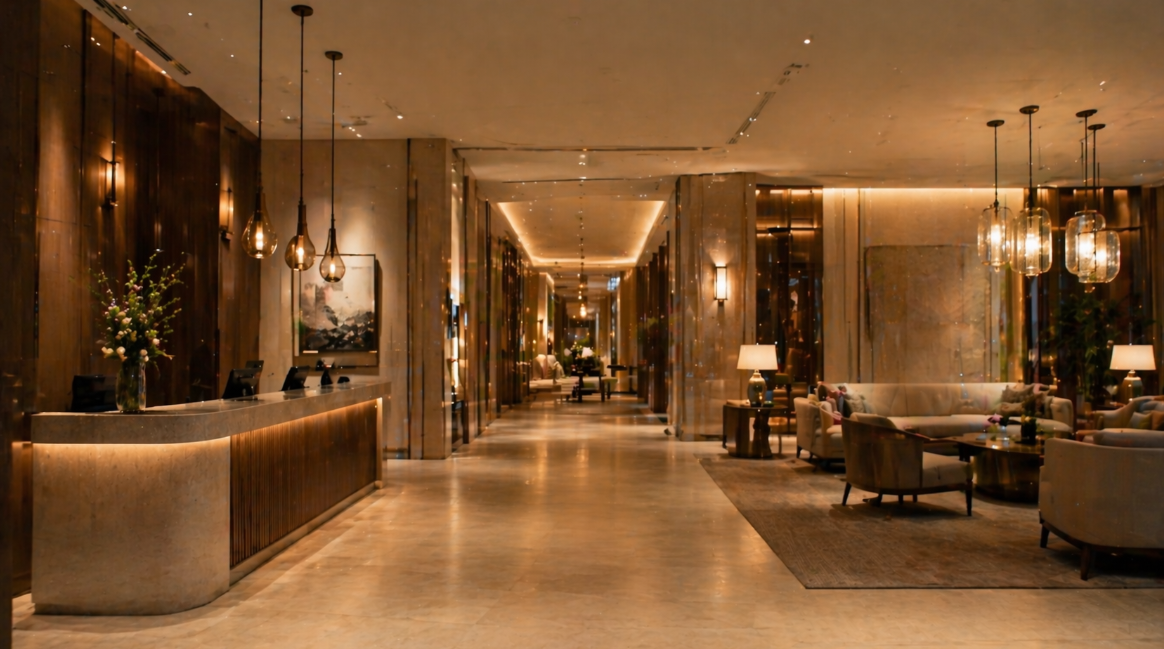
Pendants and supporting lights help connect different lobby zones without making every area look the same. Most hotel lobbies are not one single space. They often include an entrance, reception desk, waiting lounge, corridor connection, and sometimes a restaurant or bar entrance.
A large chandelier can define the main arrival area, while pendants can support lounge seating, reception-adjacent areas, or transitional zones. Wall lights or subtle ceiling lights can guide guests toward corridors and elevators.
| Lobby zone | Lighting suggestion |
| Entrance | Statement chandelier or pendant composition |
| Reception | Task lighting with soft ambient support |
| Lounge | Warmer layered lighting for comfort |
| Corridor connection | Subtle wall or ceiling lighting |
| Dining or bar entrance | Lower, more atmospheric lighting |
This approach makes the lobby feel connected but not repetitive. Each zone has its own purpose, while the overall lighting language remains consistent.
How CUSLUX helps customize lighting for hotel projects?
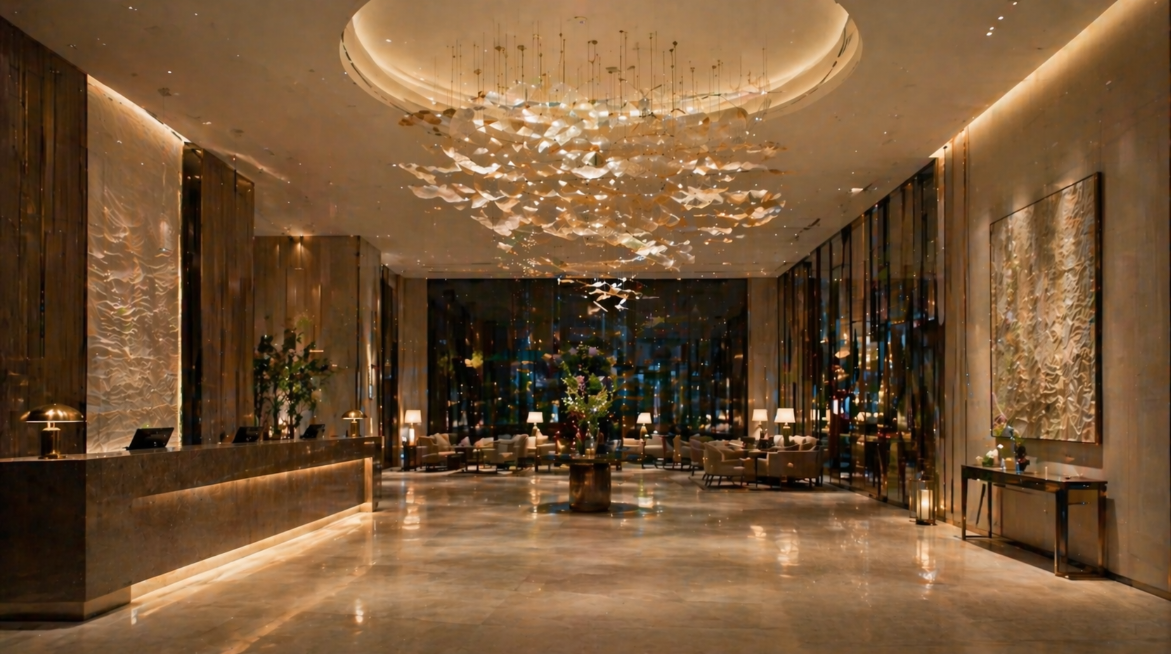
CUSLUX helpshotel projects create lighting that fits the property’s scale, brand style, and connected spaces. This is especially important when a hotel needs more than a single decorative fixture.
For example, a project may require a chandelier designed for a specific ceiling height, pendant lights adjusted for lounge or dining areas, and finishes that match the hotel’s interior palette. CUSLUX can support this by adapting fixture size, material, finish, and lighting style according to the actual project needs.
This kind of customization is helpful when the hotel wants:
-
a chandelier scaled to the lobby architecture
-
pendant lighting coordinated across several areas
-
finishes that match the brand palette
-
lighting continuity from lobby to corridor or dining space
-
decorative impact without making maintenance too difficult
Instead of treating the lobby as an isolated design moment, custom lighting helps create a more unified hospitality environment.
Common hotel lobby lighting mistakes to avoid
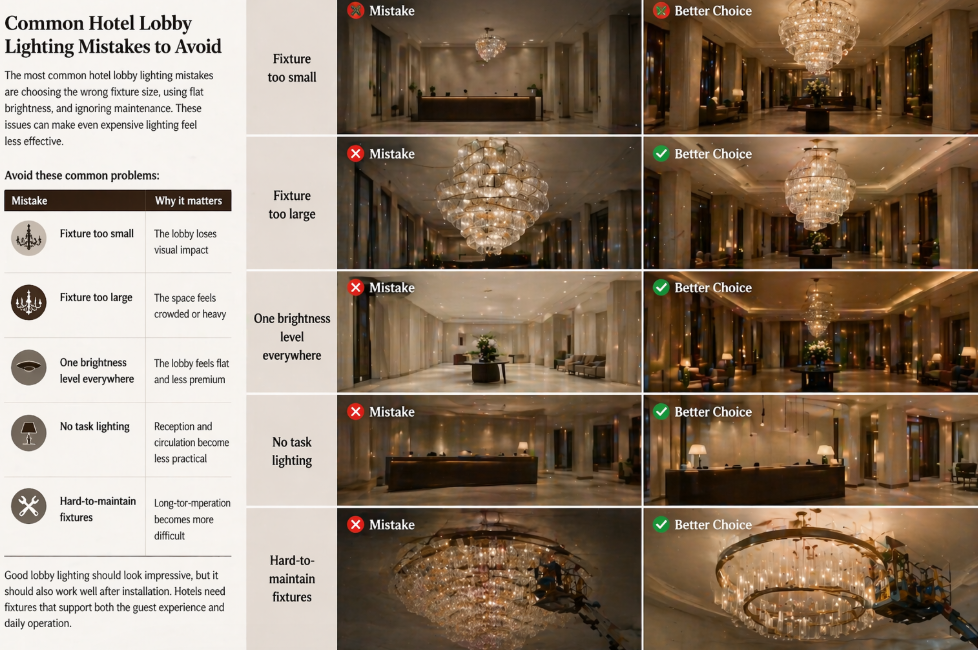
The most common hotel lobby lighting mistakes are choosing the wrong fixture size, using flat brightness, and ignoring maintenance. These issues can make even expensive lighting feel less effective.
Avoid these common problems:
| Mistake | Why it matters |
| Fixture too small | The lobby loses visual impact |
| Fixture too large | The space feels crowded or heavy |
| One brightness level everywhere | The lobby feels flat and less premium |
| No task lighting | Reception and circulation become less practical |
| Hard-to-maintain fixtures | Long-term operation becomes more difficult |
Good lobby lighting should look impressive, but it should also work well after installation. Hotels need fixtures that support both the guest experience and daily operation.
Custom Lighting Solutions for Your Space
Bring Your Lighting Design Concept to Life with CUSLUX
From chandeliers and pendant lights to decorative lighting for commercial and residential spaces, CUSLUX helps turn your ideas into custom lighting solutions with reliable design and production support.
Get Your Custom Lighting Solution →FAQ
1.What type of lighting is best for a hotel lobby?
The best hotel lobby lighting combines ambient, decorative, and task lighting. Ambient lighting provides comfort, decorative lighting creates identity, and task lighting supports reception and movement.
2.Are chandeliers suitable for modern hotel lobbies?
Yes, chandeliers can work well in modern hotel lobbies when the design is clean, well-scaled, and matched to the space. Modern chandeliers often use simpler forms, lighter visual weight, and refined materials.
3.When should hotels use pendant lighting?
Hotels should use pendant lighting when they need a lighter, more flexible lighting solution for lounge areas, reception-adjacent spaces, or connected restaurant zones.
4.Why choose custom lighting for hotel projects?
Custom lighting helps hotels achieve better scale, style, brand consistency, and coordination across multiple spaces. It is especially useful when standard fixtures do not fit the project’s architecture or design concept.
Conclusion
Custom chandeliers and layered lighting create better hotel lobby experiences by combining beauty, comfort, and practical function. A strong chandelier can define the arrival moment, but ambient lighting, pendants, task lighting, and zone planning are what make the lobby feel complete.
For hotel projects, the best lighting solution is not just the most decorative one. It is the one that fits the space, supports the guest journey, and reflects the hotel’s brand identity from the first step inside.