


Hotel Lobby Lighting Ideas for 2026: How to Choose Chandeliers, Pendants, and Ambient Layers That Fit Your Brand

Zoey
Lighting Designer
Quick Answer
The best hotel lobby lighting uses three layers: ambient lighting for comfort, decorative lighting for identity, and task lighting for function. Chandeliers are best for dramatic focal points, pendants work well for more modern flexible spaces, and custom lighting adds value by helping hotels achieve better fit, stronger brand consistency, and smoother coordination across multiple areas.
Summary
The best hotel lobby lighting in 2026 combines three essentials: ambient lighting for comfort, decorative lighting for identity, and task lighting for function. A memorable lobby is not created by one striking chandelier alone. It comes from the right balance of atmosphere, visual hierarchy, brand fit, and practical planning.
For hotels, the lobby is the first branded space guests experience. It sets expectations, shapes first impressions, and influences whether a property feels luxurious, modern, welcoming, or ordinary. That is why hotel lobby lighting should be planned as a complete system rather than a single product choice.
In this guide, we explain how to choose chandeliers, pendants, and ambient lighting layers for hotel lobbies in 2026. We also share how custom lighting can help hospitality projects achieve a more cohesive result across design, function, and long-term usability.
Why hotel lobby lighting matters?
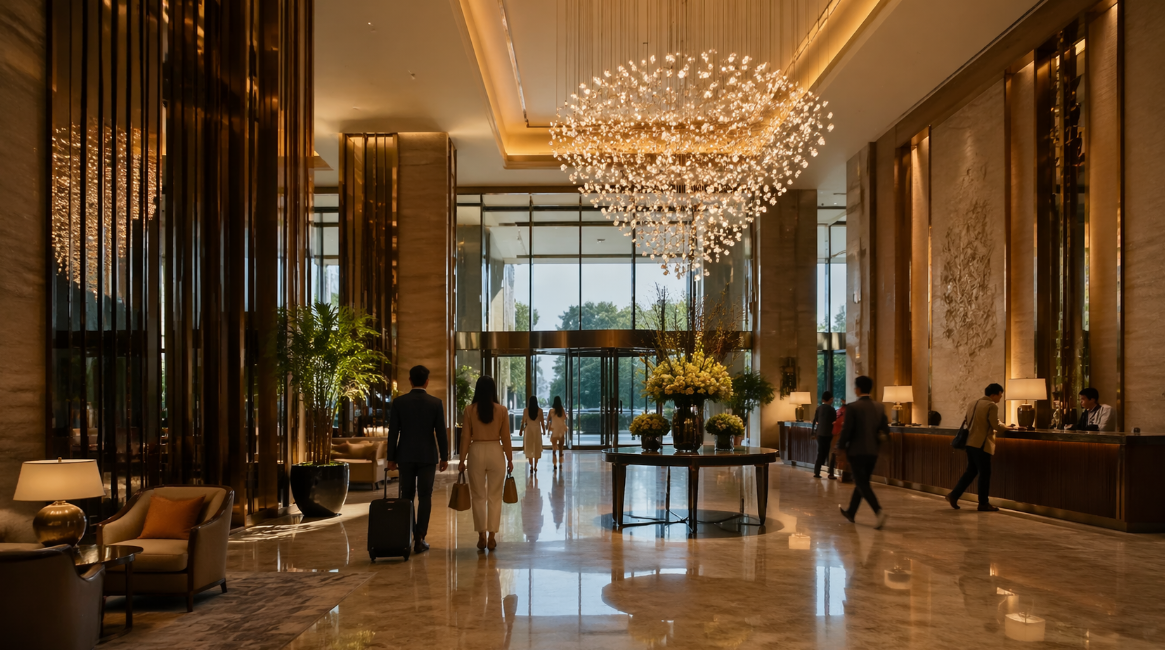
Hotel lobby lighting matters because it affects first impressions, guest comfort, and brand perception at the same time. A lobby should feel distinctive, but it also needs to work well for check-in, waiting, circulation, and nearby public areas.
When lighting is too flat, the space often feels generic. When it is too decorative without enough supporting light, the lobby may look impressive in photos but less comfortable in daily use. The strongest hospitality lighting schemes balance mood and usability from the start.
For hotel buyers and designers, the real goal is simple: create a space that feels memorable for guests and practical for the people operating it every day.
What makes good hotel lobby lighting?
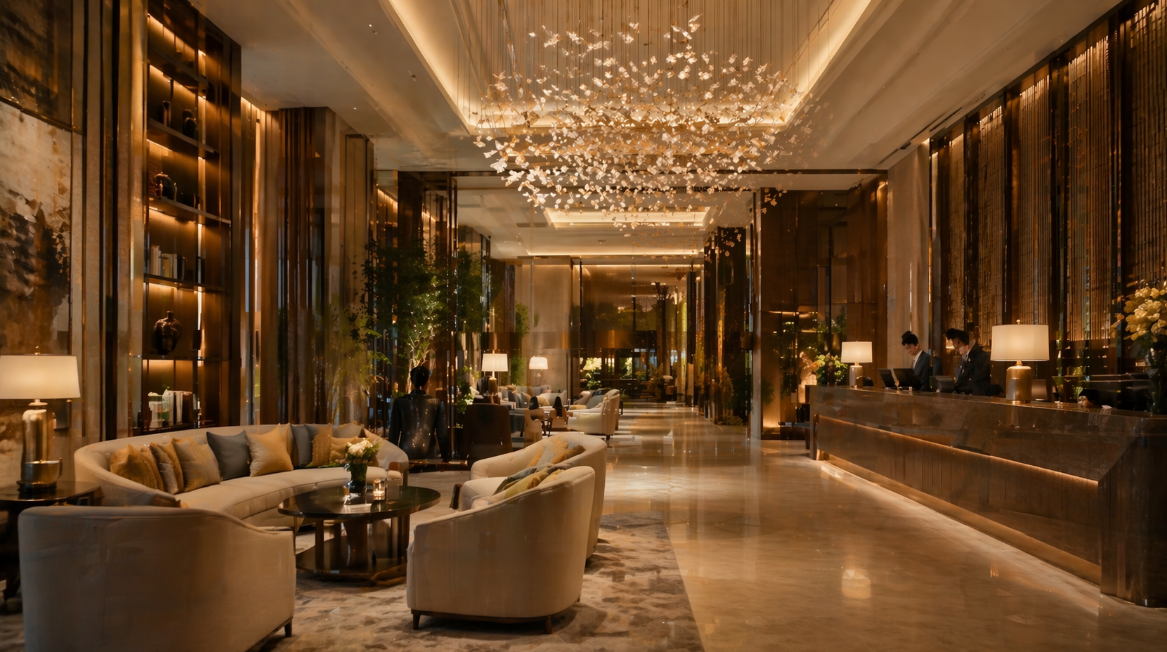
Good hotel lobby lighting creates a clear visual identity, supports how the space is used, and feels appropriate for the hotel’s positioning. In practice, that means thinking beyond appearance alone.
Before choosing a fixture, it helps to answer four questions:
-
What should guests feel when they enter?
-
Which parts of the lobby need functional support?
-
Where should the focal point be?
-
What type of lighting solution will remain practical over time?
A luxury hotel may need a stronger statement piece and richer layering. A boutique property may benefit from a softer, more curated atmosphere. A contemporary hospitality brand may prefer cleaner forms and more architectural lighting. The right answer depends on the brand story as much as the ceiling height.
The 3 lighting layers every hotel lobby needs
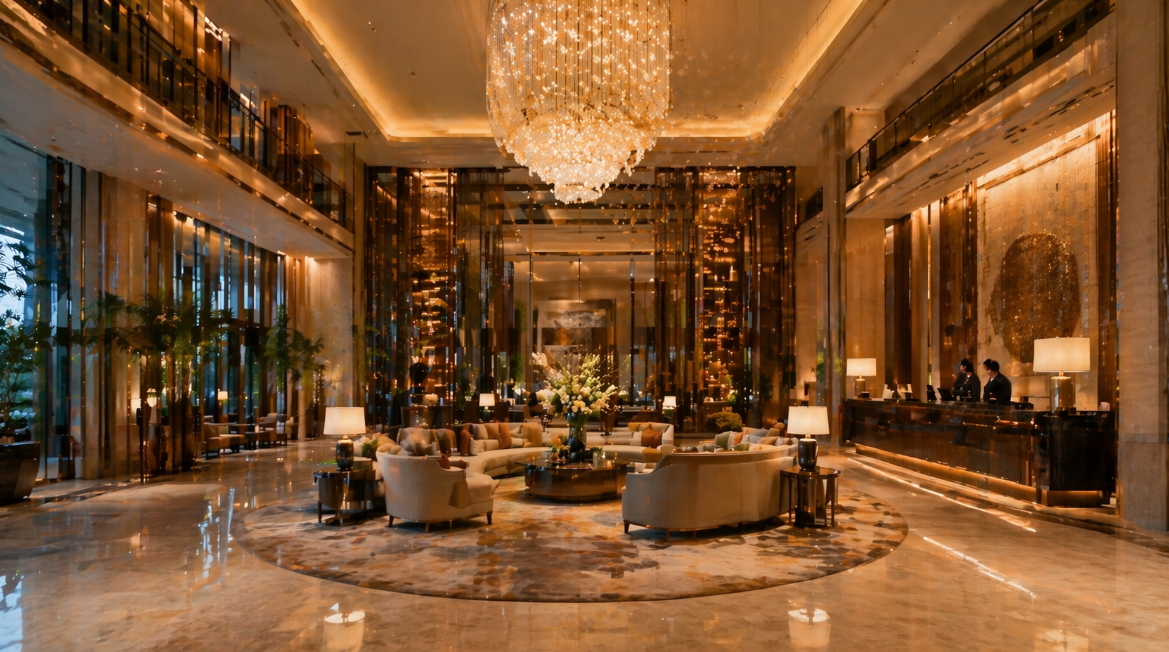
Every hotel lobby should include ambient lighting, decorative lighting, and task lighting. These three layers create the most balanced and usable environment.
| Lighting layer | Main purpose | Typical fixtures | What it adds to the lobby |
| Ambient lighting | Overall brightness and comfort | Downlights, cove lighting, recessed lights, ceiling lights | Builds the visual base of the space |
| Decorative lighting | Identity and focal impact | Chandeliers, pendants, statement fixtures | Gives the lobby a signature look |
| Task lighting | Functional visibility | Reception lighting, accent desk lighting, directional light | Supports check-in and circulation |
Ambient lighting provides the background. Decorative lighting creates emotional and visual value. Task lighting helps the space perform well for staff and guests.
A common mistake is to depend too heavily on only one layer. A dramatic chandelier without enough ambient support can leave the lobby uneven. A lobby with only recessed lighting may be bright, but it often lacks personality.
Chandeliers vs pendants: which is better for a hotel lobby?
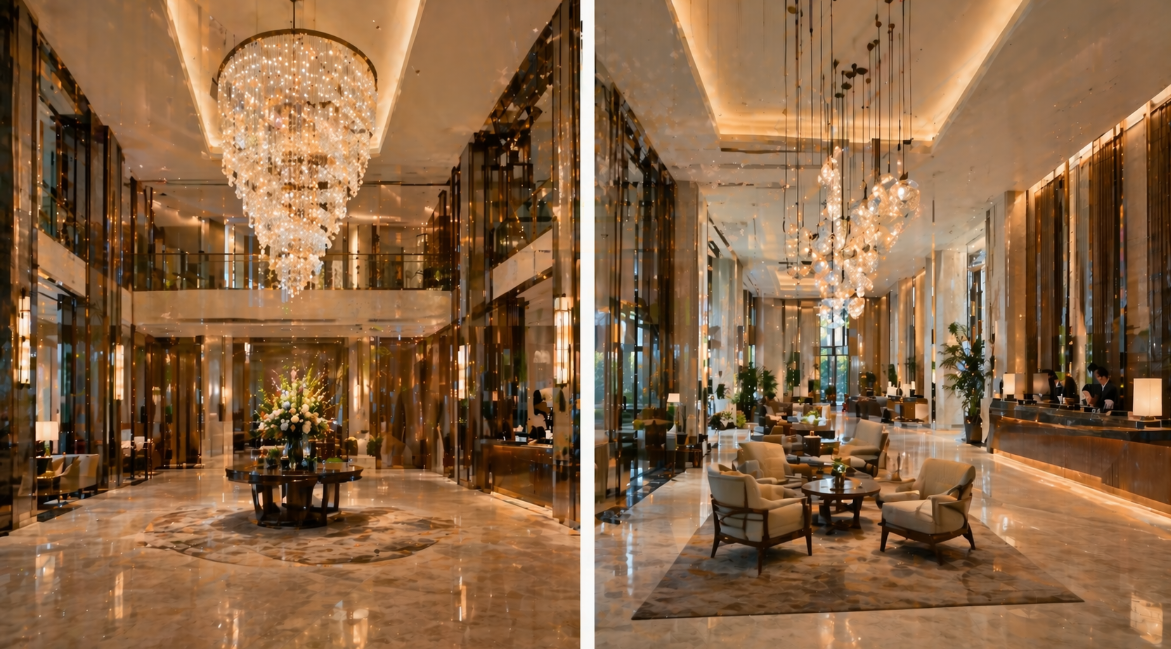
Chandeliers are usually better for dramatic focal points, while pendants are often better for modern, flexible, or lighter-looking hospitality spaces. Both can work well, but they communicate different things.
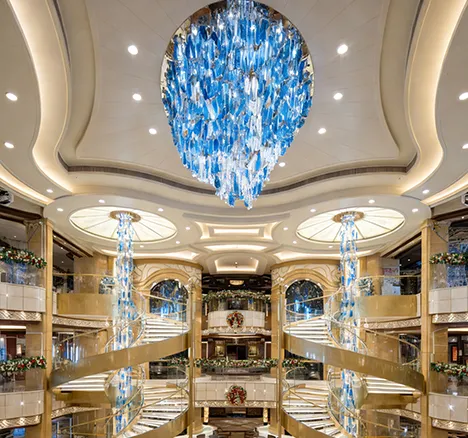
Chandeliers are ideal when the hotel wants a strong arrival statement. They work especially well in larger lobbies, double-height spaces, or interiors where luxury and visual impact are central to the brand.
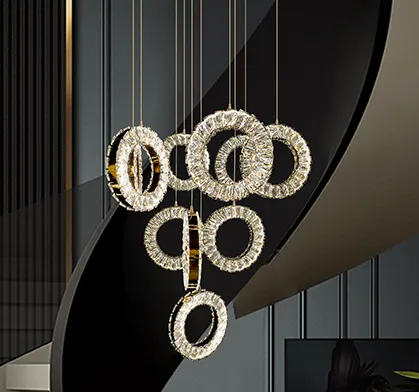
Pendants are often a better fit for contemporary hospitality spaces. They can feel cleaner, lighter, and easier to distribute across several connected zones, especially where the lobby flows into lounge seating, a restaurant, or a bar.
| If your lobby needs… | Better choice |
| A grand arrival statement | Chandelier |
| A modern and lighter appearance | Pendant lighting |
| A central luxury focal point | Chandelier |
| Repetition across multiple areas | Pendant lighting |
| A layered mixed composition | Chandelier + pendants |
The best choice is not just about style. It should come from the brand identity, the scale of the space, and how the lobby connects to adjacent areas.
How to choose the right fixture size, style, and placement?
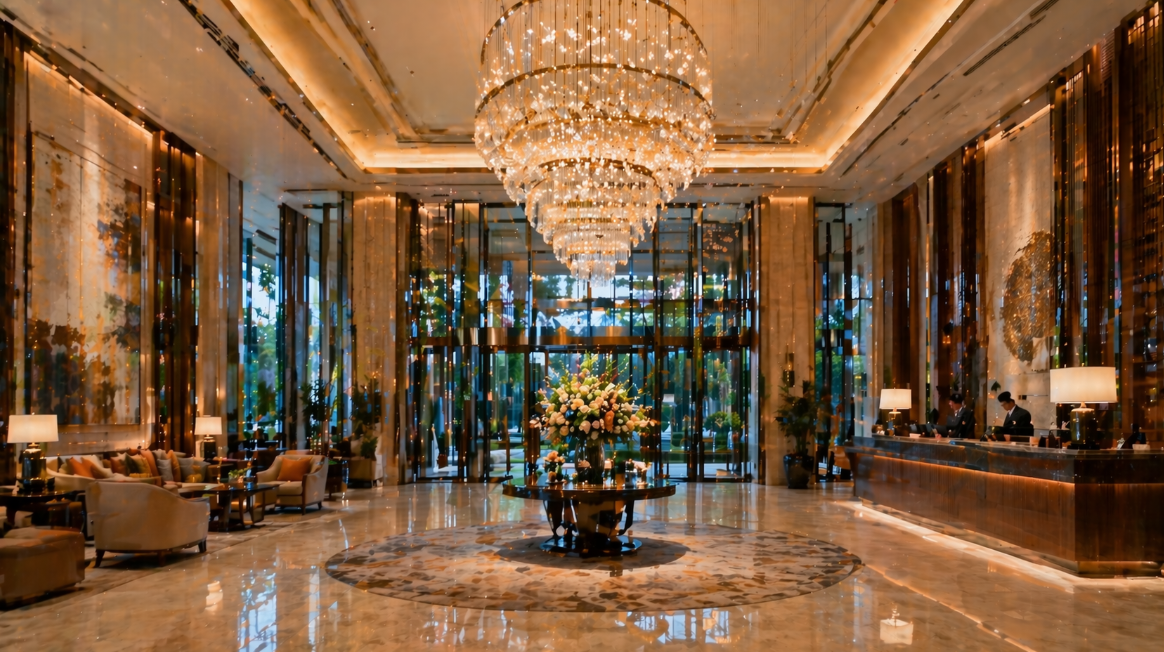
The right fixture should match the lobby’s scale, the hotel’s style, and the practical needs of the project. A beautiful light can still fail if it is too small, too visually heavy, or difficult to maintain.
Start with scale. Large lobbies and double-height spaces can support oversized chandeliers, cascading compositions, or custom statement lighting. Lower ceilings often benefit from broader forms, lighter silhouettes, or grouped pendants that create presence without overwhelming the room.
Next, match the fixture style to the hotel’s positioning. Crystal and brass may suit classic luxury. Sculptural pendants and textured finishes may work better for boutique hotels. Clean glass or metal forms may suit a more modern hospitality brand.
Placement is just as important as style. The main decorative fixture should support the arrival moment and reinforce the visual center of the lobby. Reception desks, waiting areas, and circulation zones may each need their own supporting light rather than depending on one decorative feature.
Long-term usability also matters. Hotels need fixtures that remain attractive and practical after opening, not only during installation. This is where custom lighting becomes especially helpful, because the design can be adapted to the actual scale, style, and operation of the property rather than forced into a standard format.
What color temperature works best in a hotel lobby?
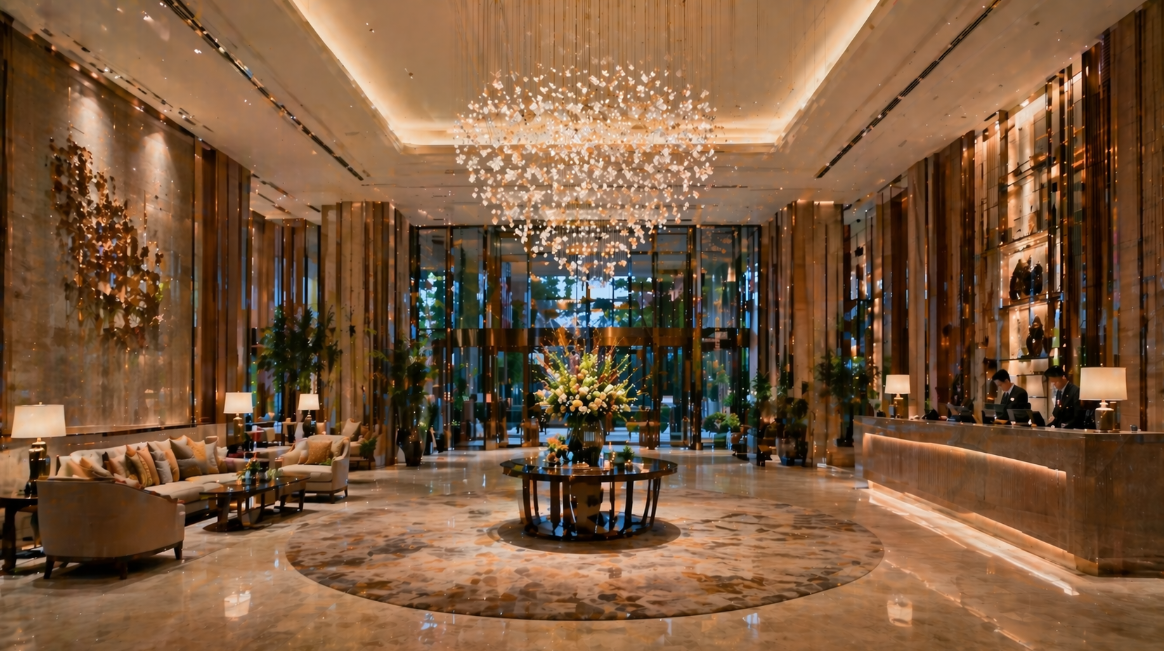
Warm to soft-neutral light usually works best in hotel lobbies because it feels welcoming while still supporting clarity and comfort. Very cool light is often less suitable for hospitality unless the design concept specifically calls for it.
Warm light tends to create a softer and more luxurious atmosphere. Soft-neutral light may work well in lobbies that also serve as informal meeting or waiting spaces. What matters most is not making the entire space evenly bright. A layered brightness strategy usually feels more refined than flat illumination.
Dimming is also valuable. Hotel lobbies often need different moods during the day and in the evening. Adjustable lighting levels can make the same space feel more adaptable and premium.
Lighting ideas by hotel zone
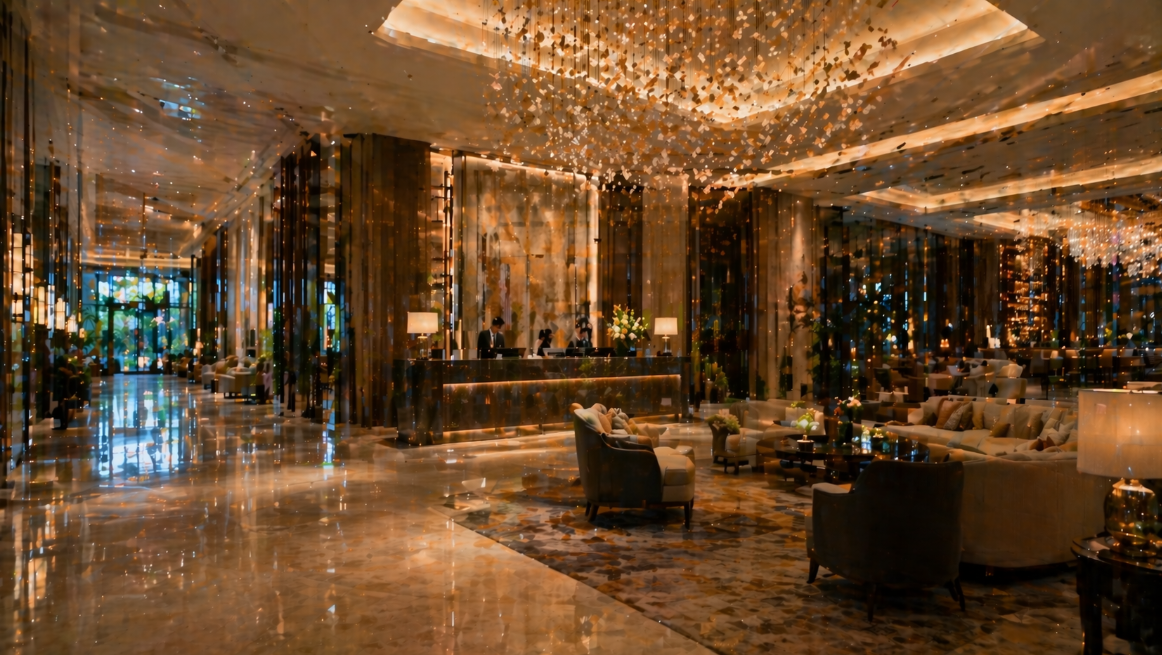
The best hotel lobby lighting schemes are zoned rather than uniform. Even when the visual language is consistent, different parts of the space should be lit according to their function.
-
Entrance area: create clarity and a strong first impression
-
Reception desk: provide practical visibility for staff and guests
-
Waiting lounge: use softer layers for comfort and longer dwell time
-
Corridor connection: guide movement while maintaining continuity
-
Restaurant or bar near the lobby: shift toward a more intimate mood without breaking the brand language
For hospitality projects, this zoned approach usually leads to better results than relying on one fixture style everywhere.
How custom lighting adds value to hotel projects?
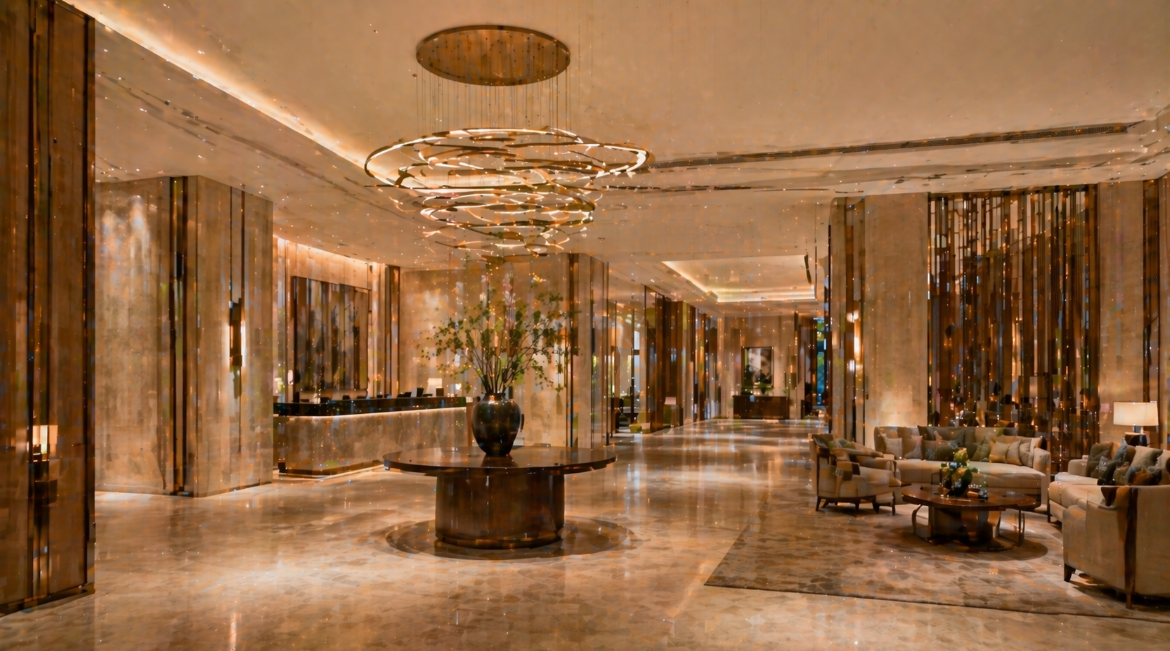
Custom lighting adds value because it helps hotel projects achieve a better fit in scale, style, brand expression, and multi-zone coordination. This is one of the main differences between choosing decorative fixtures individually and planning lighting as part of a hospitality project.
One advantage of working with CUSLUX is that the lighting approach can be adjusted to the real needs of the property rather than forced into a standard catalog solution. In hotel projects, that is useful because the lobby is rarely the only space involved. The lighting language often needs to connect with corridors, lounges, dining areas, bedside spaces, or private dining rooms as part of one coherent guest experience.
CUSLUX also supports hotel projects in a way that is more practical for buyers and design teams. Early quotation helps clarify feasibility quickly. A tailored concept stage helps translate mood boards or project ideas into more specific lighting directions. Sample development makes it easier to review finishes, details, and overall fit before production. For larger hospitality orders, consistency across multiple fixtures and spaces becomes just as important as the appearance of one individual piece.
This kind of support is especially useful when a project needs:
-
a chandelier scaled to a specific ceiling height
-
pendant lighting adapted to several connected zones
-
finishes that align with the hotel’s brand palette
-
coordination across lobby, corridor, and dining-related spaces
-
a solution that balances decorative impact with easier maintenance
Instead of treating the lobby as an isolated design moment, custom lighting makes it easier to build a more unified hospitality environment.
What feels current in hotel lobby lighting in 2026?
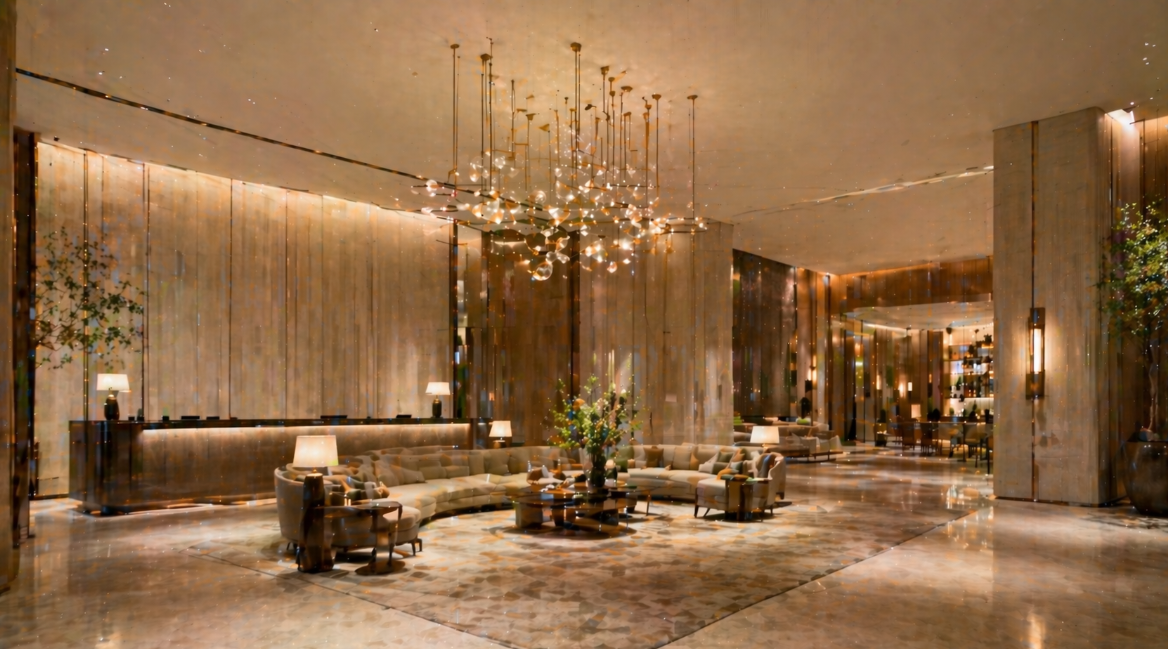
In 2026, hotel lobby lighting feels more refined, lighter in visual weight, and more closely connected to brand identity than before. The direction is not simply “larger” or “more decorative.” It is more intentional and better integrated.
Several design directions feel especially current:
-
cleaner silhouettes
-
refined mixed materials
-
decorative lighting with easier maintenance in mind
-
integrated LED compatibility
-
dimmable systems and layered control
-
designs that feel luxurious without looking overly heavy
This also means traditional materials such as crystal, glass, or brass can still look current, as long as the proportions, finishes, and detailing feel more considered and less dated.
Common mistakes to avoid
The most common hotel lobby lighting mistakes are choosing the wrong scale, over-lighting the space, and focusing only on appearance.
Typical problems include:
-
selecting a fixture that is too small
-
using one uniform brightness level everywhere
-
ignoring glare and visual comfort
-
overlooking cleaning and maintenance
-
treating reception, circulation, and waiting zones as if they need the same type of light
A successful lobby lighting scheme should feel impressive on opening day and still work well long after the project is complete.
Custom Lighting Solutions for Your Space
Bring Your Lighting Design Concept to Life with CUSLUX
From chandeliers and pendant lights to decorative lighting for commercial and residential spaces, CUSLUX helps turn your ideas into custom lighting solutions with reliable design and production support.
Get Your Custom Lighting Solution →Conclusion
The best hotel lobby lighting combines a clear focal point, layered support, and a lighting strategy that fits the hotel’s brand and real operational needs. Chandeliers and pendants can both work beautifully, but the final result depends on more than style alone.
For hospitality projects in 2026, the strongest results come from combining decorative identity, ambient comfort, and practical coordination across the space. When lighting is planned with both design and usability in mind, the lobby becomes more than a bright entrance. It becomes a memorable part of the guest experience.