

Hotel Lobby Lighting Trends to Watch in 2026?

Zoey
Lighting Designer
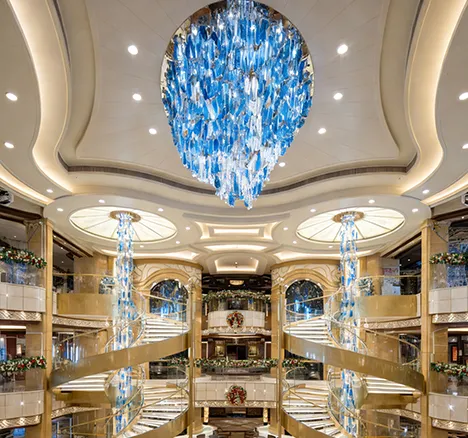
In 2026, luxury hotel lighting is moving beyond simple decoration. Hotel lobbies are no longer designed only to look bright and elegant. They are expected to create emotion, guide movement, support brand identity, and make guests remember the space from the moment they enter.
For luxury hotels, boutique resorts, high-end commercial buildings, and hospitality interiors, lighting has become one of the most important tools for shaping the guest experience. A chandelier, pendant installation, wall light, or ceiling feature can influence how people feel, where they look, how they move, and how they understand the hotel’s style.
The most important hotel lobby lighting trends 2026 are not about using the biggest or most expensive fixture. They are about using lighting with better intention: sculptural forms, artistic glass, softer diffusion, warm ambience, and layered lighting schemes that make the space feel comfortable and memorable.
2. Why Luxury Hotel Lighting Is Becoming More Experiential
Luxury hotel lighting trends are becoming more experiential because hotel guests now expect more than basic comfort. They want spaces that feel warm, personal, photogenic, and connected to the hotel’s brand story.
In the past, many hotel lobbies used lighting mainly to show scale and luxury. Large chandeliers, polished finishes, and bright public areas were enough to create a strong first impression. Today, the goal is more refined. A luxury lobby should feel impressive, but also comfortable. It should look beautiful in photos, but still function well for reception, waiting, movement, and social interaction.
This is why lighting design is shifting toward mood, atmosphere, and emotional connection. A sculptural fixture can become a visual landmark. A warm glow can make a lounge area feel more welcoming. A softly lit corridor can make guest movement feel calm and safe.
Guest Experience as the Starting Point
A successful lighting plan should begin with the guest journey. Designers need to think about how people enter the lobby, where they stop, what they see first, and how they move from reception to elevators, lounges, corridors, restaurants, or meeting areas.
Lighting should support each step of that journey. The entrance may need stronger visual impact. The reception desk may need clearer task lighting. The lounge may need softer decorative light. Corridor transitions should feel smooth instead of suddenly bright or dark.
For hotel projects, trend-based lighting only works when it supports real use.
Artistic Chandeliers as Visual Focal Points in Hotel Lobbies
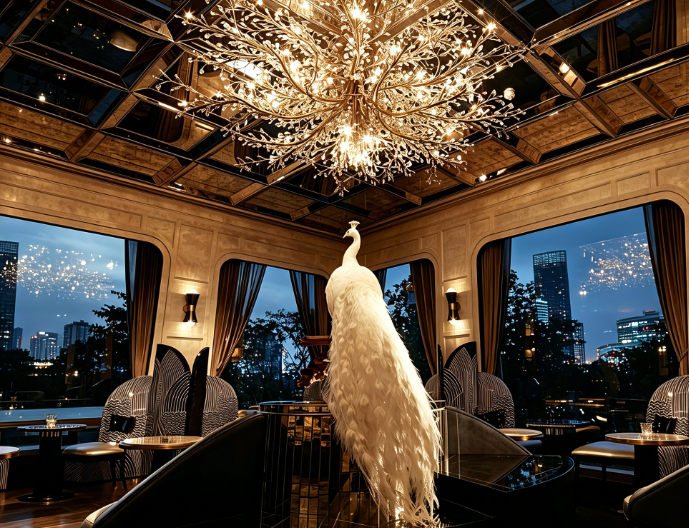
Artistic chandeliers are one of the strongest directions in modern hotel lobby design. Instead of treating a chandelier as a standard decorative product, many hotels now use it as a signature visual element.
A lobby chandelier can express the hotel’s personality. It may feel elegant, sculptural, organic, futuristic, classical, or minimal depending on the brand positioning. In 2026, the most effective chandelier designs are often those that look custom-made for the architecture rather than added after the interior is finished.
For large hotel lobbies, artistic lighting can also help organize the space. A chandelier above the central lounge can create a clear gathering point. A suspended installation near the entrance can guide guests forward. A feature light above the reception area can help define the service zone.
Contemporary Artistic Chandeliers with Sculptural Forms
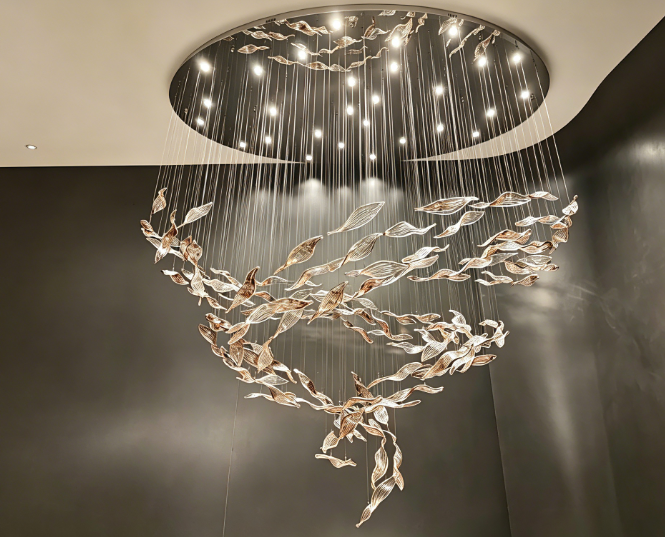
Contemporary artistic chandeliers often use asymmetry, layered forms, flowing lines, or geometric structures. These designs work well in luxury hotel interiors because they feel more architectural than ordinary decorative fixtures.
A sculptural chandelier does not always need to be oversized. In many projects, the shape, rhythm, material, and lighting effect are more important than the physical size. A well-designed fixture can become memorable even with a restrained form.
This approach is especially suitable for boutique hotels, lifestyle hotels, and resorts that want a stronger identity.
Artistic Chandeliers for Hotel Lobby Brand Identity
Artistic chandeliers for hotel lobby spaces should connect with the hotel’s concept. A coastal resort might use wave-like glass elements. A city hotel might use metal lines and clean geometry. A luxury heritage hotel might use crystal, brass, or warm glass details.
The key is consistency. The chandelier should not feel isolated from the rest of the interior. It should work with the floor material, wall finishes, furniture, ceiling design, and lighting color temperature.
Artistic Glass Fixtures for Hotel Lobbies in 2026
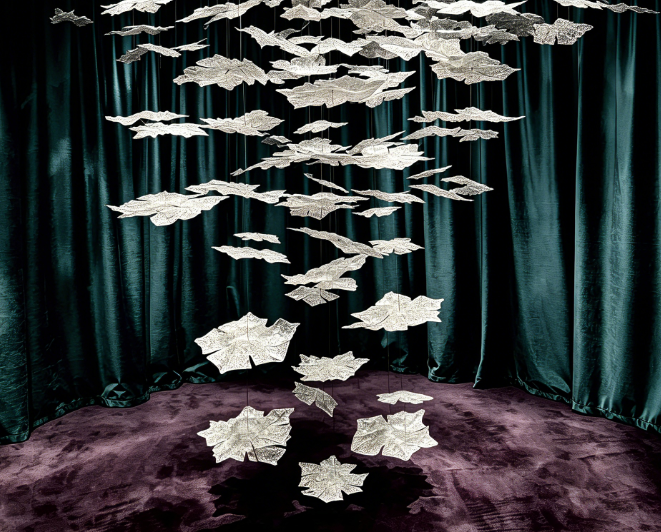
Glass remains one of the most important materials in high-end lighting, but the way it is used is changing. Instead of only clear crystal sparkle, many hotel projects are turning to textured glass, smoked glass, amber tones, blown glass, frosted glass, and hand-shaped glass details.
These materials create a softer and more crafted feeling. They can make the lobby feel luxurious without looking too cold or formal.
Art Glass Chandelier Designs for Luxury Interiors
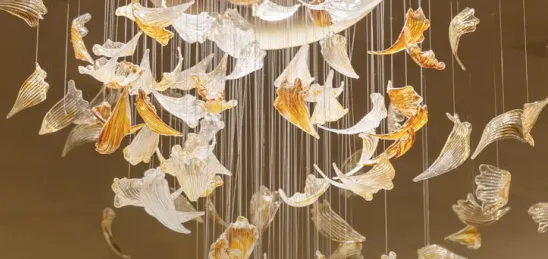
An art glass chandelier can add depth, color, and movement to a hotel lobby. Unlike standard crystal chandeliers, art glass can show irregular textures, subtle color variation, and handcrafted details.
This type of fixture is suitable for hotels that want a more artistic or boutique atmosphere. It can work especially well in lobby lounges, grand staircases, reception areas, and bar entrances.
Art glass also helps create a warmer impression when paired with bronze, champagne gold, brushed brass, or dark metal finishes.
Artistic Glass Pendant Lights for Reception and Lounge Areas
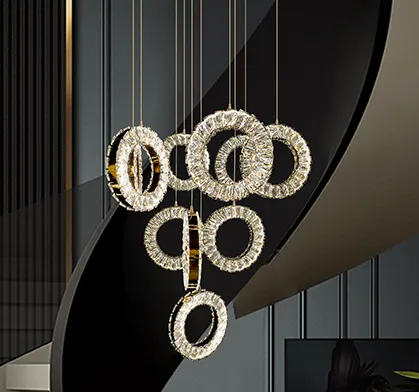
Artistic glass pendant lights are useful when the project needs a more flexible lighting layout. Instead of one large central fixture, designers can use multiple pendants to create rhythm across a reception desk, seating area, or lobby bar.
This approach works well for hotels that want a refined but not overly formal atmosphere. Pendants can be arranged in clusters, lines, or different hanging heights to create a more dynamic ceiling composition.
They can also visually connect the lobby with nearby restaurant, lounge, or corridor areas.
Contemporary Glass Chandeliers for Modern Hotel Interiors
Contemporary glass chandeliers are suitable for hotels that prefer clean shapes and modern luxury. Compared with traditional crystal chandeliers, they often feel lighter, softer, and more architectural.
They may use clear glass globes, smoked glass tubes, frosted glass shades, or irregular blown glass forms. These materials help create visual interest without overwhelming the space.
For luxury hotel projects, contemporary glass fixtures can make the lobby feel high-end but still relaxed.
Softer and More Diffused Lighting Effects for Guest Comfort
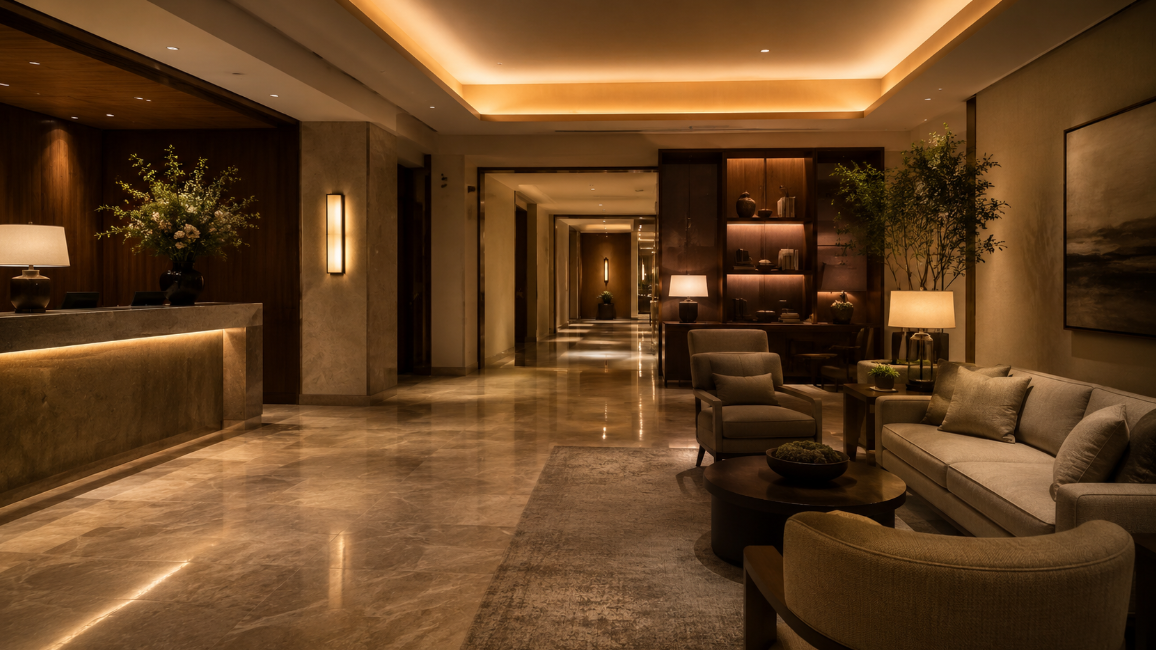
One of the most practical trends in hotel lobby design is the move toward softer and more comfortable light. Strong direct lighting can make a space feel cold, harsh, or tiring, especially in public areas where guests spend time waiting, meeting, or relaxing.
Diffused lighting fixtures help reduce glare and create a more pleasant atmosphere. They are especially useful in lobbies, lounges, corridors, restaurants, and bar areas.
Soft light does not mean the space should be dark. It means the brightness should be controlled, layered, and distributed in a way that supports both comfort and visibility.
Diffused Lighting Fixtures for Hotel Ambience
Diffused lighting fixtures for hotel ambience can include frosted glass pendants, fabric-shaded fixtures, alabaster-style lights, indirect ceiling features, backlit panels, and wall lights with soft covers.
These fixtures help create a warm and gentle glow. In luxury hotels, this type of lighting is often used to make public spaces feel more relaxing and premium.
Diffused lighting is also useful when combined with decorative chandeliers. The chandelier provides visual focus, while softer background lighting supports comfort and function.
How Soft Light Supports Premium Public Areas
In a hotel lobby, guests need to see clearly, but they should not feel exposed under harsh light. Softer lighting can make seating areas feel more private, reception areas more welcoming, and transition spaces more comfortable.
For commercial hospitality interiors, the goal is to avoid visual fatigue. Guests may arrive after travel, attend meetings, or wait in the lobby for long periods. A carefully diffused lighting scheme can improve the overall experience.
Layered Lighting for Reception, Lounge, and Corridor Areas
Layered lighting is becoming a standard approach in high-end hotel interiors. A single chandelier or ceiling light cannot support every function in a lobby. Different zones need different lighting levels, fixture types, and visual effects.
A complete lobby lighting plan may include:
A statement chandelier or pendant feature
Ceiling downlights for general brightness
Wall lights for warmth and depth
Linear lights for architectural edges
Accent lights for artwork or plants
Task lighting near reception desks
Soft decorative lights in lounge areas
This layered approach allows the hotel to create different moods during the day and night.
Artistic Pendant Lights for Flexible Lobby Zones
Artistic pendant lights are useful in areas where a large chandelier is not necessary. They can be used above lounge tables, reception counters, bar areas, side seating zones, or transition spaces.
Pendants help create smaller visual moments within a large lobby. This is important because modern hotel lobbies often combine many functions: check-in, waiting, working, meeting, dining, and socializing.
By using pendant lights with related materials or finishes, the hotel can maintain a consistent design language without repeating the same fixture everywhere.
Corridor Lighting as Part of the Guest Journey
Corridors should not be treated as separate technical spaces. They are part of the guest experience. Lighting in corridors should feel connected to the lobby and public areas.
Wall sconces, recessed lights, and hidden linear lighting can create rhythm and guide movement. The brightness should be comfortable, and the color temperature should match the hotel’s overall mood.
A well-lit corridor helps guests feel safe while continuing the brand atmosphere beyond the lobby.
How to Apply Hotel Lobby Lighting Trends 2026 Without Overdesigning
Trends are useful, but they should not control the whole project. The best hotel lobby lighting trends 2026 are those that can support the hotel’s architecture, brand identity, and long-term operation.
Overdesigning is a common risk. A lobby can quickly become visually confusing if too many statement fixtures, materials, colors, and lighting effects are used at the same time.
The goal is not to use every trend. The goal is to choose the right trend for the right space.
Match Lighting Trends with Brand Positioning
A luxury resort, business hotel, boutique hotel, and event hotel should not all use the same lighting style. Before choosing a fixture, the project team should define the brand feeling.
For example:
A business hotel may need clean, calm, and efficient lighting.
A boutique hotel may prefer artistic glass and stronger visual identity.
A resort may use warm finishes and organic forms.
A luxury urban hotel may choose sculptural chandeliers and refined metal details.
Lighting should support the brand, not compete with it.
Balance Visual Impact with Technical Feasibility
A lighting concept may look attractive in a rendering, but it must still be buildable, installable, and maintainable. Before production, the team should confirm fixture size, material weight, suspension method, electrical system, dimming control, driver access, and cleaning method.
This is especially important for custom chandeliers, artistic glass installations, and large pendant compositions.
A trend-based design becomes valuable only when it can be delivered successfully on site.
FAQ About Luxury Hotel Lighting Trends
1.What are the main luxury hotel lighting trends for 2026?
The main trends include sculptural chandeliers, artistic glass fixtures, warm ambience, diffused lighting, layered lighting schemes, and more personalized lighting concepts that support brand identity and guest experience.
2. Why are artistic chandeliers popular in hotel lobbies?
Artistic chandeliers are popular because they can become a strong visual focal point. They help express the hotel’s style, create a memorable first impression, and connect the lighting design with the architecture.
3. Where can an art glass chandelier be used in a hotel?
An art glass chandelier can be used in hotel lobbies, lounge areas, grand staircases, boutique reception spaces, restaurants, and bar entrances. It works well when the project needs a handcrafted or artistic lighting effect.
4.Are diffused lighting fixtures suitable for hotel public areas?
Yes. Diffused lighting fixtures are suitable for lobbies, corridors, lounges, restaurants, and guest transition areas because they reduce glare and create a softer, more comfortable atmosphere.
5. How should hotels use trends without overdesigning the lobby?
Hotels should choose trends based on brand positioning, space scale, ceiling conditions, guest movement, and maintenance needs. A good lobby lighting scheme should feel memorable but still practical for daily operation.
Conclusion: Luxury Hotel Lighting Should Be Memorable, Comfortable, and Buildable
The future of luxury hotel lighting is not only about decoration. In 2026, hotel lobby lighting should create a stronger guest experience through artistic form, warm ambience, diffused comfort, and layered functionality.
Artistic chandeliers, art glass chandelier designs, artistic pendant lights, and contemporary glass chandeliers can all help a hotel create a more memorable public space. At the same time, diffused lighting fixtures and layered lighting plans make the lobby more comfortable and practical for daily use.
For hotel owners, designers, contractors, and procurement teams, the best lighting trend is not always the most dramatic one. It is the one that fits the brand, works with the architecture, supports guest movement, and can be produced, installed, and maintained successfully.